







Wie Ebury seine globale Website neu aufbaute, damit sie zum Unternehmen passte, das es geworden war
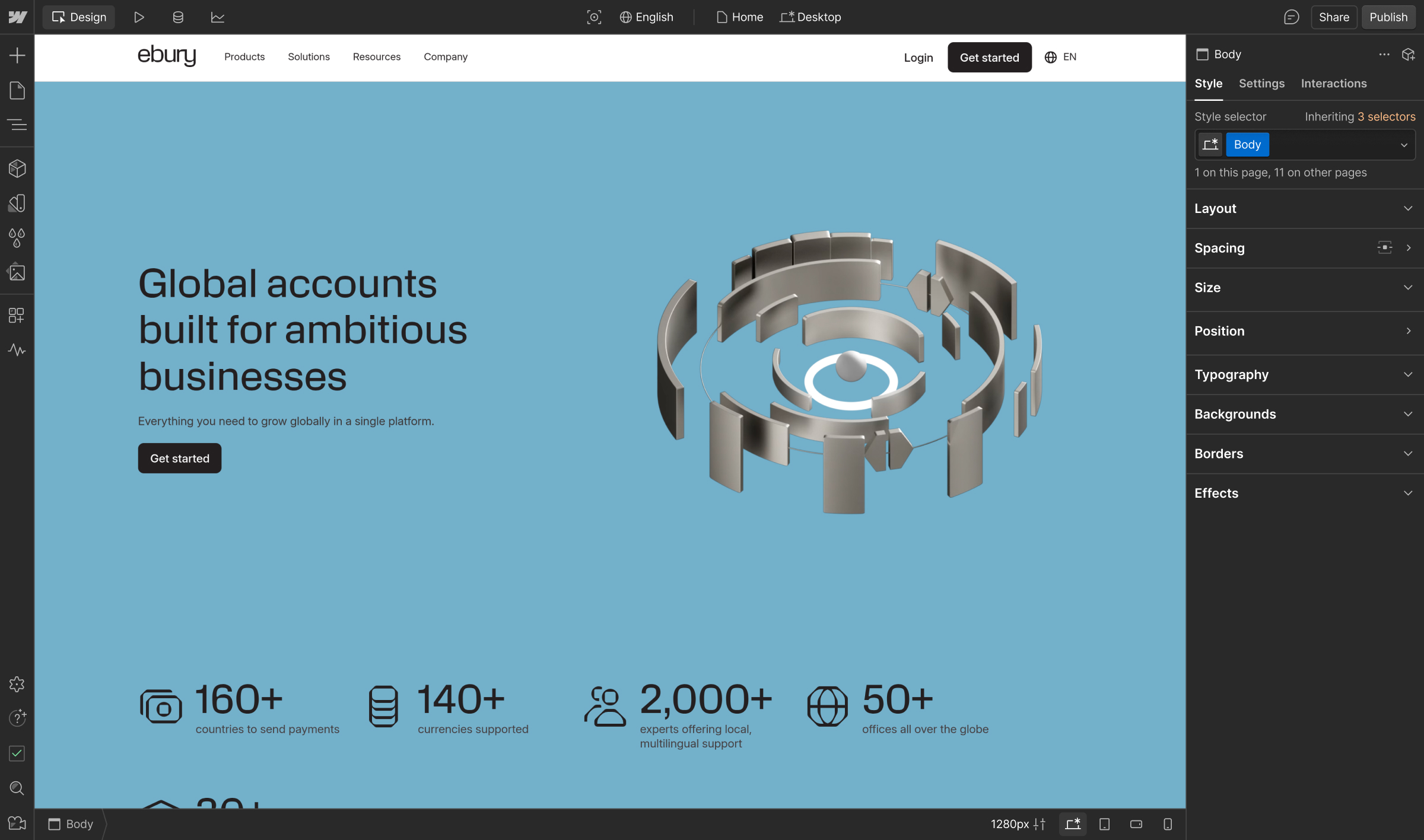
Ebury bewegt Geld für 27.000 Unternehmen in 40 Ländern über Grenzen hinweg. Um diesem Umfang gerecht zu werden, migrierte das Unternehmen von 30 separaten WordPress-Instanzen zu Webflow, führte eine fragmentierte Marke zusammen und gab lokalen Teams erstmals die Kontrolle über ihre eigenen Märkte.

Unlock your site’s full potential with best practices vetted by our experts. Learn the Webflow Way.
Ein Zahlungsunternehmen, das seiner eigenen Eingangstür entwachsen war
Ebury, eine führende globale Plattform für grenzüberschreitende Zahlungen und Handelslösungen, befindet sich in einer Phase rasanten Wachstums. Das mehrheitlich zu Santander gehörende Fintech ist in 30 regulierten Märkten tätig und sicherte sich kürzlich eine Finanzierungsrunde über 550 Millionen Pfund, um seine internationale Expansion zu beschleunigen und die Produktentwicklung zu fördern.
Ebury hat 16 Jahre lang die Infrastruktur aufgebaut, auf die seine Kundschaft angewiesen ist: Zahlungsnetzwerke, FX-Tools, Absicherungsprodukte, Lieferantenfinanzierung, Unternehmenskreditkarten und ein globales Netzwerk über 40 Länder und mehr als 160 Währungen hinweg.
Das Unternehmen bewegt Geld für mehr als 27.000 Unternehmen über Grenzen hinweg – von Herstellern, die Waren zwischen China und den USA versenden, bis zu E-Commerce-Marken, die Lieferanten auf fünf Kontinenten bezahlen. Es konkurriert direkt mit globalen Banken auf deren Heimatmärkten. Gemeinsam mit der Webflow-Agentur Parallax wollte Ebury sich modernisieren, neu positionieren und als modernes, hochtechnologisches und ambitioniert wachsendes Fintech präsentieren. Dafür musste sich die Website grundlegend verändern.
Wenn 30 WordPress-Instanzen nicht mehr zu verwalten sind
„Jede Änderung an einer unserer Websites bedeutete Änderungen in 30 verschiedenen WordPress-Instanzen. Der Rückstau für Änderungen betrug zu verschiedenen Zeitpunkten drei, sechs oder mehr Monate. Wir haben keine Verbesserungen vorgenommen. Wir haben Fehler behoben.“
— Jon Heaton, Senior Vice President Engineering, Ebury
Während des größten Teils seiner Geschichte verwaltete jedes Regionalbüro von Ebury seine eigene WordPress-Instanz. Das Setup war Markt für Markt organisch gewachsen – und das zeigte sich. Die Markenrichtlinien gingen auseinander. Der Tonfall driftete ab. Ein in Großbritannien verfügbares Produkt hatte andere Texte als dasselbe Produkt in Spanien. Ein kleines Webplattform-Team musste jede kundenorientierte Änderung prüfen, Deployments dauerten Stunden und die Bereitstellung neuer Funktionen kam nur schleppend voran. Eine Compliance-Korrektur konnte drei Monate in der Warteschlange liegen, und das Web-Team verbrachte die meiste Zeit damit, Fehler zu beheben, statt am Nächsten zu arbeiten.
Die Diskrepanz zwischen dem, was die Vertriebsteams von Ebury sagten, und dem, was auf der Website erschien, war zu einem geschäftlichen Problem geworden. Das Unternehmen entwickelte aktiv eine Vertikalisierungsstrategie, bei der es seine Kernkompetenzen für Segmente wie institutionelle Finanzdienstleistungen, Sport und E-Commerce neu bündelte. Dafür brauchte der Vertrieb eine digitale Präsenz, die ihren Teil des Gesprächs überzeugend mittragen konnte.
Die Entscheidung zur Migration ging nicht nur darum, Technologie zu konsolidieren. Es ging darum, die Marke und ihre Online-Präsenz aus einer zentralen Quelle neu aufzubauen.
Ein Rebranding, ein Plattformwechsel und nur drei Monate für beides
„Es war vielleicht ein wenig verrückt, dass wir den kompletten Neuaufbau unserer kundenorientierten Handelsplattform, das Rebranding jedes einzelnen kundenorientierten Erlebnisses und die Migration zu Webflow gleichzeitig miteinander verknüpft haben. Harte Deadlines zwingen zu besseren Abwägungen. Wir wurden kompromisslos pragmatisch bei der Frage, was wirklich unverzichtbar ist.“
— Jon Heaton, Senior Vice President Engineering, Ebury
Im Oktober 2025 beschloss Ebury, das Problem zu lösen – und zwar nicht schrittweise. Der Plan umfasste ein vollständiges Rebranding, eine Migration zu Webflow und den Neuaufbau der kundenorientierten Handelsplattform, alles mit gleichzeitigem Launch. Drei Monate. Weihnachten mittendrin. 39 Sprachversionen zu migrieren.
Um ein Programm dieses Umfangs in diesem Tempo umzusetzen, arbeitete Ebury mit Parallax zusammen, einem Webflow Premium Partner, der strategische Beratung und Umsetzung kombinierte. Die Zusammenarbeit ging weit über die Auslieferung hinaus: Parallax arbeitete während des gesamten Rebrandings eng mit Ebury zusammen und half dabei, von der Discovery-Phase bis zum Launch Strategie, Designsystem und Webflow-Best-Practices zu gestalten.
„Wir haben Parallax nicht nur engagiert, um eine Website zu entwickeln. Das Team wurde zur Erweiterung unseres Teams, half uns bei der Ausgestaltung der Strategie, stellte unsere Denkweise infrage und entwickelte ein langlebiges Designsystem. Es brachte uns innerhalb eines ambitionierten Zeitplans live und stellte gleichzeitig sicher, dass wir die Plattform selbstbewusst übernehmen und weiterentwickeln können.“
— Sajid Anam, VP of Design, Ebury
Blogbeiträge sind ein gutes Beispiel für die neue Geschwindigkeit und Genauigkeit bei der Veröffentlichung bei Ebury. „Was früher 40 einzelne Veröffentlichungsschritte über Sprachversionen hinweg erforderte, wird jetzt einmal veröffentlicht, während die regionalen Einheiten den Rest übernehmen. Die Website hat sich von einem Engpass zu etwas entwickelt, mit dem wir schnell vorankommen können“, erklärt Thomas Dodds, Senior Engineer bei Ebury.
Der Launch erfolgte am Valentinstag, nur zwei Wochen nach dem ursprünglichen Zieltermin.
Was sich verändert, wenn lokale Teams endlich vorankommen können
„Seit dem Launch im Februar haben wir mehr Mitwirkende bei Übersetzungen als in den fünf Jahren zuvor. Länder-Manager:innen und Vertriebsteams können ihren eigenen Content aktualisieren. Marketingteams können Eventseiten erstellen. Wir können uns auf die Dinge konzentrieren, die wirklich wichtig sind.“
— Jon Heaton, Senior Vice President Engineering, Ebury
Die operative Veränderung ging über die Veröffentlichungsgeschwindigkeit hinaus. Eines der zentralen Ziele der Migration war Dezentralisierung: Den Büros von Ebury in fast 40 Ländern sollte ermöglicht werden, ihren eigenen Content zu verwalten, ohne auf eine zentrale Warteschlange zu warten oder von der Marke abzuweichen.
Vor Webflow musste jede Anfrage aus einem lokalen Markt über das zentrale Web-Team laufen. Landingpages dauerten Wochen. Eventseiten erforderten Entwicklungsressourcen. „Wenn in Griechenland etwas passiert und das Team dort die Website aktualisieren möchte, bringt es nichts, wenn wir dafür drei Monate brauchen“, sagt Heaton. „Man möchte sofort reagieren – markenkonform, im richtigen Design, abgestimmt auf den Markt und die Bedürfnisse der Kundschaft, aber innerhalb der Richtlinien.“
Jetzt greifen Länder-Manager:innen und Marketingteams auf Templates zu, füllen CMS-Felder aus und veröffentlichen. Kein Entwicklungsticket. Keine Warteschlange. Dringende Compliance-Updates werden noch am selben Tag umgesetzt.
Eine Marke, die endlich zum Unternehmen passt
„Wir waren sehr schlecht darin, unsere Geschichte zu erzählen. Die Marke war schwach. Wir verließen uns darauf, dass unsere Mitarbeitenden diese Geschichte erzählen. Die Website ist eine weitere Möglichkeit, sie zu erzählen, aber sie musste genauso schnell und gut sein wie unsere zugrunde liegende Zahlungsinfrastruktur.“
— Sajid Anam, VP of Design, Ebury
Die wichtigere Veränderung ließ sich schwerer quantifizieren.
Mit dem Rebranding wollte Ebury die Glaubwürdigkeitslücke zwischen dem Unternehmen, zu dem es sich im Stillen entwickelt hatte, und seiner Außenwirkung schließen. Die Website hatte nicht mit dem Unternehmen Schritt gehalten. Die Marke vermittelte in verschiedenen Märkten unterschiedliche Botschaften. Das Produkt wirkte komplizierter, als es war.
„Wenn es eine Dissonanz zwischen dem gibt, was ein Vertriebsmitarbeiter sagt, und dem, was auf der Website steht, untergräbt das Vertrauen“, sagt Heaton. „Man muss der sein, für den man sich ausgibt.“
Seit der Migration hat sich der Sichtbarkeitsindex von Ebury verdoppelt. Der Vertrieb verweist nun auf spezifische Seiten, statt Kund:innen auf die Startseite zu schicken. Zum ersten Mal verfügt das Web-Team über Daten, denen es vertraut, und eine Plattform, auf der es handeln kann. „Jetzt kann ich erkennen, dass Content wertvoll ist“, sagt Dodds, „und wir können die richtigen Hebel in Bewegung setzen.“
Von der Plattform zum Wachstumsmotor
„Jetzt, da wir das Fundament haben, stellt sich die Frage: Wie machen wir daraus das Erlebnis der nächsten Stufe für unsere Kund:innen? Darauf freuen wir uns.“
— Sajid Anam, VP of Design, Ebury
Jetzt, da die Infrastruktur steht, hat Ebury Pläne für die nächsten Schritte.
Optimize und Analyze stehen für die kommenden sechs Monate auf der Roadmap. AEO, ein Bereich, in den Ebury bisher noch nicht eingestiegen ist, bietet dem Team kurzfristig die größte Chance: die Möglichkeit, neu zu starten und einem Wandel voraus zu sein, den die meisten Unternehmen in seinem Bereich noch nicht priorisiert haben.
Langfristig strebt das Unternehmen eine Multichannel-Akquisitionsmaschine an: Sie soll Signale aus Marketingkanälen aufnehmen, in Personalisierungsexperimente zurückführen und das digitale Erlebnis auf jedes Segment abstimmen, das Ebury bedient. Wenn ein:e Vertriebsmitarbeiter:in institutionelle Finanzdienstleistungen präsentiert, sollte die Website dieses Gespräch widerspiegeln – und nicht mit einer generischen Seite den Pitch untergraben.
„Es geht nicht darum, A/B-Tests zu haben, die ständig laufen“, sagt Heaton. „Es geht darum, 600 Versionen Ihrer Website zu haben – ein dauerhaft laufendes Experiment, das das Erlebnis kontinuierlich personalisiert. Das passte genau zu dem Problem, das wir hatten.“
Ebury ist ein 16 Jahre altes Unternehmen, das die meiste Zeit seine Mitarbeitenden die Marken-Story tragen ließ. Jetzt ist die Website endlich bereit, einen Teil davon ebenfalls zu tragen.
Explore more Enterprise stories
Analyze
Localization
Optimize
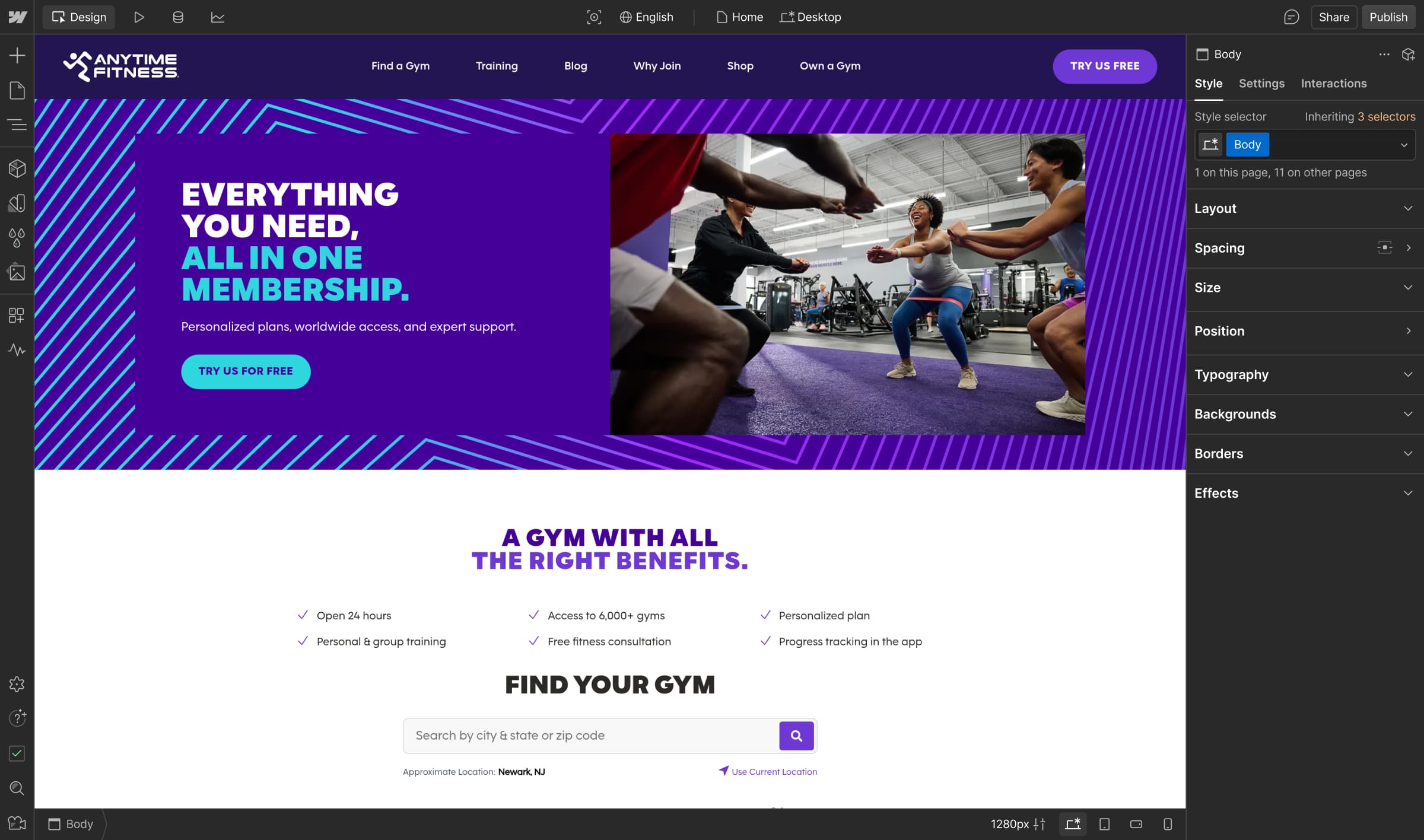
Purpose Brands vereint Marken wie Orangetheory Fitness, Anytime Fitness, The Bar Method und Waxing the City in einem globalen Portfolio, das Millionen von Menschen erreicht. Mit Webflow ersetzte das Unternehmen eine fragmentierte Webpräsenz durch eine gemeinsame Grundlage, sodass neue Märkte schneller launchen und einmal entwickelte Funktionen markenübergreifend skalieren können.

Analyze
Localization
Optimize
Hakim Group, der größte Verbund unabhängiger Optiker:innen in Großbritannien und Irland, musste mehr als 500 individuell gebrandete Optiker-Websites skalieren, ohne das zu verlieren, was jede Praxis einzigartig macht. Nach der Migration zu Webflow Enterprise und der Nutzung agentenbasierter Migrations-Workflows über Webflow MCP steigerte das Team die Website-Produktion um 400 %. Ziel ist es, in den nächsten drei bis vier Jahren 1.000 individuelle Websites zu erreichen.


Analyze
Localization
Optimize
Arkose Labs setzte Anfang 2026 unternehmensweit auf agentenbasierte KI: Jeder Anbieter musste sich mit Claude verbinden lassen, andernfalls schied er aus. Als die WordPress-Website die Prüfung nicht bestand, ging das Team bei potenziellen Ersatzlösungen genauso vor, wie es mittlerweile jeden Anbieter bewertete: Konnte sie agentenbasiert über Claude betrieben werden? Webflow setzte sich als beste Plattform durch. Noch in derselben Woche wurde der Vertrag unterzeichnet, und dreieinhalb Wochen später war die neue Website live.


Analyze
Localization
Optimize
Das Brand Innovation Lab von Amazon Ads entwickelt jährlich Hunderte hochwertiger Werbeerlebnisse über die gesamte Arbeitsfläche von Amazon hinweg. Mit Webflow hat das Team seinen Workflow transformiert: Designer verantworten jetzt den Build-Prozess, Technolog:innen werden für wirkungsvolle Forschung und Entwicklung freigestellt, und die Entwicklungszyklen haben sich um nahezu 50 % verkürzt. Dieser strukturelle Wandel ermöglicht es dem Team, seine kreativen Ambitionen zu skalieren und Innovationen schneller als je zuvor zu Kund:innen zu bringen.

Analyze
Localization
Optimize
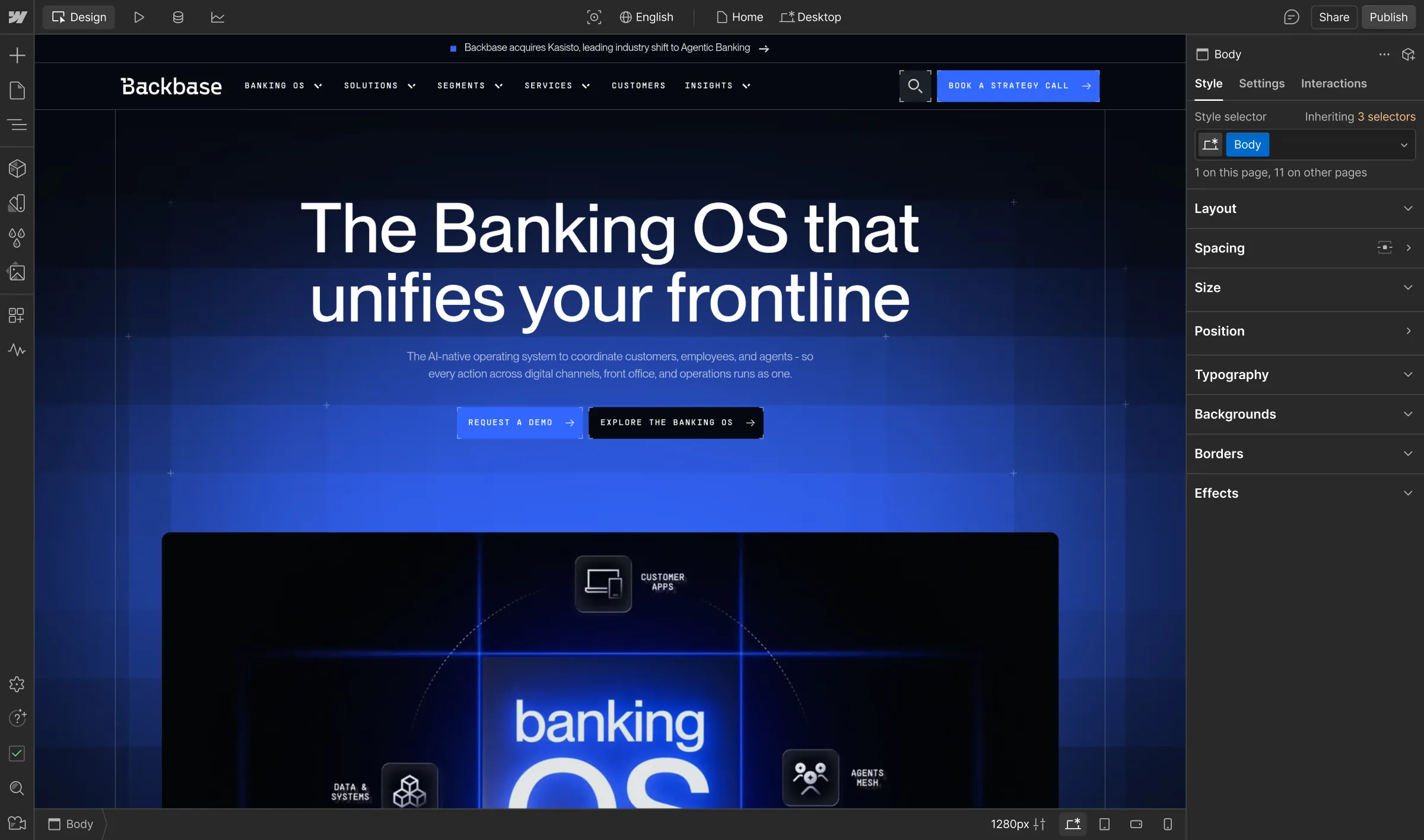
Backbase, ein globales KI-natives Banking-Betriebssystem, das traditionellen Banken hilft, mit modernen Fintechs zu konkurrieren, migrierte seine gesamte Website in acht Wochen zu Webflow. Dadurch veränderte sich, wie ein schlankes Zweierteam die Marke zum Leben erweckt, und das Marketingteam kann nun mit dem Tempo der Innovation Schritt halten.

Analyze
Localization
Optimize
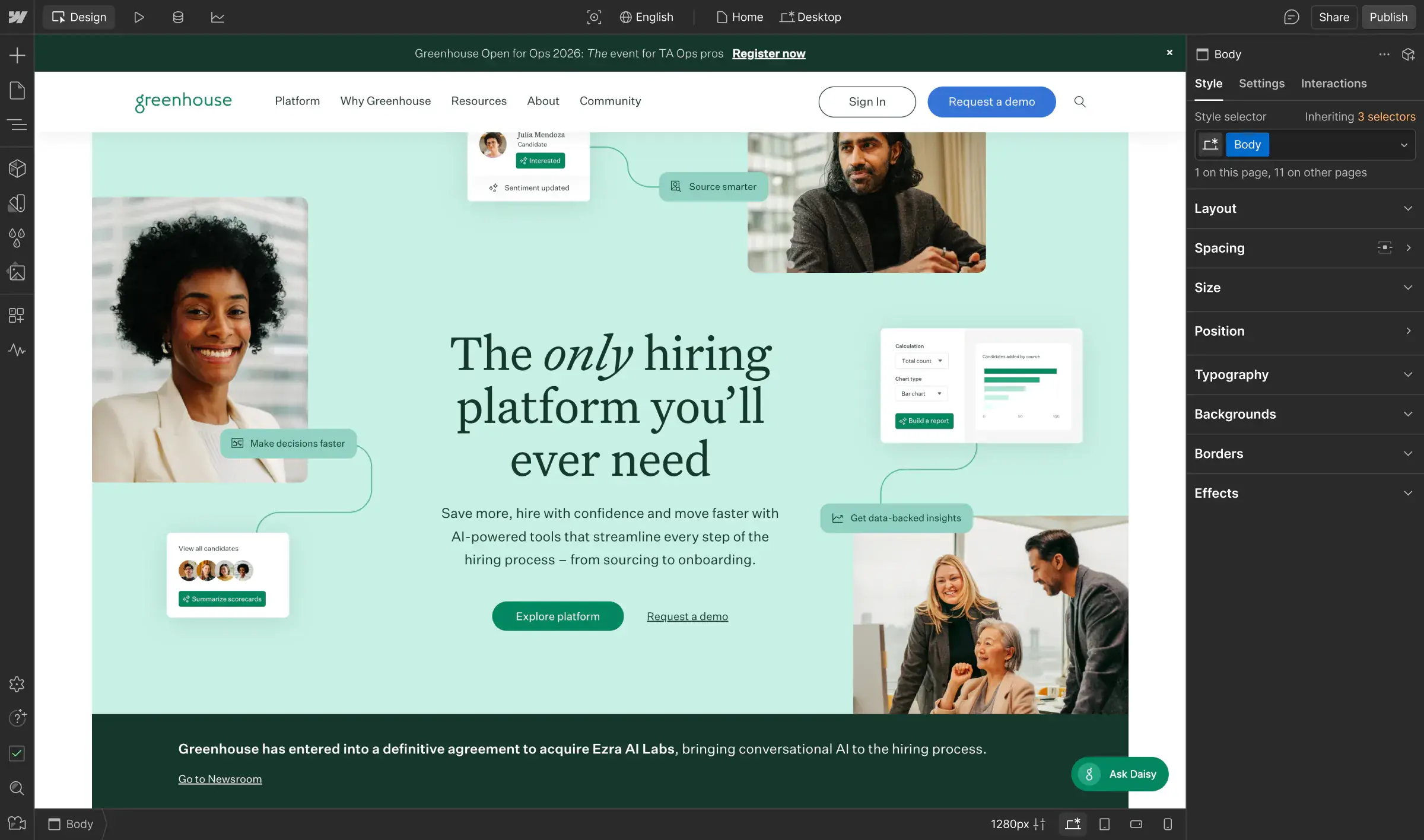
Greenhouse, eine Recruiting-Plattform für mehr als 7.000 Unternehmen, war durch ein individuelles CMS eingeschränkt, das bei jeder Änderung die Mitwirkung von Entwickler:innen erforderte. Durch die Migration zu Webflow mit der Digitalagentur HappyCog verwandelte das Unternehmen seine Website von einer wartungsintensiven Belastung in eine dynamische, vom Marketing gesteuerte Plattform, erschloss dem Team mehr Eigenständigkeit, verdoppelte die Umsetzungsgeschwindigkeit und verbesserte die Conversion-Raten um bis zu 40 %.

Analyze
Localization
Optimize
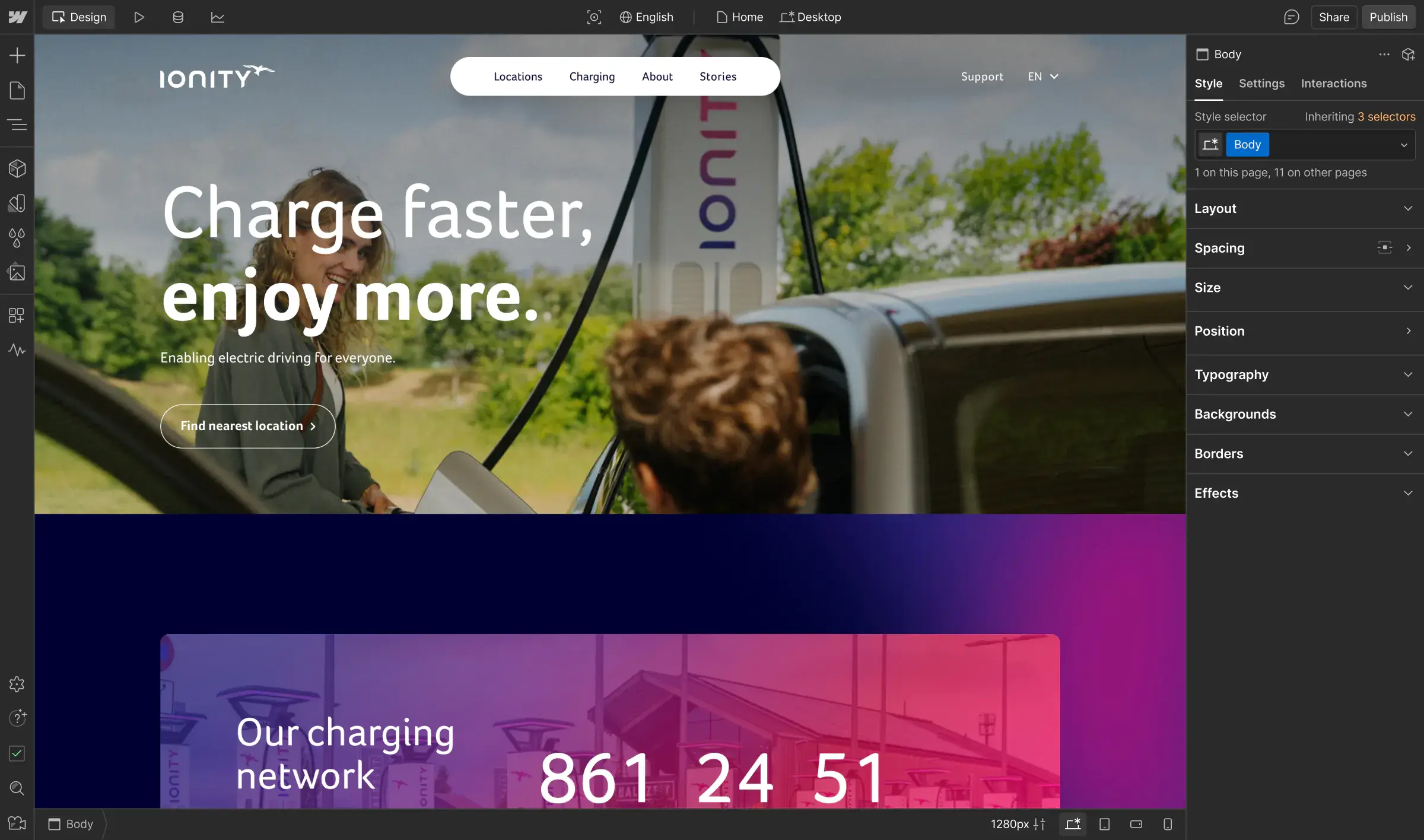
Nachdem das bisherige, stark entwicklerabhängige Setup an seine Grenzen gestoßen war, baute IONITY seine Website gemeinsam mit dem Hamburger Partner Klarkode auf Webflow Enterprise neu auf – und startete so eine individuell integrierte Plattform für 24 Märkte, die 64 % mehr aktive Nutzende verzeichnet.


Analyze
Localization
Optimize
Mit einer veralteten Webplattform und einer bevorstehenden globalen Neuausrichtung musste Verifone beweisen, dass ihr Marketingteam das nächste Wachstumszeitalter des Unternehmens vorantreiben kann. Mit Webflow haben sie ihre digitale Präsenz in nur 10 Tagen neu aufgebaut und das Unternehmen für eine 'grenzenlose' Zukunft neu positioniert.

Analyze
Localization
Optimize
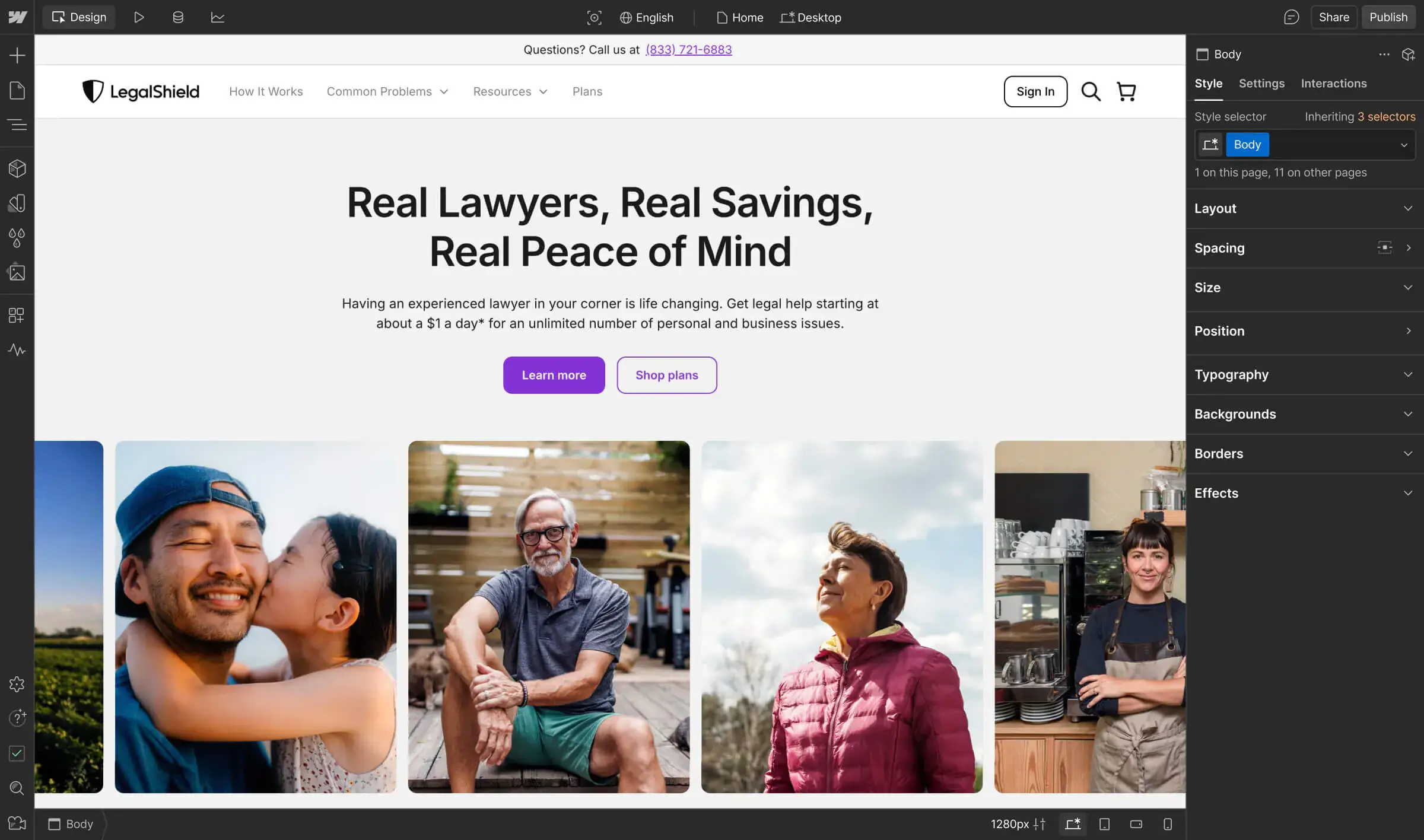
Vor Webflow sah sich der Anbieter von Rechts- und Identitätsdiensten langsamen Aktualisierungen, Engineering-Engpässen und einer begrenzten Fähigkeit zur Testung oder Skalierung von Inhalten gegenüber. Jetzt führt das Team marketinggesteuerte Experimente durch und verwaltet lokalisierte Inhalte in drei Sprachen, ohne dass Entwicklerübergaben erforderlich sind.

Analyze
Localization
Optimize
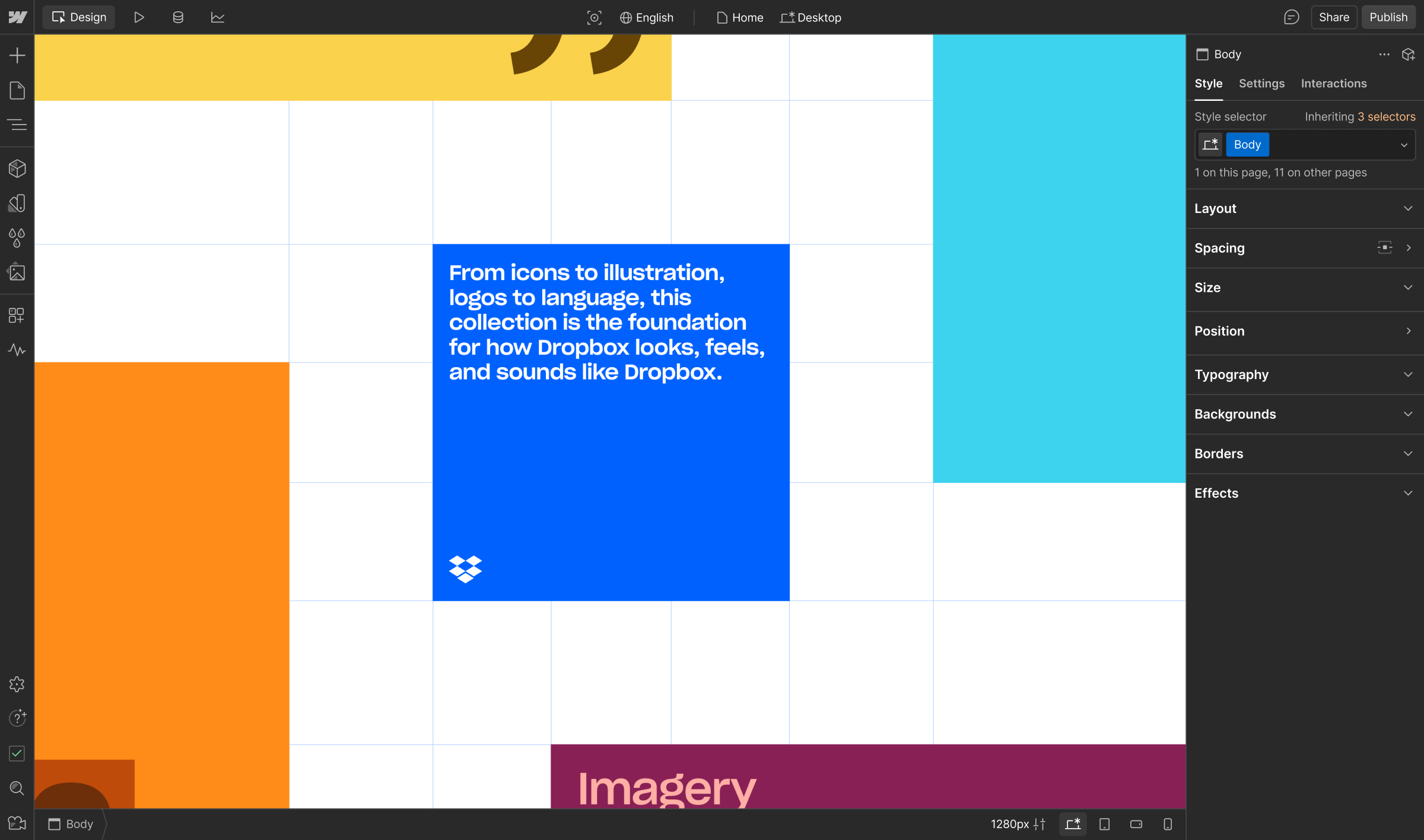
Dropbox musste ihre Markenrichtlinien von einer statischen Webseite zu einem interaktiven Erlebnis weiterentwickeln, das ihr Markenkonzept verstärkt. Mit Webflow Partner Daybreak nutzten sie Webflows visuelle-first CMS, um die Zusammenarbeit zu bereichern und eine Webseite zu erstellen, die ihre Marke zum Leben erweckt.

Analyze
Localization
Optimize
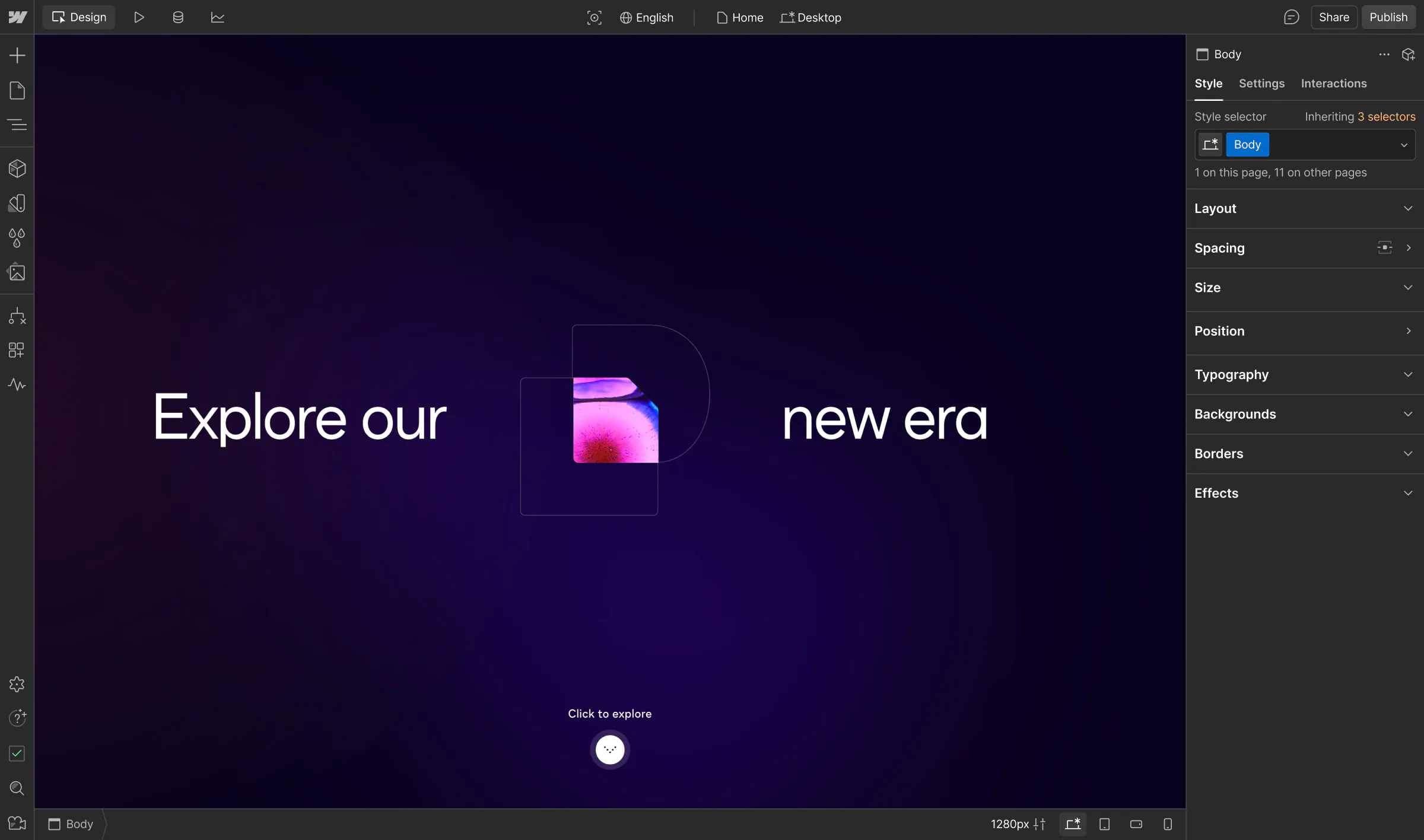
Getrieben von dem Wunsch, die Branche zu revolutionieren und über ihre traditionellen Wurzeln hinaus zu transformieren, benötigte Docusign eine leistungsstarke Weblösung. Mit Webflow und strategischen Agenturexperten erlangten sie kreative Freiheit und globale Anerkennung im aufkommenden Bereich des Intelligent Agreement Management.

Analyze
Localization
Optimize
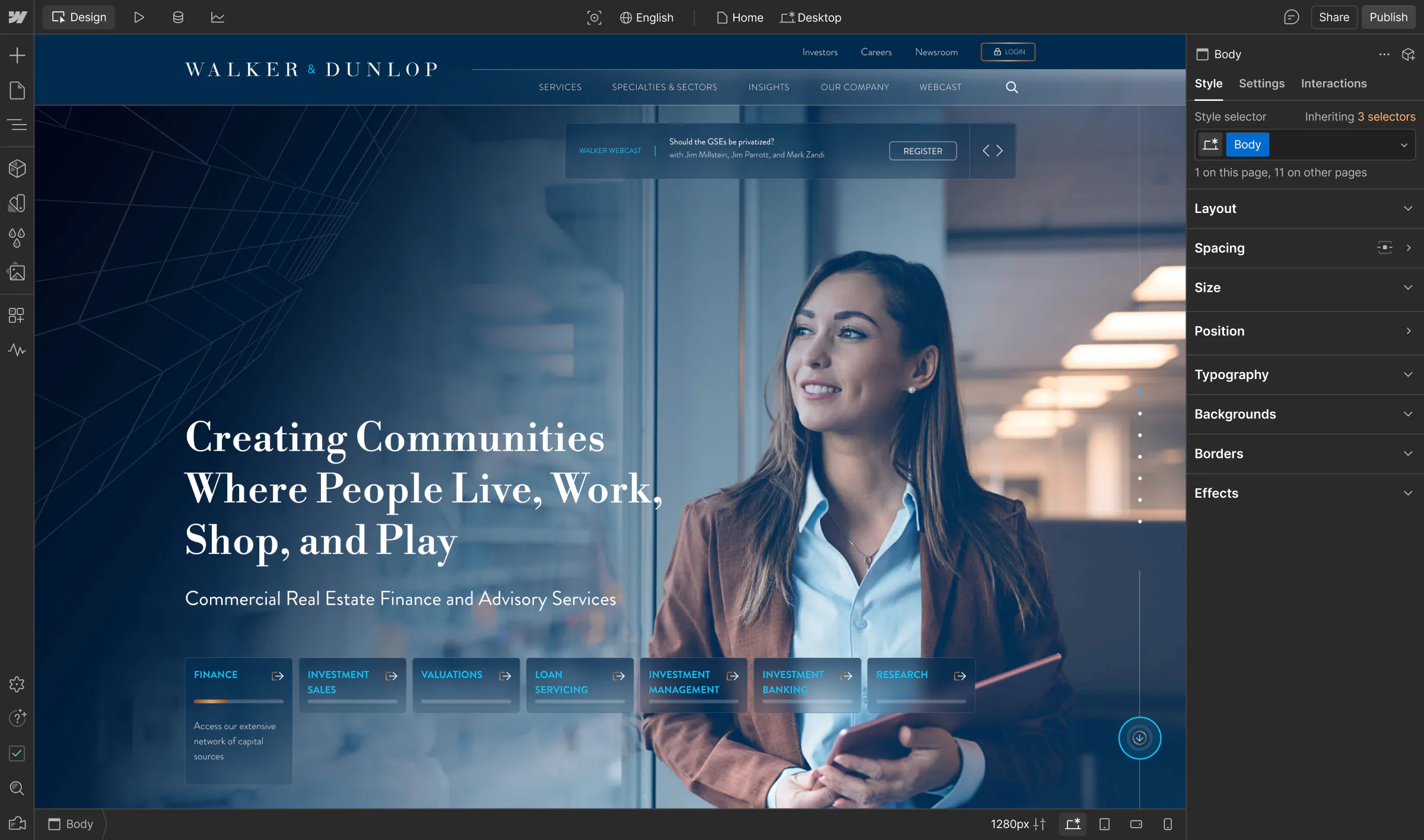
Nachdem sie Schwierigkeiten hatten, ein statisches, veraltetes CMS zu aktualisieren, das ihre moderne Marke nicht widerspiegelte, nutzte Walker & Dunlop Webflows WXP, um ihre Website in ein dynamisches, leistungsstarkes Verkaufs- und Marketinginstrument zu verwandeln, das das Engagement steigert und bedeutende Geschäftsergebnisse erzielt.

Analyze
Localization
Optimize
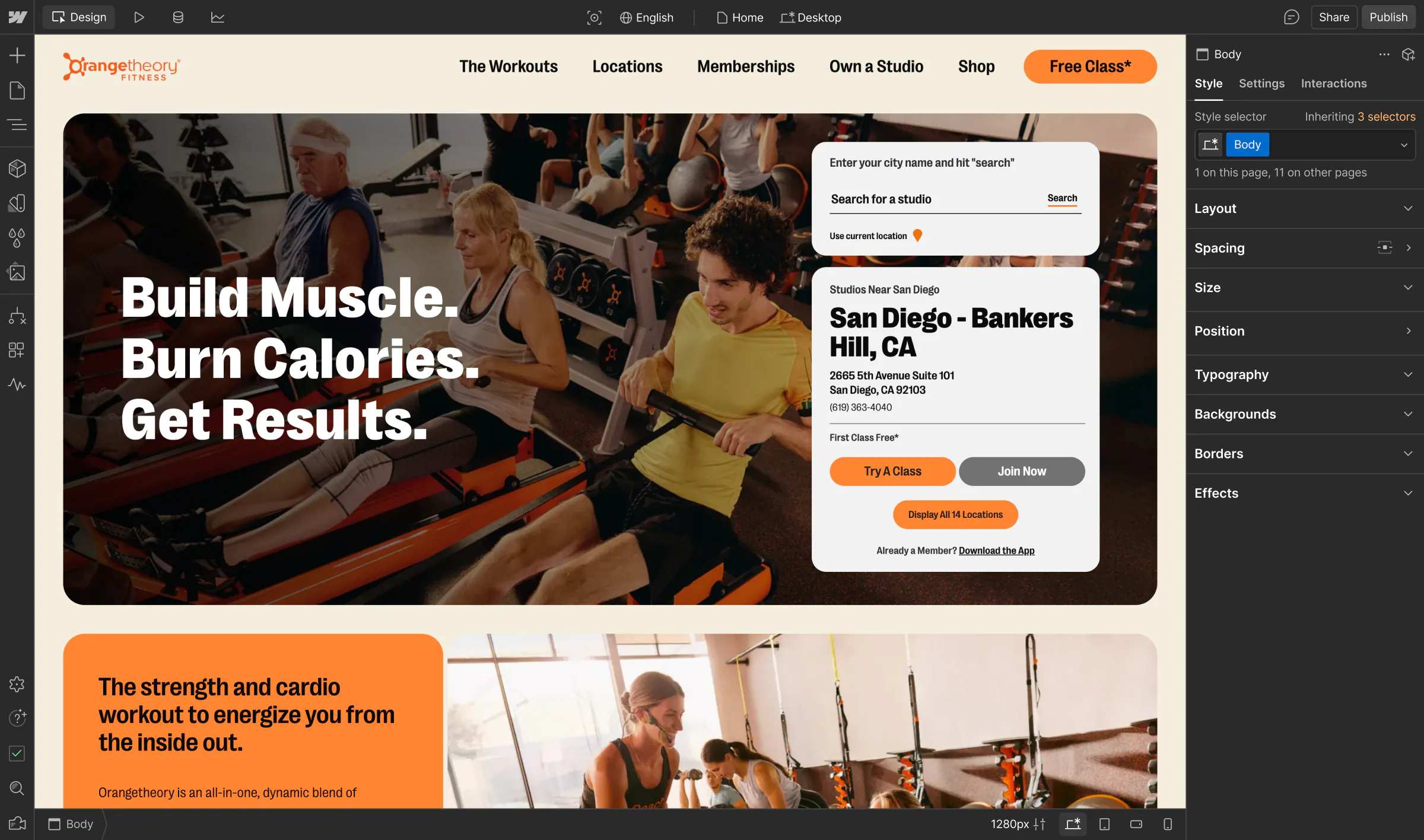
Der globale Fitness-Pionier erkannte die Notwendigkeit einer agilen und effizienten Webplattform, um sein Wachstum und seine Innovation zu unterstützen. Mit Webflows WXP verwandelten sie ihre digitale Präsenz, erschlossen neue Einnahmequellen und boten dynamische Inhaltserlebnisse weltweit an.

Analyze
Localization
Optimize
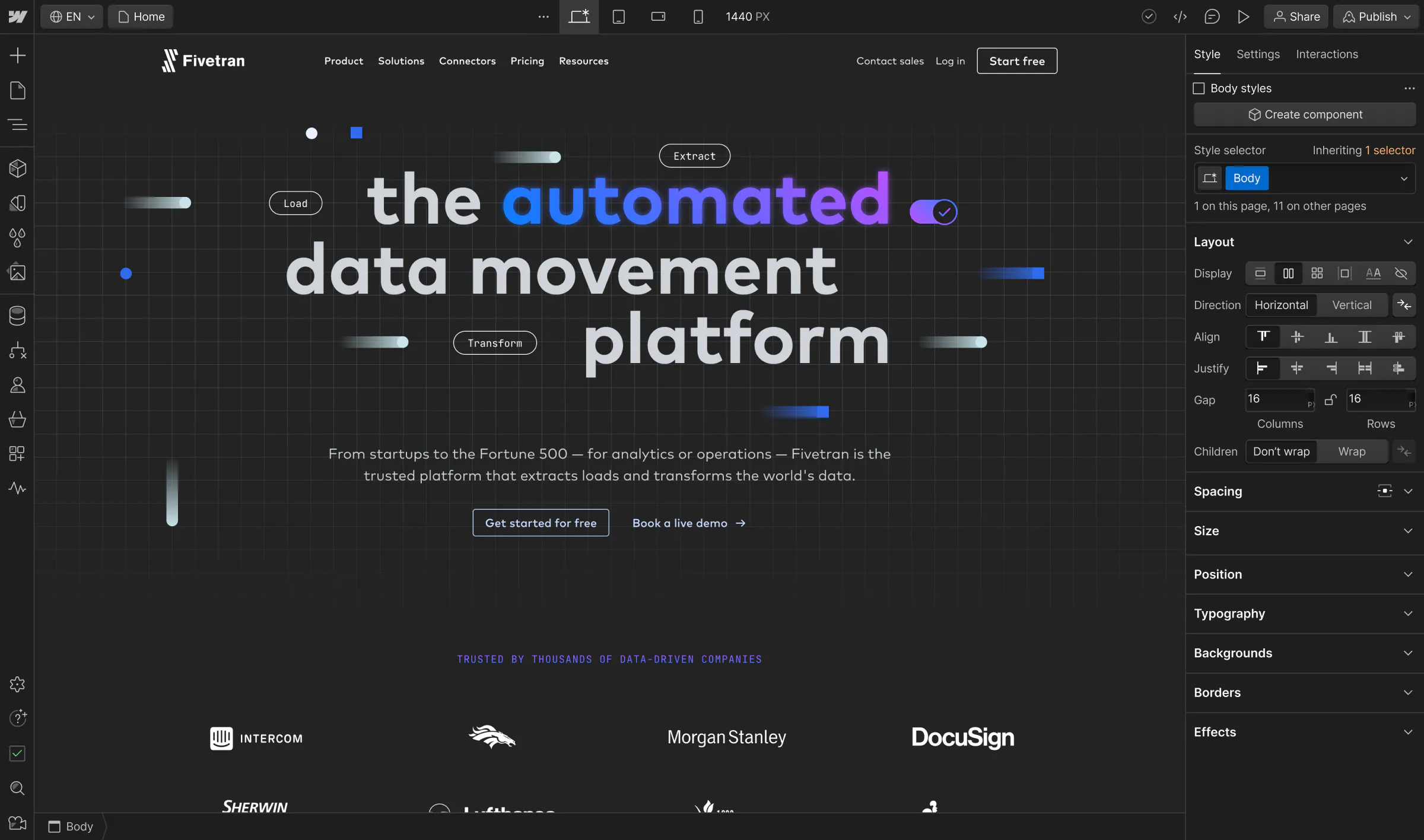
Auf der Suche nach einer Webentwicklungsplattform, die ehrgeizige Geschäftsziele unterstützen kann, wandte sich Fivetran an Webflow, um ihre Markteinführungszeit zu beschleunigen, die interne Zusammenarbeit zu verbessern und ihre digitale Präsenz auf die nächste Stufe zu heben.

Analyze
Localization
Optimize
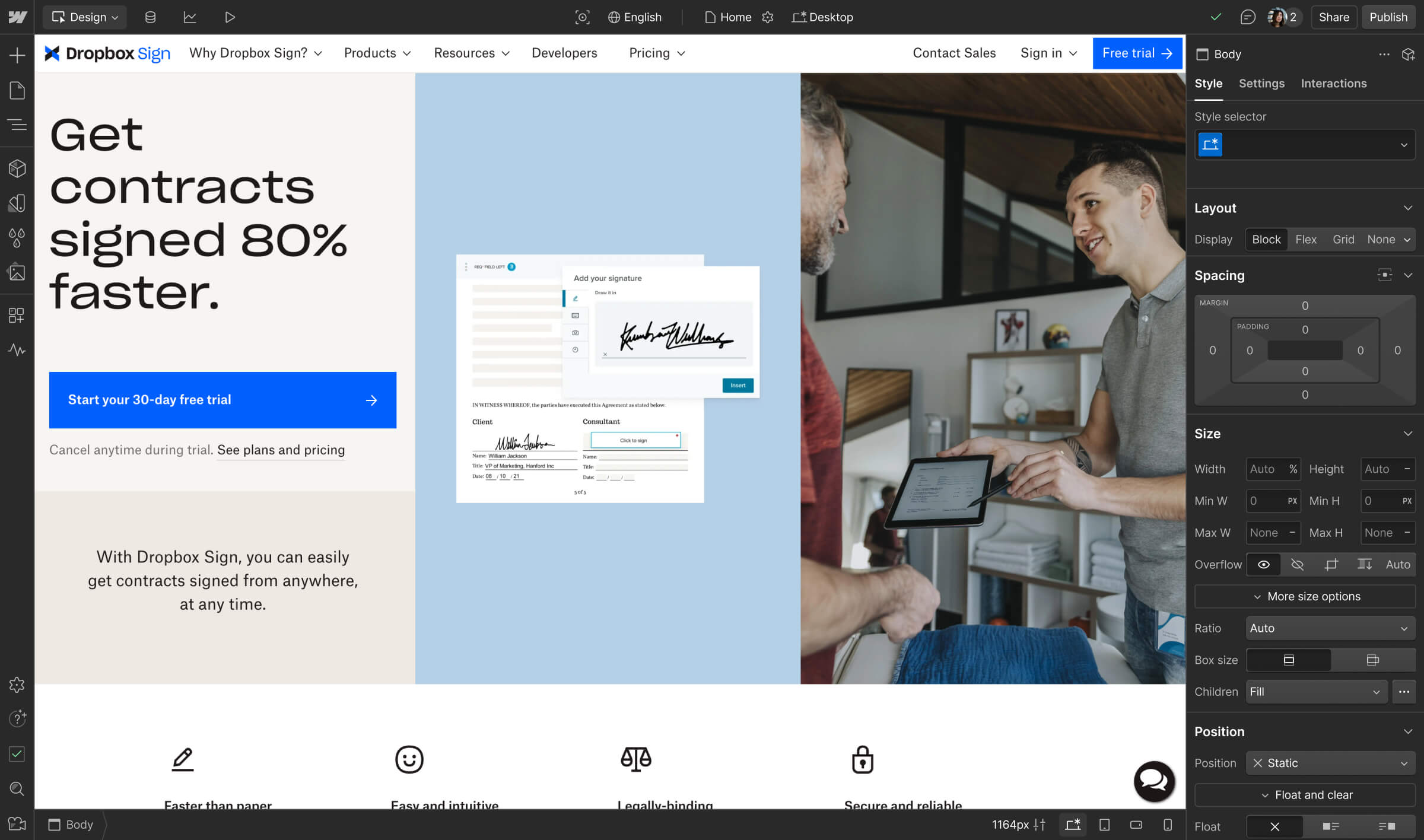
Ein integraler Bestandteil der Dropbox-Suite, nutzte Dropbox Sign Webflow, um Entwicklungsprozesse zu optimieren und damit seine Design- und Marketingteams zu befähigen, die wirkungsvollsten Dienstleistungen schneller bereitzustellen.

Analyze
Localization
Optimize
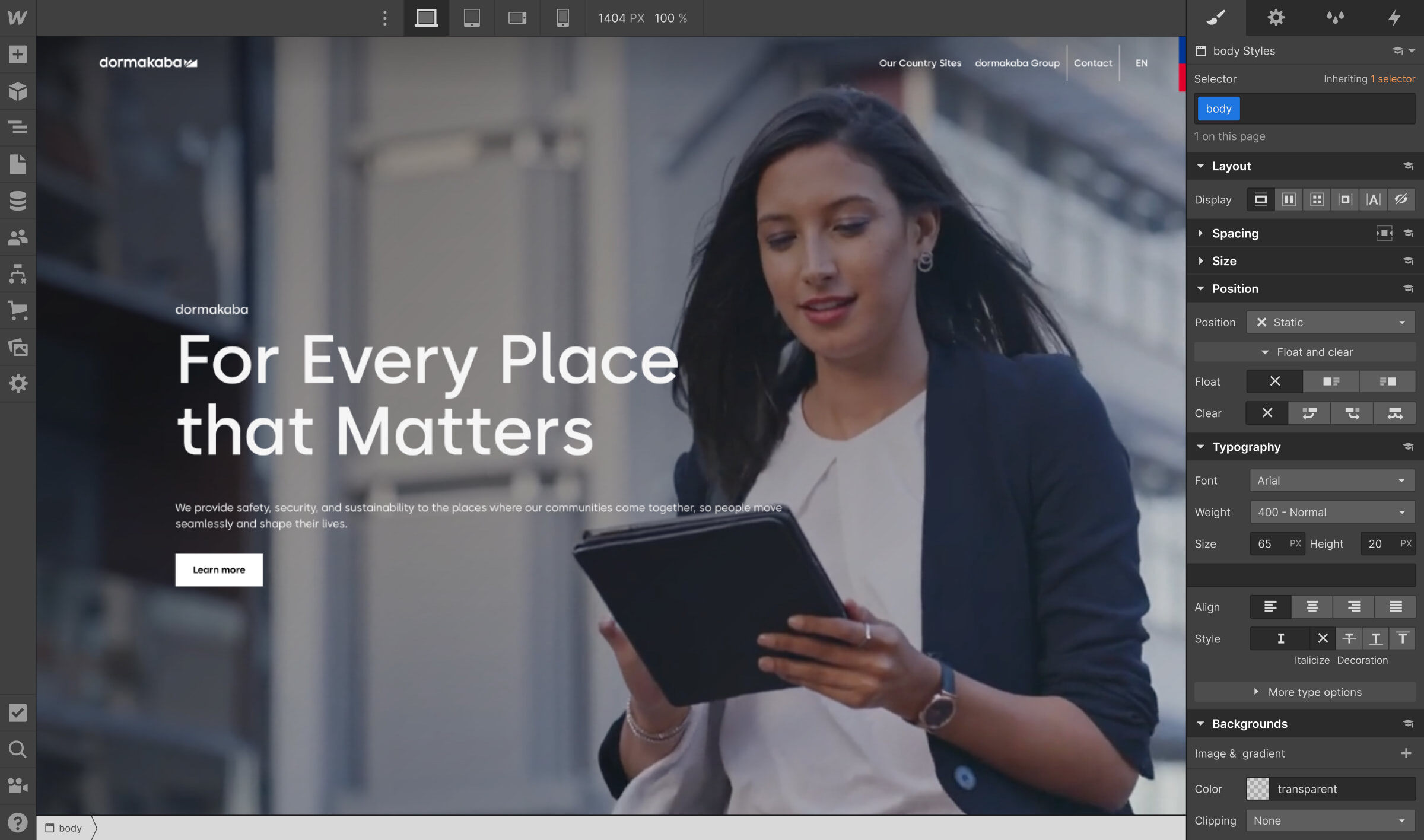
Auf der Suche nach einer Plattform, um einfach Microsites zu erstellen, Kosten zu senken und ihre Marke zu vereinheitlichen, wandte sich das führende Unternehmen für Zugangskontrolle an Webflow, um neue Webseiten zu erstellen, die ihren globalen Markenstandards entsprachen.
Explore more stories

Analyze
Localization
Optimize
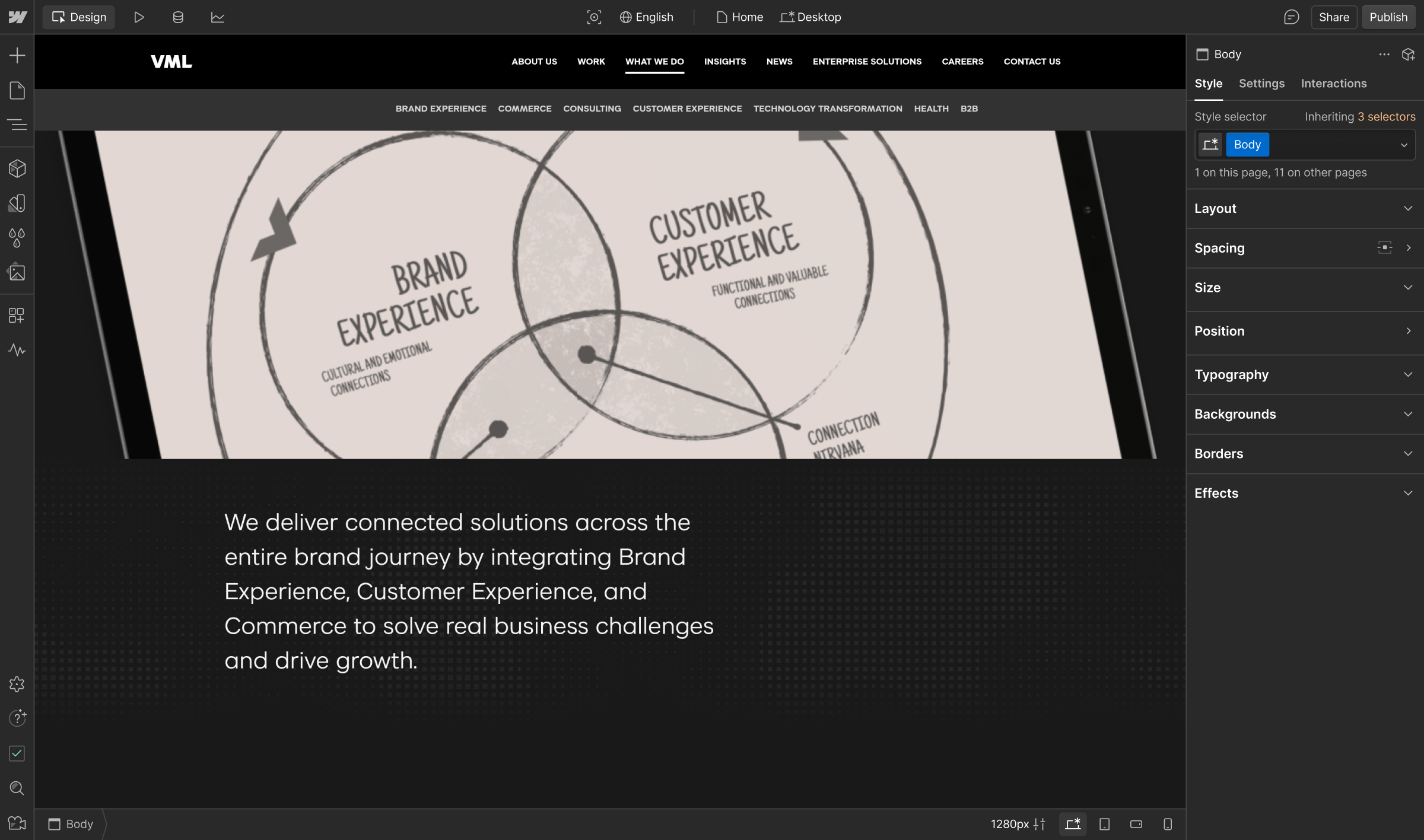
VML builds and manages web experiences for some of the world's most recognizable brands, from Ford to Wendy's to the Brisbane 2032 Olympic and Paralympic Games, as well as much-loved local destinations like South Bank. As client expectations shifted, brands started asking for a faster, more flexible alternative to heavyweight builds, without trading away an ounce of craft. That led VML to Webflow, where its teams now build at pace, at scale, and with plenty of room to play.

Analyze
Localization
Optimize
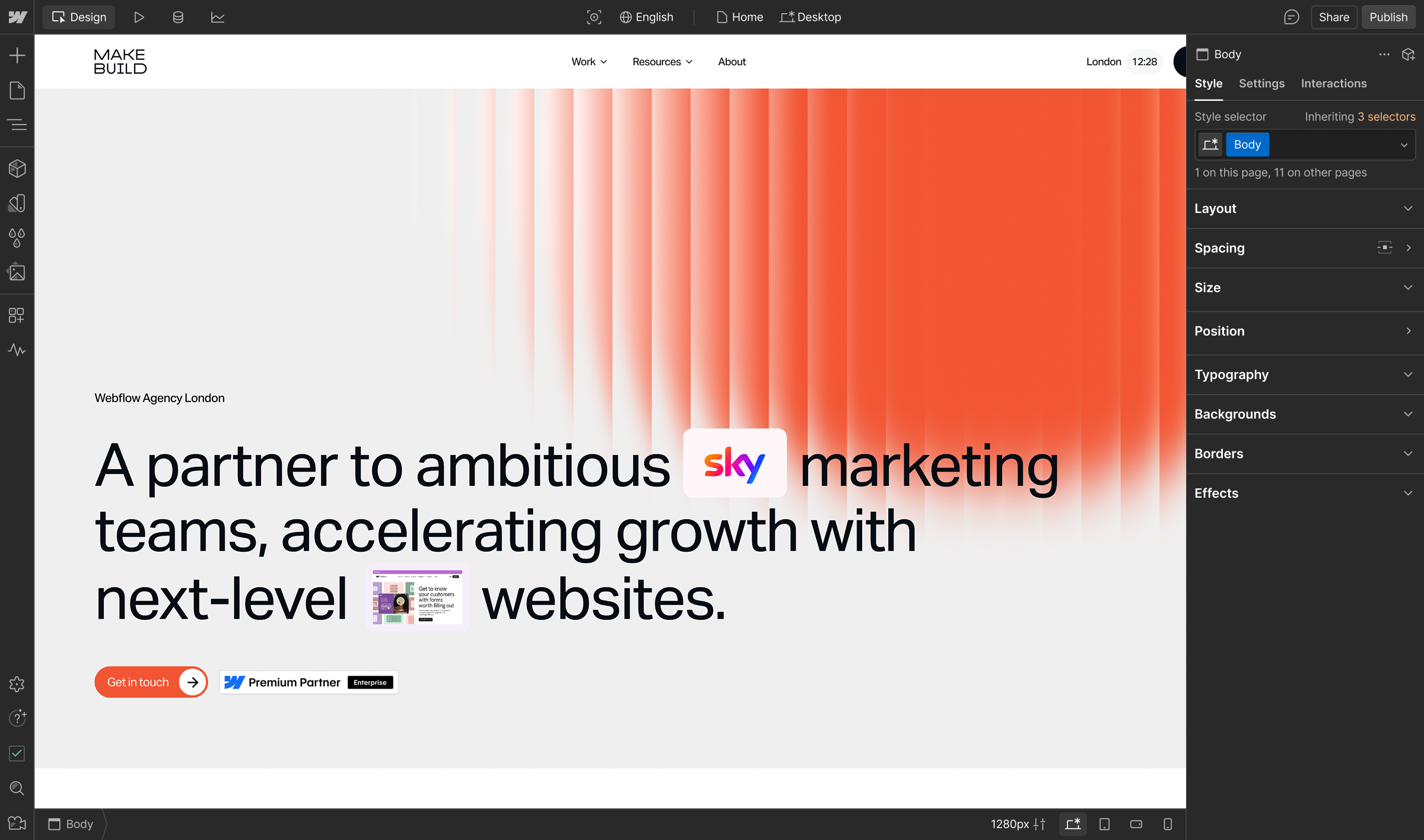
MakeBuild treats a website launch as the starting point, building sites that are designed to grow, adapt, and drive measurable commercial outcomes over time. MakeBuild brings together strategic clarity, considered design, and deep Webflow expertise to solve problems that go beyond the brief, from helping marketing teams take back control of their web presence, to building the kind of flexible, high-performing sites that compound in value as the business scales.

Analyze
Localization
Optimize
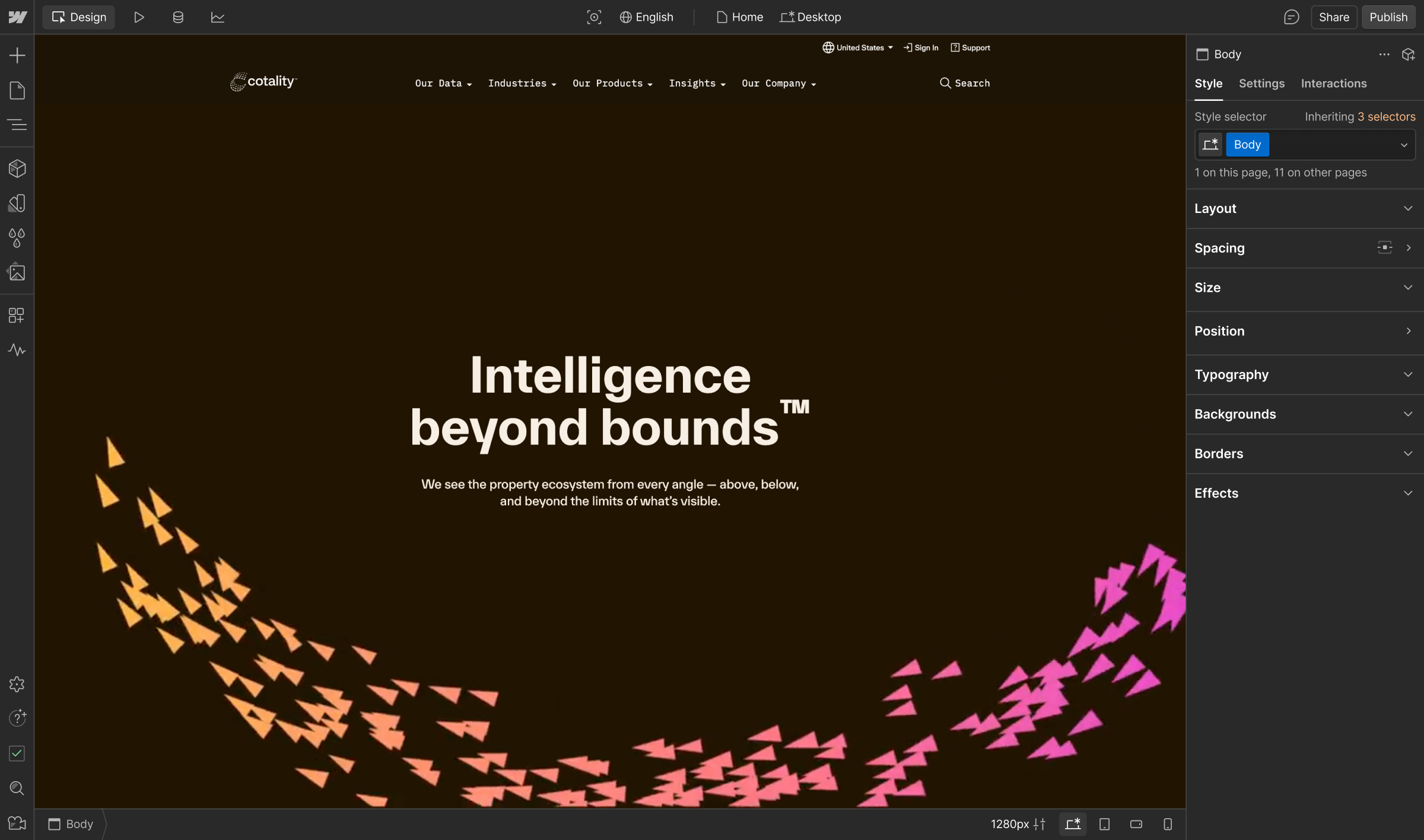
Cotality hatte einen neuen Namen und rund 90 Tage Zeit, ihn weltweit einzuführen. Gleichzeitig wurde KI-Sichtbarkeit zu einer Priorität für die Führungsebene, wodurch strukturierter Content, Lokalisierung und Governance für die nächsten Schritte unverzichtbar wurden. Cotality entschied sich für Webflow, um eine globale Plattform einzuführen, ohne den Umsatz zu beeinträchtigen, und so die Grundlage für die nächste Phase der KI-Arbeit zu schaffen.
Analyze
Localization
Optimize
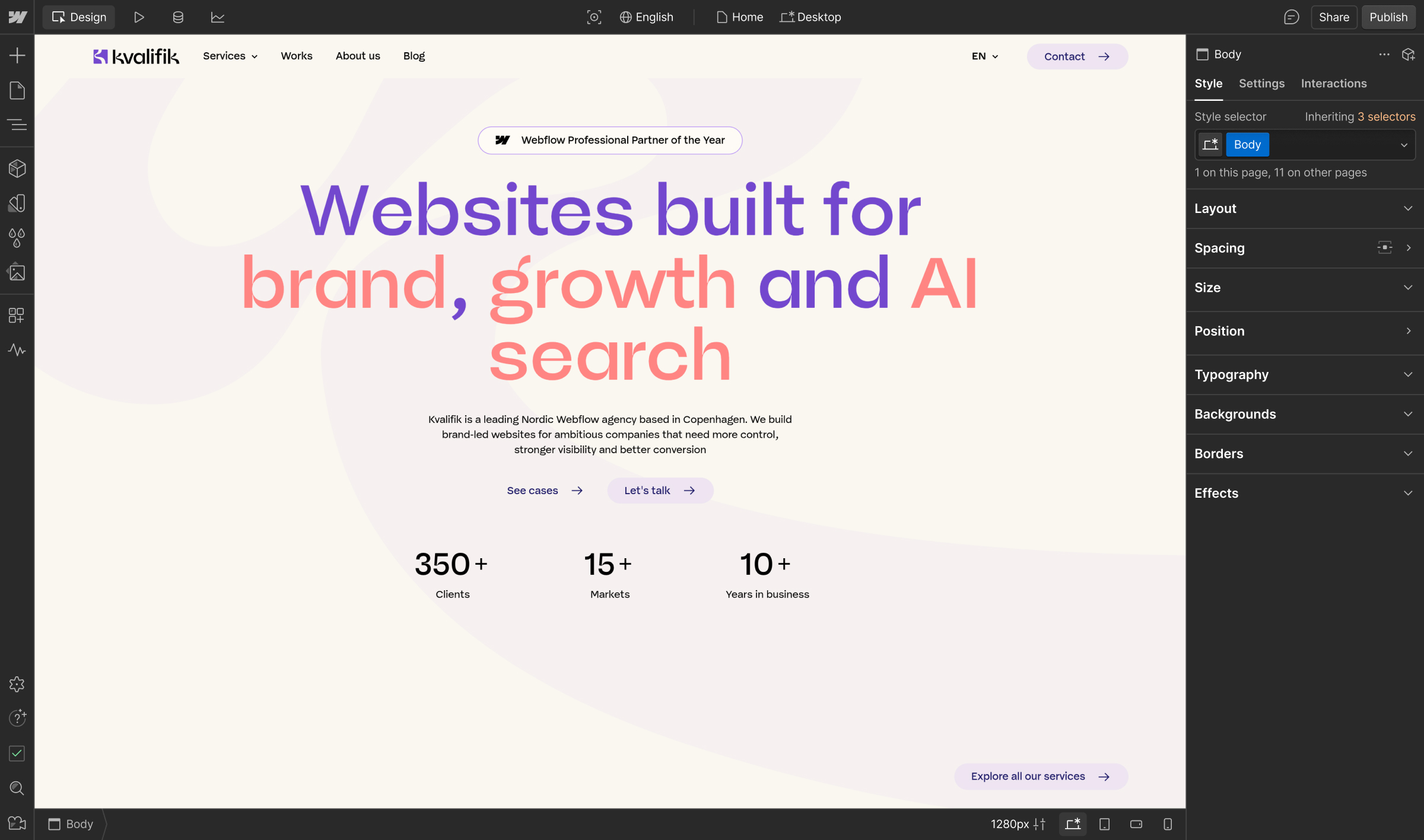
Since 2015, Kvalifik has bet on something many agencies weren't ready for: the people who grow a business should also shape its website. That belief led the Danish agency to Webflow before it became an enterprise platform. Today, Kvalifik has delivered 100+ Webflow projects, migrated 20,000+ pages, and earned Webflow's 2025 Professional Partner of the Year award. Kvalifik now helps European companies build sites that let marketing teams move fast while designers and developers focus on higher-value work — backed by enterprise-grade governance, scalability, and security.

Analyze
Localization
Optimize
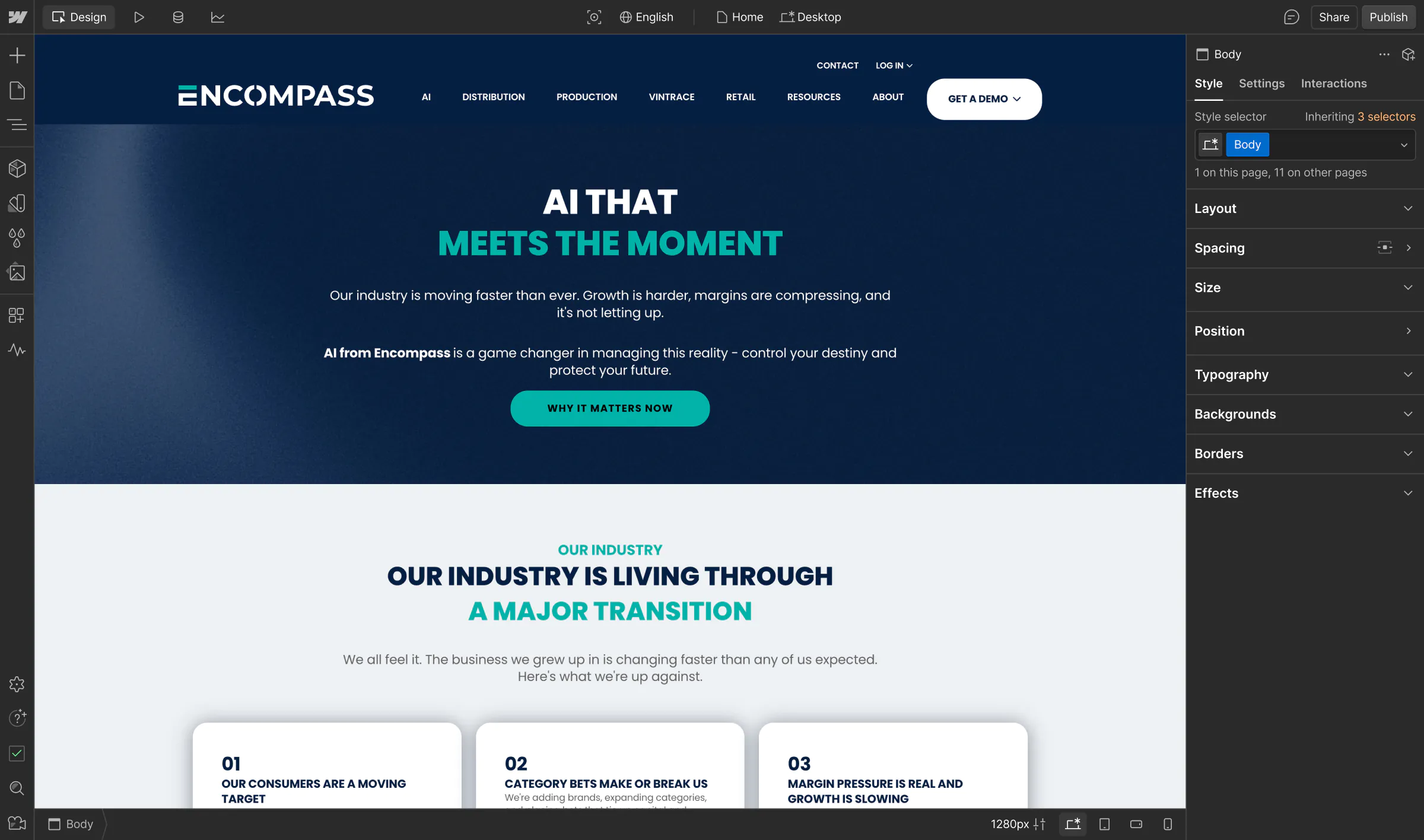
Wenn das Marketingteam von Encompass eine Änderung vornehmen wollte, erstellte es ein Ticket und wartete. Drei übernommene Marken bedeuteten drei voneinander getrennte Websites und keinerlei Unabhängigkeit beim Veröffentlichen. Nach der Migration zu Webflow konsolidierte das Team alles und übernahm die vollständige Verantwortung für seine digitale Eingangstür.
Analyze
Localization
Optimize
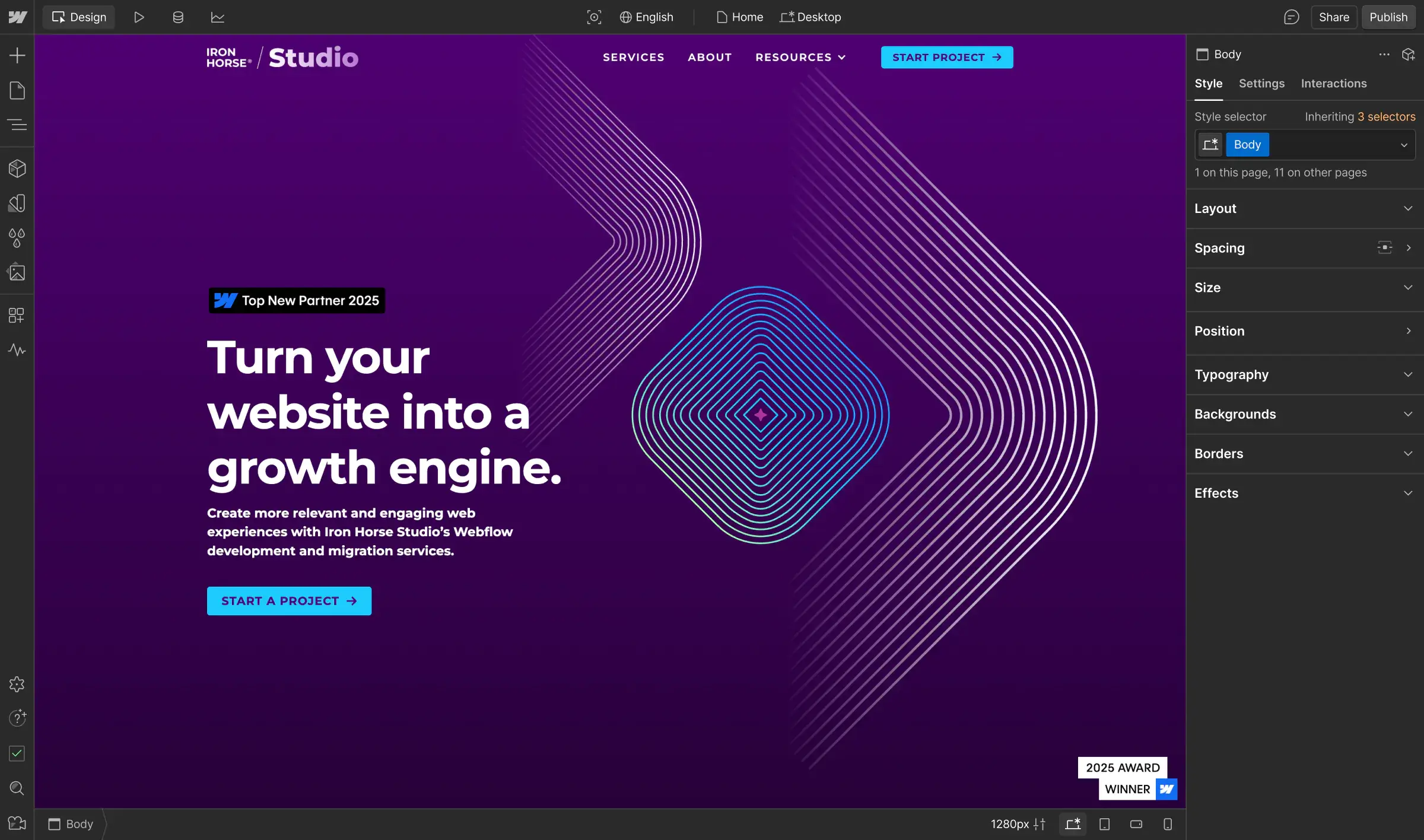
After 26 years building growth strategies for enterprise brands, Iron Horse discovered Webflow in October 2024 — and went all in. With Webflow Enterprise, Optimize, and Cloud, they broke free from developer bottlenecks, doubled win rates on web-led deals, and launched an entirely new business: Iron Horse Studio


Analyze
Localization
Optimize
N4 went all-in on Webflow Enterprise three years ago, evolving from a multi-platform agency into a specialized partner that tackles the most complex migrations and digital transformations. By deeply embedding Webflow's capabilities — especially Optimize — into their strategic approach, they've become the go-to partner for enterprises looking to break free from legacy platforms like Adobe Experience Manager.

Analyze
Localization
Optimize
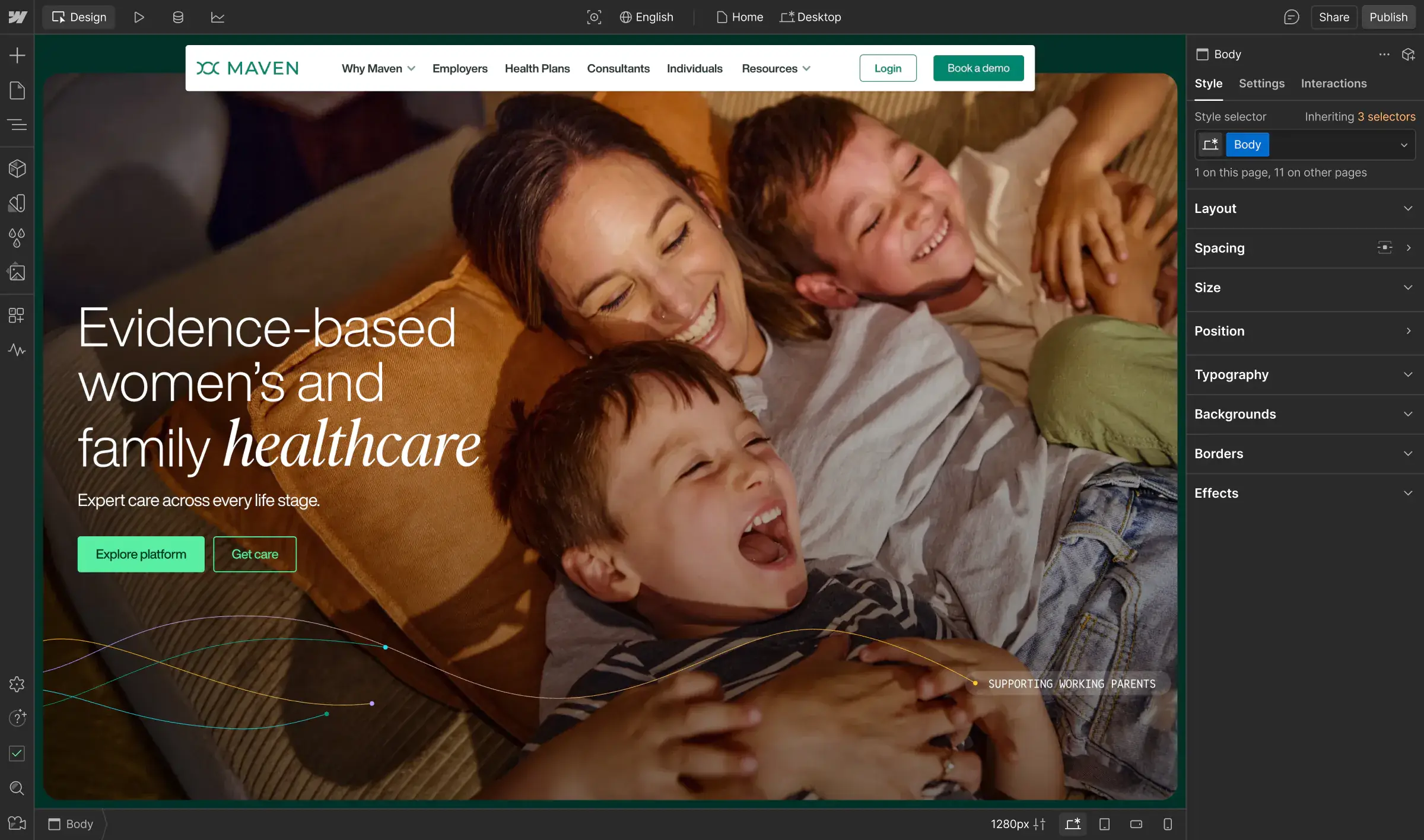
Nach dem Kampf mit einer Einheitslösung hat Maven mit dem Webflow-Partner N4 auf Webflow Enterprise neu aufgebaut, um mehreren Zielgruppen besser zu dienen. Das moderne, modulare System unterstützt echtes Testen, globale Lokalisierung und eine reibungslosere Zusammenarbeit zwischen Marketing und Design.

Analyze
Localization
Optimize
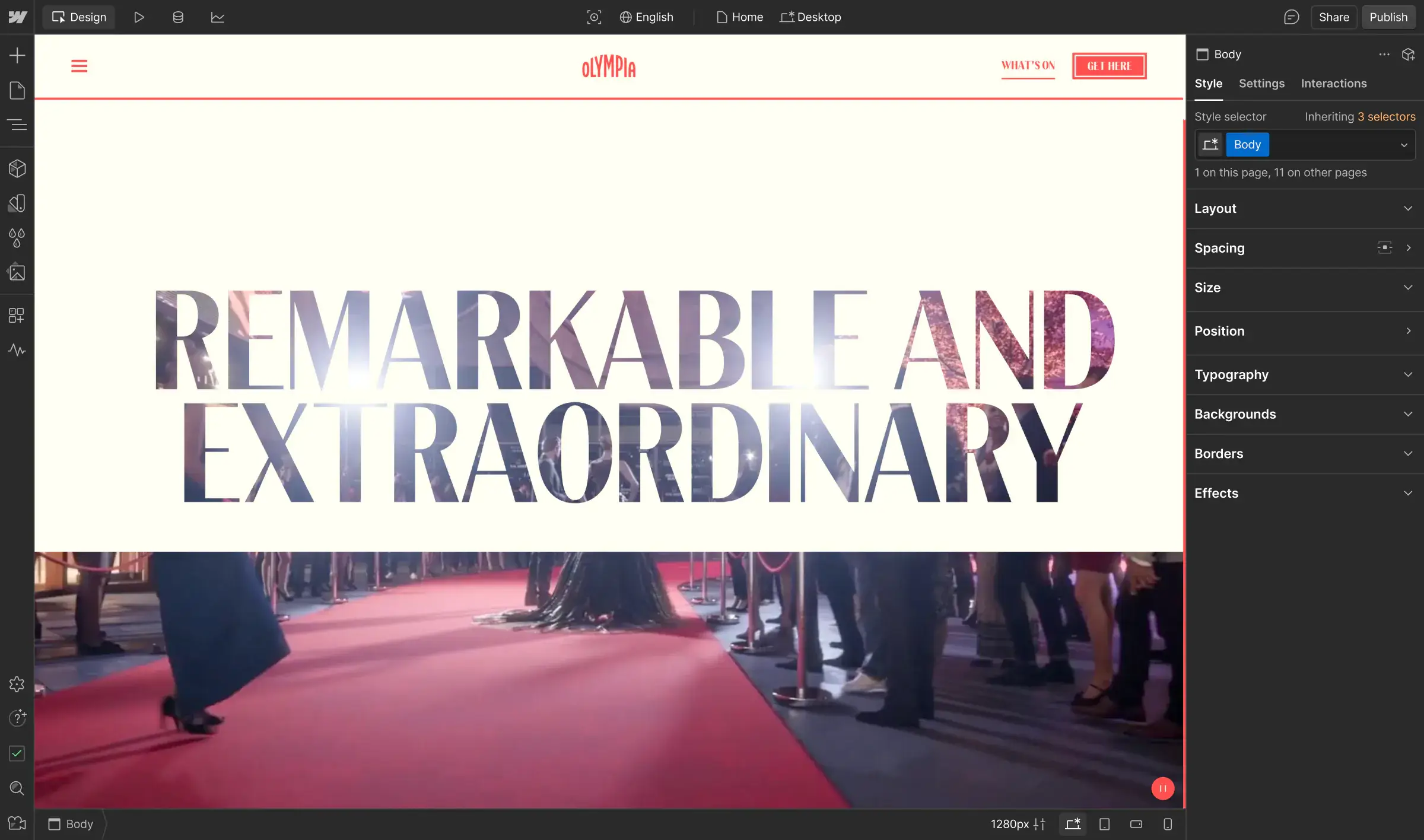
In Erwartung der Eröffnung ihres neu gestalteten physischen Ziels benötigte Olympia ein digitales Zuhause, das zu einer Investition von 1,3 Milliarden Pfund in die Transformation dieses ikonischen Standorts in London vom Ausstellungsort zum neuesten Unterhaltungsziel der Hauptstadt passt. Mit Webflow und N4 betreibt das Team jetzt eine flexible, skalierbare Website, die für beispiellose Personalisierung und Wachstum entwickelt wurde.

Analyze
Localization
Optimize
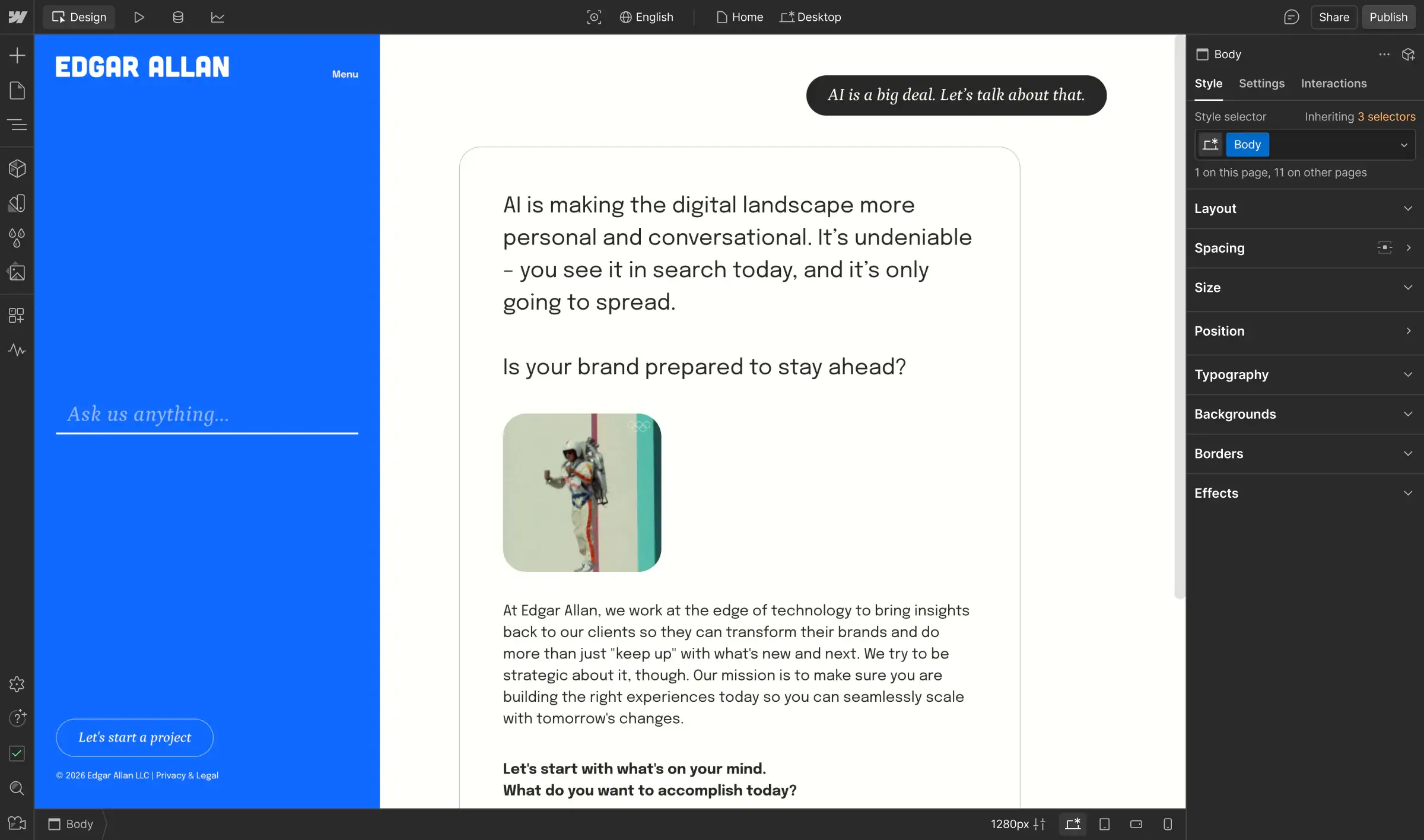
Wie viele Agenturen war Edgar Allan mit langsamen Plattformen, schweren Übergaben und langsamen Nachbearbeitungen nach dem Start nicht zufrieden. Durch die Einführung von Webflow vor mehr als einem Jahrzehnt haben sie ein modernes Agenturmodell angenommen, das eine innovativere, skalierbare Möglichkeit bietet, zu entwerfen, zu bauen und zu optimieren.

Analyze
Localization
Optimize
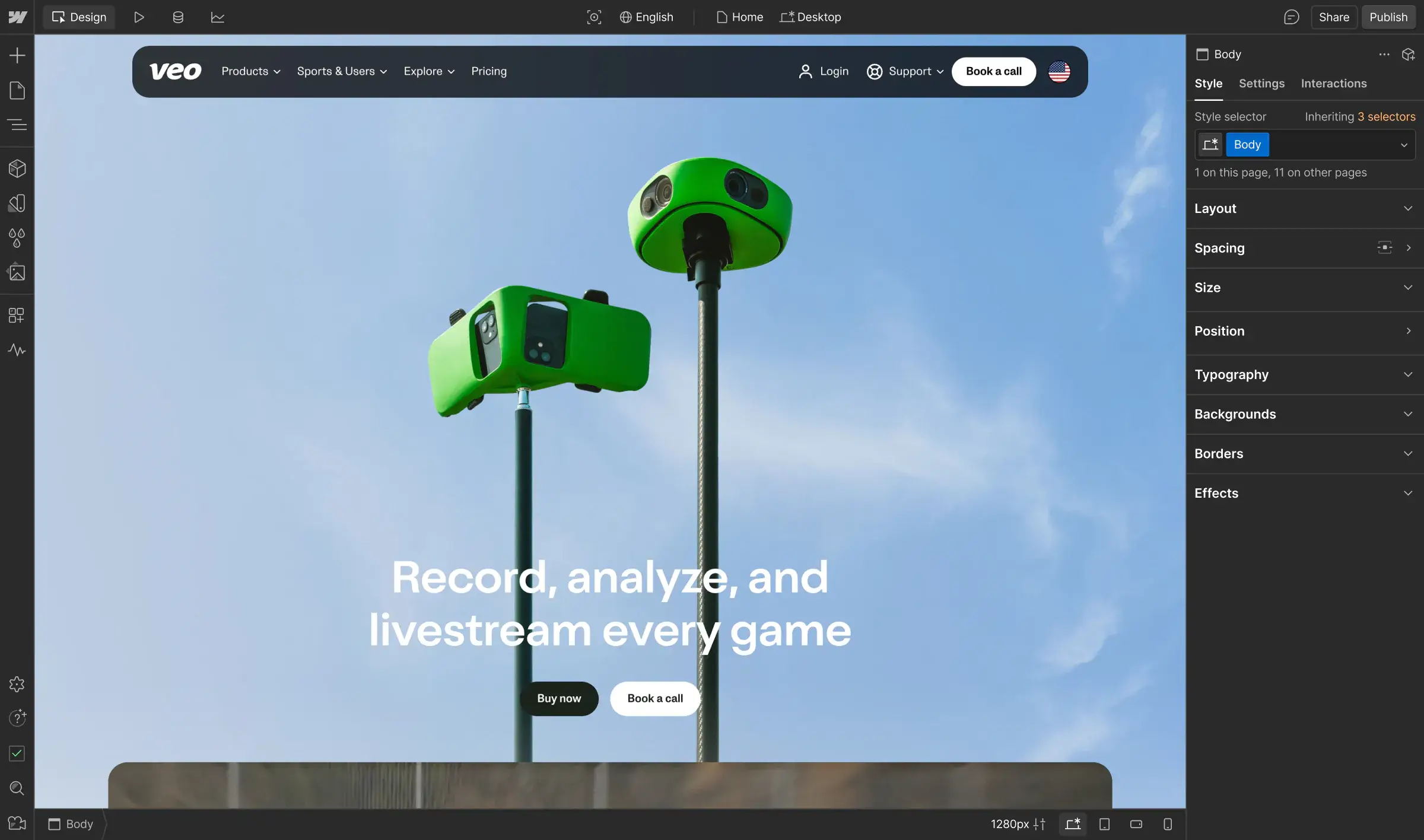
Nach Jahren langsamer, entwicklerlastiger Arbeitsabläufe hat Veo die Kontrolle über ihre Website mit Webflow Enterprise und dem Enterprise-Partner Kvalifik zurückgewonnen. Jetzt bewegt sich das Team schnell, veröffentlicht globale Inhalte mühelos und passt die Kundenreisen für jeden Sport und Markt an.
Analyze
Localization
Optimize
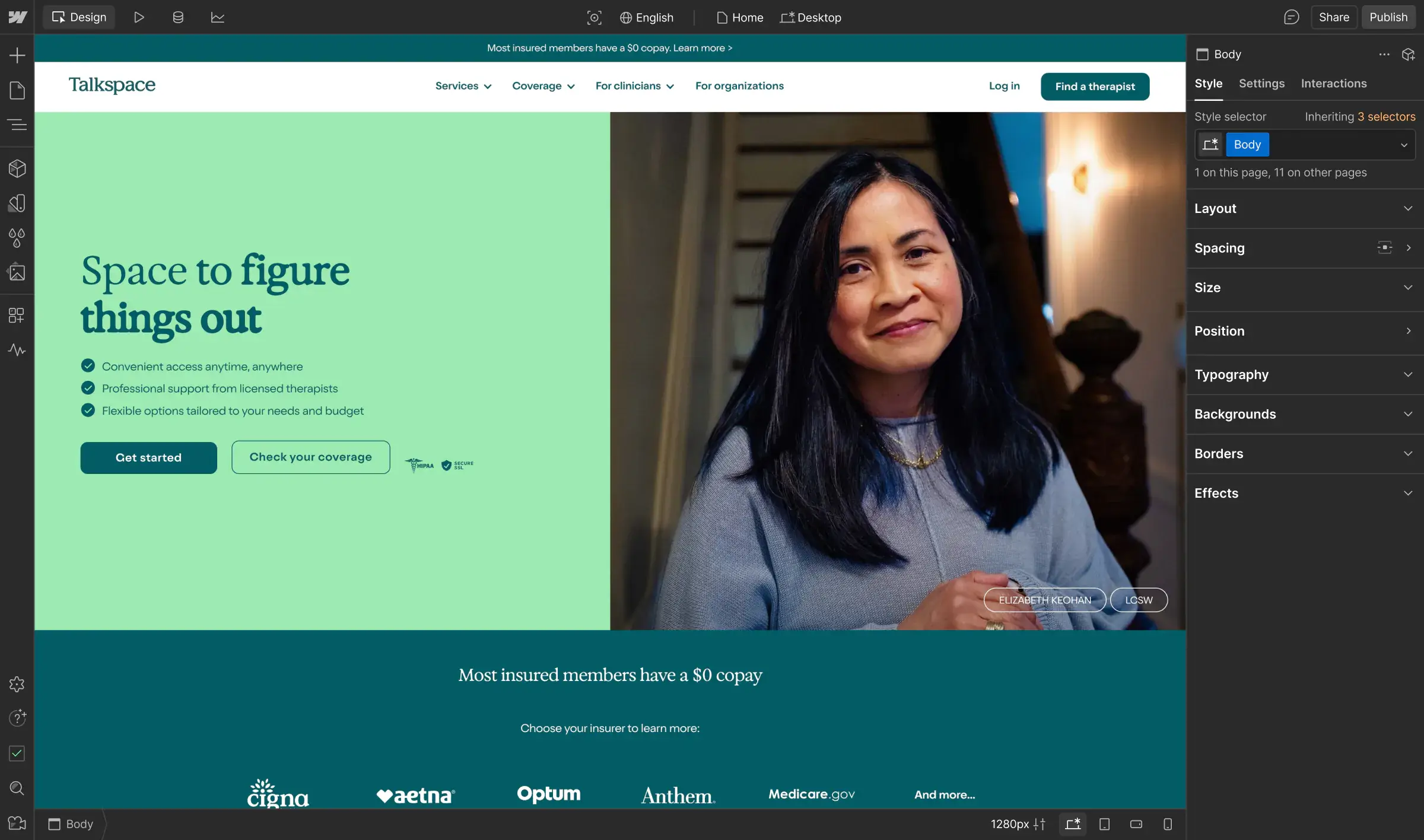
Talkspace benötigte eine Möglichkeit, ihre digitale Präsenz und Markenidentität zu vereinheitlichen. Mit Webflow Enterprise dauern Updates jetzt nur noch Stunden, neue Seiten werden 7x schneller gestartet, und das Team kann sich auf seine Mission konzentrieren, den Zugang zur psychischen Gesundheitsversorgung zu erweitern.

Analyze
Localization
Optimize
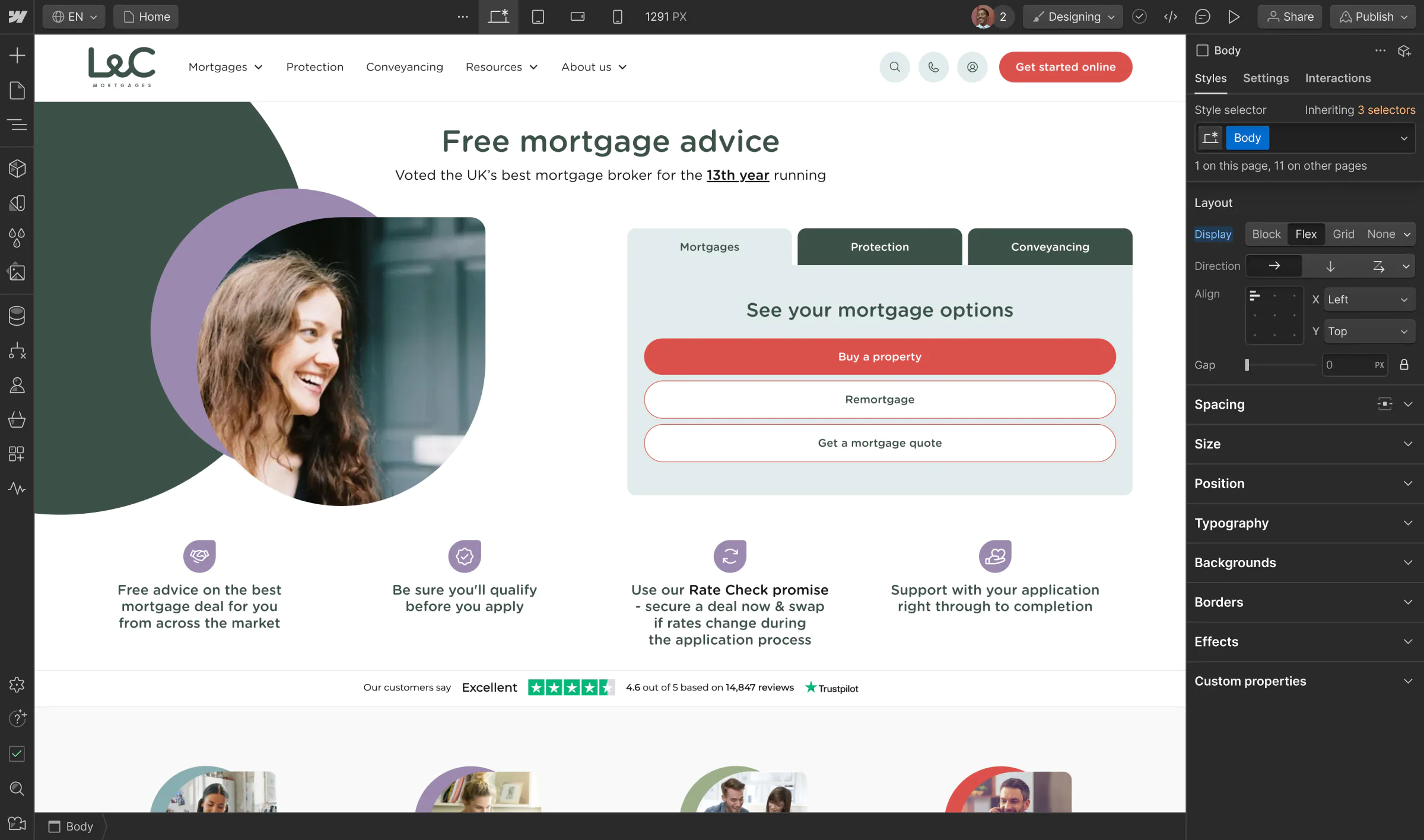
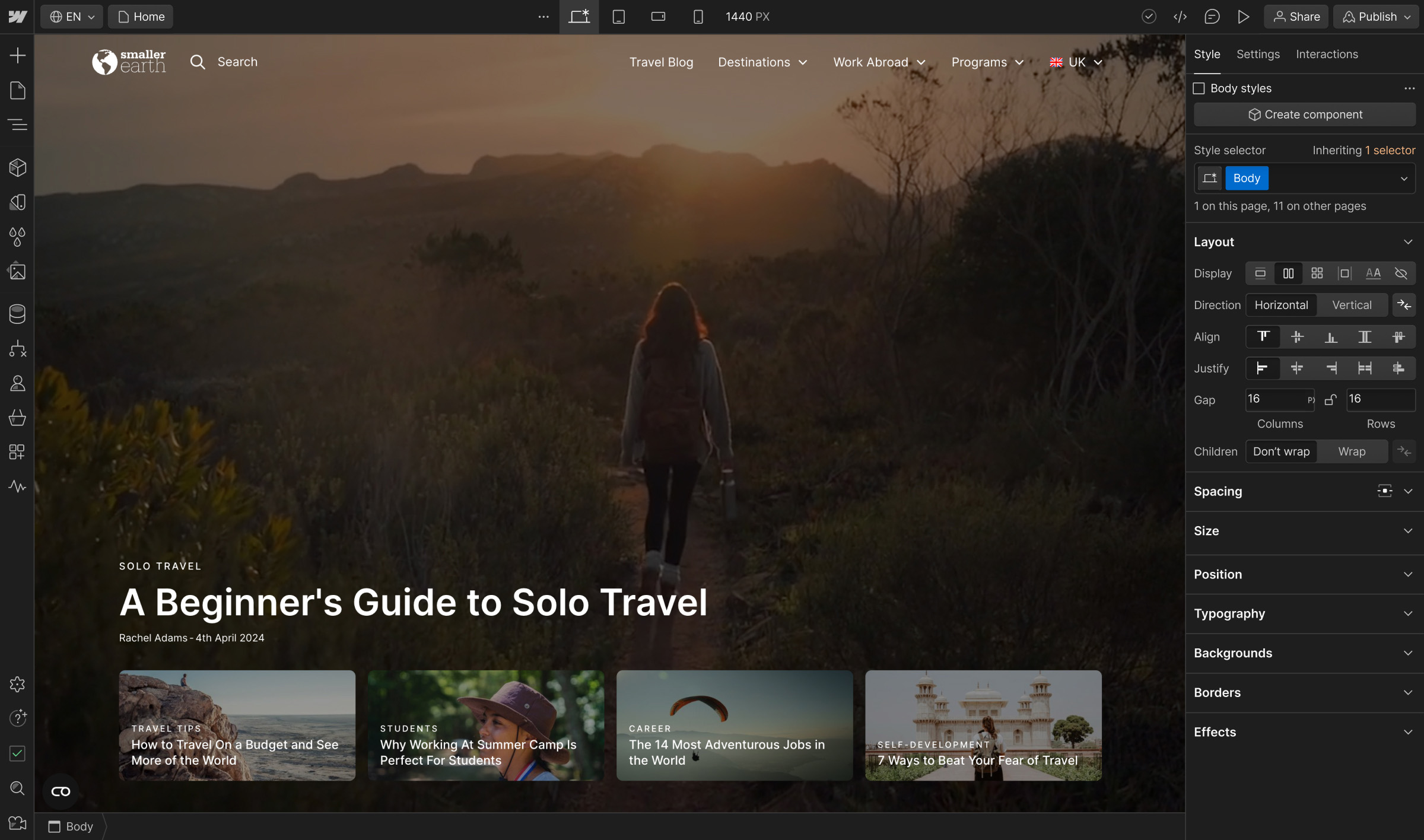
Seit Jahren erstickte eine maßgeschneiderte, veraltete Website die Kreativität des provisionsfreien Hypothekenmaklers, und lange Entwicklungszyklen machten selbst die einfachsten Änderungen mühsam. Jetzt hat das Marketingteam von L&C die Flexibilität, ihr Wachstum mit einer skalierbareren Webpräsenz wirklich selbst in die Hand zu nehmen.

Analyze
Localization
Optimize
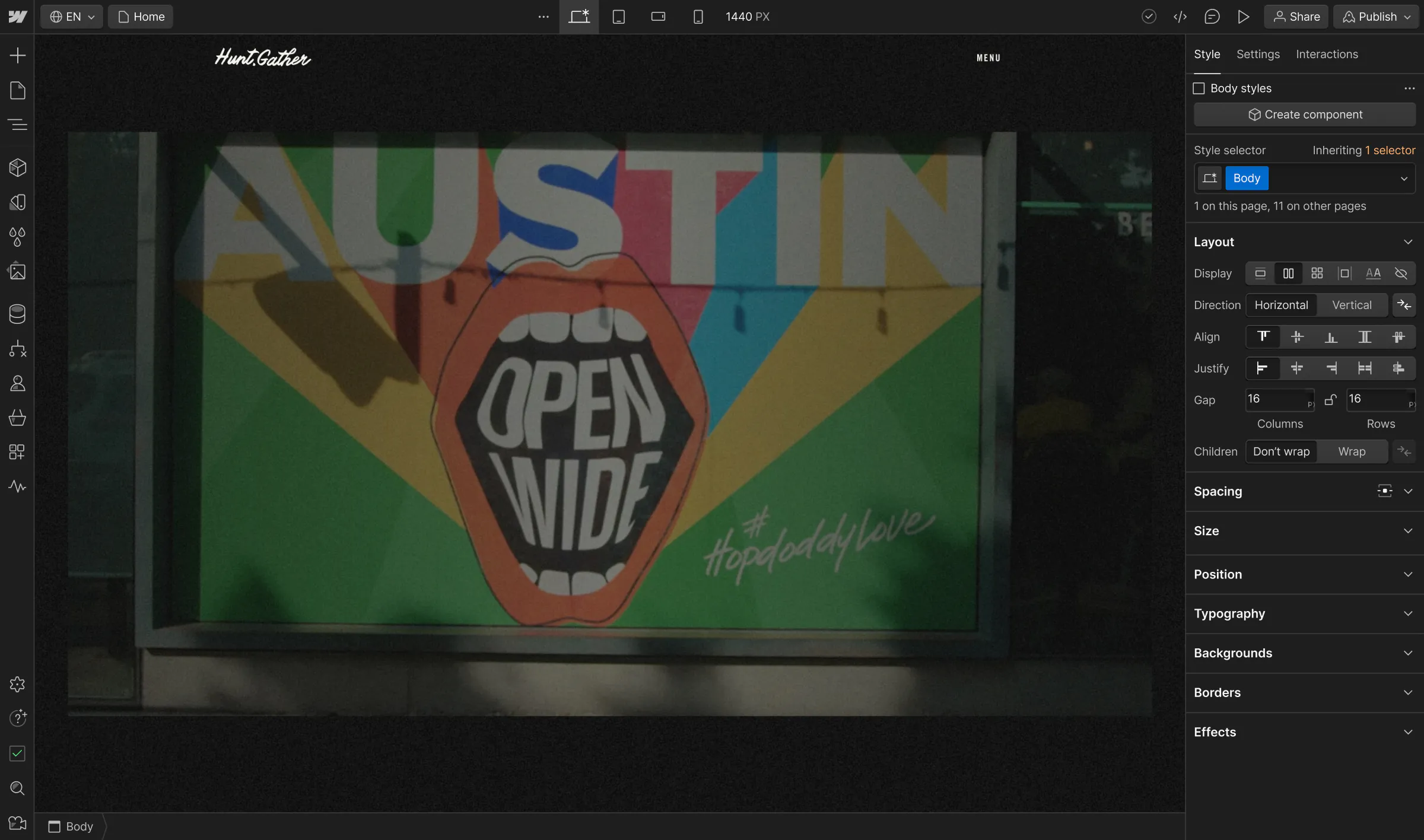
Früher auf Entwickler angewiesen, um benutzerdefinierte Websites zu starten und zu verwalten, hat die Kulturaustauschgruppe die Lokalisierung mit Webflow Enterprise optimiert, was die Markteinführungszeit erheblich verkürzt und maßgeschneiderte, markenbezogene Erlebnisse weltweit bietet.

Analyze
Localization
Optimize
Die Full-Service-Kreativagentur kann ihre charakteristische Hochdesign-Arbeit liefern, ohne auf Entwickler warten zu müssen, was letztendlich Zeit spart und die Tür zu weiteren Kundenmöglichkeiten öffnet.

Analyze
Localization
Optimize
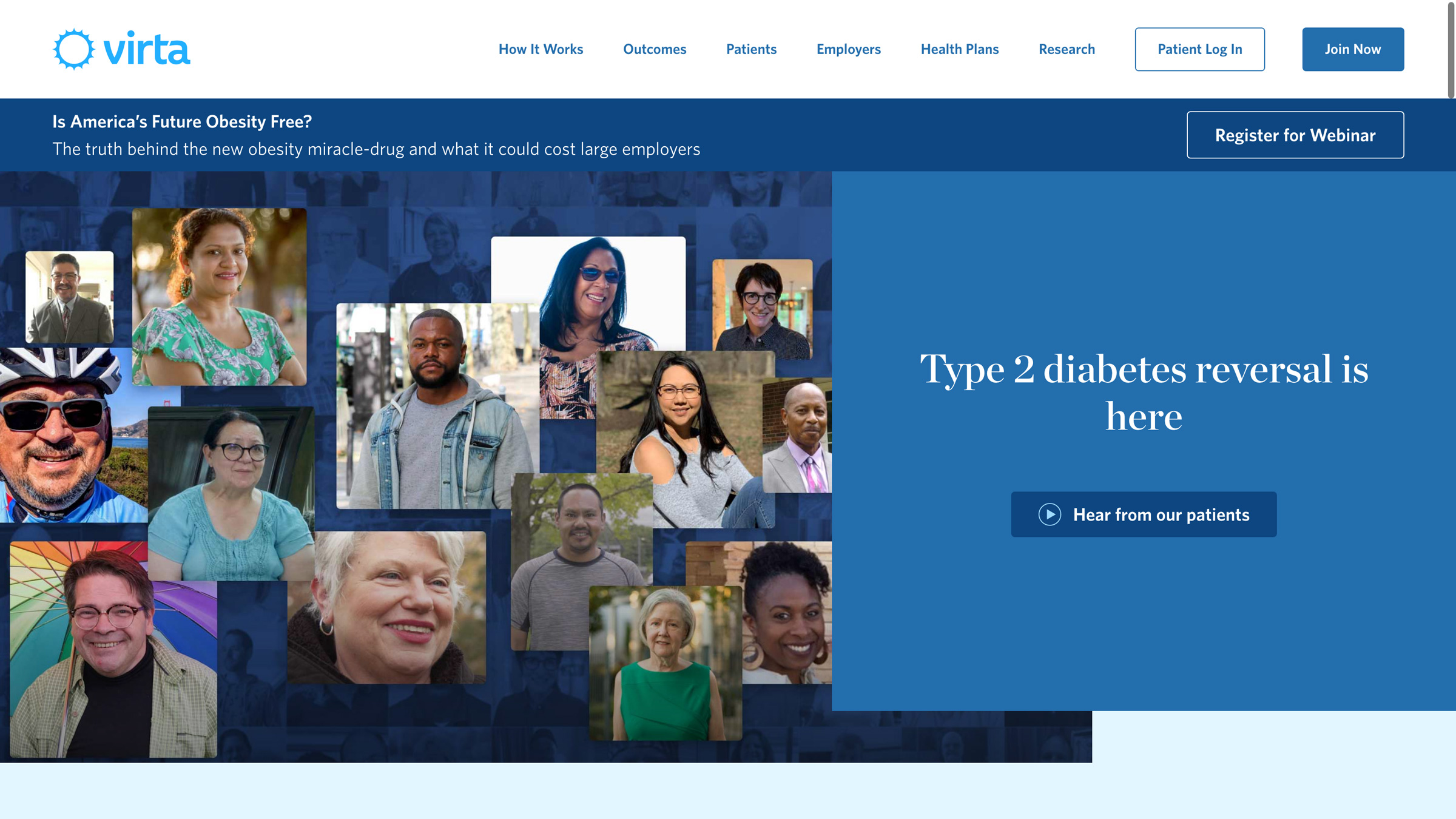
Virta hat mit ihrem Umstieg auf Webflow viel mehr als ein flexibles CMS gewonnen – sie haben auch ein neues Niveau der Zusammenarbeit, Kreation und Zugänglichkeit erreicht.












Jetzt kostenlos loslegen
Try Webflow for as long as you like with our free Starter plan. Purchase a paid Site plan to publish, host, and unlock additional features.
Try Webflow for as long as you like with our free Starter plan. Purchase a paid Site plan to publish, host, and unlock additional features.