







How Hakim Group scaled site production 400% with Webflow MCP
Hakim Group, the UK and Ireland's largest family of independent opticians, needed to scale over 500 individually branded optician websites without losing what makes each practice unique. After migrating to Webflow Enterprise, and leveraging agentic migration workflows via Webflow MCP, the team increased site production 400%. Their goal is to reach 1,000 unique sites in the next 3-4 years.

Unlock your site’s full potential with best practices vetted by our experts. Learn the Webflow Way.
“Webflow was so much further advanced than anyone else in terms of speed, ease of use, and feature breadth. This allowed us to achieve an ambitious roadmap with our existing team"

Safeguarding the brand independence of 550+ practices across 450+ local brands
Hakim Group is the UK and Ireland's largest family of independent opticians. Founded in 2005 by Dr. Imran Hakim, the Group has over 500 individual partner practices who each retain their brand identity and clinical independence while accessing Hakim Group's centralized support.
Managing, migrating and maintaining a growing estate of more than 550 independent optician sites from a single platform was a complex multi-site governance challenge. Webflow Enterprise gave Hakim Group a platform proven at multi-site scale. Webflow agency Demandflow, which employs an MCP-driven migration process and specializes in developing sites for scale, worked closely with Hakim Group.
Deploying Webflow MCP pushed migration rates from six to eight websites a month up to 30. Hakim Group's relatively small team has been able to build websites and move faster than ever before.
When 500 individually branded websites become impossible to manage
We've inherited about 500 different individual small websites managed across so many different systems it was just absolute chaos. Everything from wild old Joomla sites that somebody had built in a basement to terrible WordPress sites. It was really hard to change anything.
— David Souliotti-Barker, Head of Growth, Hakim Group
When David Souliotti-Barker joined as Head of Growth, he inherited legacy Joomla builds, fragile WordPress sites, a partially completed migration to Wix, and a custom .NET/Umbraco platform that couldn't flex to fit the practices using it.
The operational cost was real. One year, with around 400 live sites, the team had to log into every single one manually to update Christmas opening hours, only to discover that whoever had built each site had linked opening hours to something else entirely. Every fix created a new problem. Custom integrations were a huge amount of management work for us, he emphasizes.
At first, David wanted to standardize everything: one template, locked in place and rolled out across the board. He quickly abandoned that approach. Hakim Group's practices do not operate like franchise units. Their patients are deeply loyal, third-generation regulars. Erasing 500 unique brand identities by forcing them into one uniform template would destroy the core value of these businesses. Each of our individual brands really need to resonate with the local community, so making sure that they have a distinct presence is very important, he explains.
Instead, he faced a more complex challenge: delivering uniqueness at scale. The goal was to keep every website distinct while ensuring the entire estate could be managed by a compact central team. As David explains, What we needed was an infrastructure which was scalable, buildable and centrally-controlled to optimize execution. We needed individuality at scale to offer uniqueness again and again.
Why Hakim Group chose Webflow Enterprise over building their own solution
It needed to be a solution that gave us something we could build in quite quickly and simply, but also had the ability to scale. It had a simplicity to the builder and also a depth of capability and the ability to write clean code, which meant we could do more in terms of scaling.
— David Souliotti-Barker, Head of Growth, Hakim Group
David Souliotti-Barker of Hakim Group and Stephen Wise, CEO of Demandflow had considered a number of digital experience platforms, but ultimately opted for Webflow Enterprise as Workspace-as-a-Service (WaaS), implemented without a requirement to hire twenty developers but allowing them to upskill those they had already.
As Webflow's MCP evolved it became more relevant to Demandflow's migration process. Wix is a really hard system to migrate from because it isn't stable code; the MCP meant we could push things through, explains David. Webflow's MCP allowed us to provide individuality at scale, to offer uniqueness over and over again, and support real individuality for each of our portfolio businesses. This was driven by our teams, who were empowered by the use of the MCP to drive value through the websites.
Webflow has a modest tech team without a great deal of coding resource so using Webflow's MCP allowed Hakim Group to deliver complex websites. Operating in the closed ecosystem of the MCP allowed Hakim Group to experiment, safe in the knowledge that they could revert to an earlier version of the site.
The agentic workflow in practice
Webflow MCP was used for agentic site migrations, which involved moving legacy WordPress, Wix, and Umbraco sites into the Webflow workspace programmatically, at a speed and scale that would not be achievable through manual Webflow builds. Demandflow imports AI-generated site designs directly into Webflow via MCP. That speeds up the build cycle for new practice sites and campaign pages, creating an end-to-end agentic workflow from design generation to live site.
The team model shifted too. Instead of everything routing through a central bottleneck, individual contributors own their own builds. It allows me to give individual people the access they need to actually be successful so they can empower themselves and drive value through the websites, rather than everything having to come through a choke point, says David.
500 distinct practices. One interconnected workspace
We can continue to support real individuality for each of our portfolio businesses on a brand by brand basis, but have it in a safe, stable and somewhat interconnected environment.
— David Souliotti-Barker, Head of Growth, Hakim Group
Demandflow and Hakim Group are working toward a workspace-level component and design system where updates to shared elements cascade across all practice sites simultaneously. The target architecture involves a centralized CMS layer integrated with Supabase or Airtable, enabling data-driven content at scale. David works closely with the Webflow MCP product team to stay ahead of new capabilities, building infrastructure that won't need to be rebuilt when the next feature ships.
As confidence builds David would like to see this become a regular cadence. We've seen a massive uplift in our productivity, and I think we will see it again now with the MCP. I can envisage a time when this will just be an always on seamless process. When tiny edits need to be made, the MCP is straight back on it and we're giving it enough context so that it's not changing any variables or altering any styles. It's an iterative flow which we want to see as a wave rather than a sprint. That is really our goal for the rest of this year, making the process smooth so our team can focus on being creative and engaged in what they're building at the end of the process, rather than focusing on the system that's building it.
What's next: owning symptom-based search for independent opticians
We really want to be part of the AEO conversation, making sure that we're feeding in really relevant content and funnelling people across to find their own local independent optician.
— David Souliotti-Barker, Head of Growth, Hakim Group
Hakim Group is in the middle of launching a national patient acquisition platform, built on Webflow, which will lean heavily on AEO integrations. The play is symptom-based and intent-driven search, routing patients to their nearest independent optician across both traditional search and LLM interfaces.
The 1,000-site goal is three to four years out. The build rate is already moving. Before Webflow we were managing a wildly fragmented estate. Now bringing it all into a single environment, it allows us to execute much quicker.
Explore more Enterprise stories

Analyze
Localization
Optimize
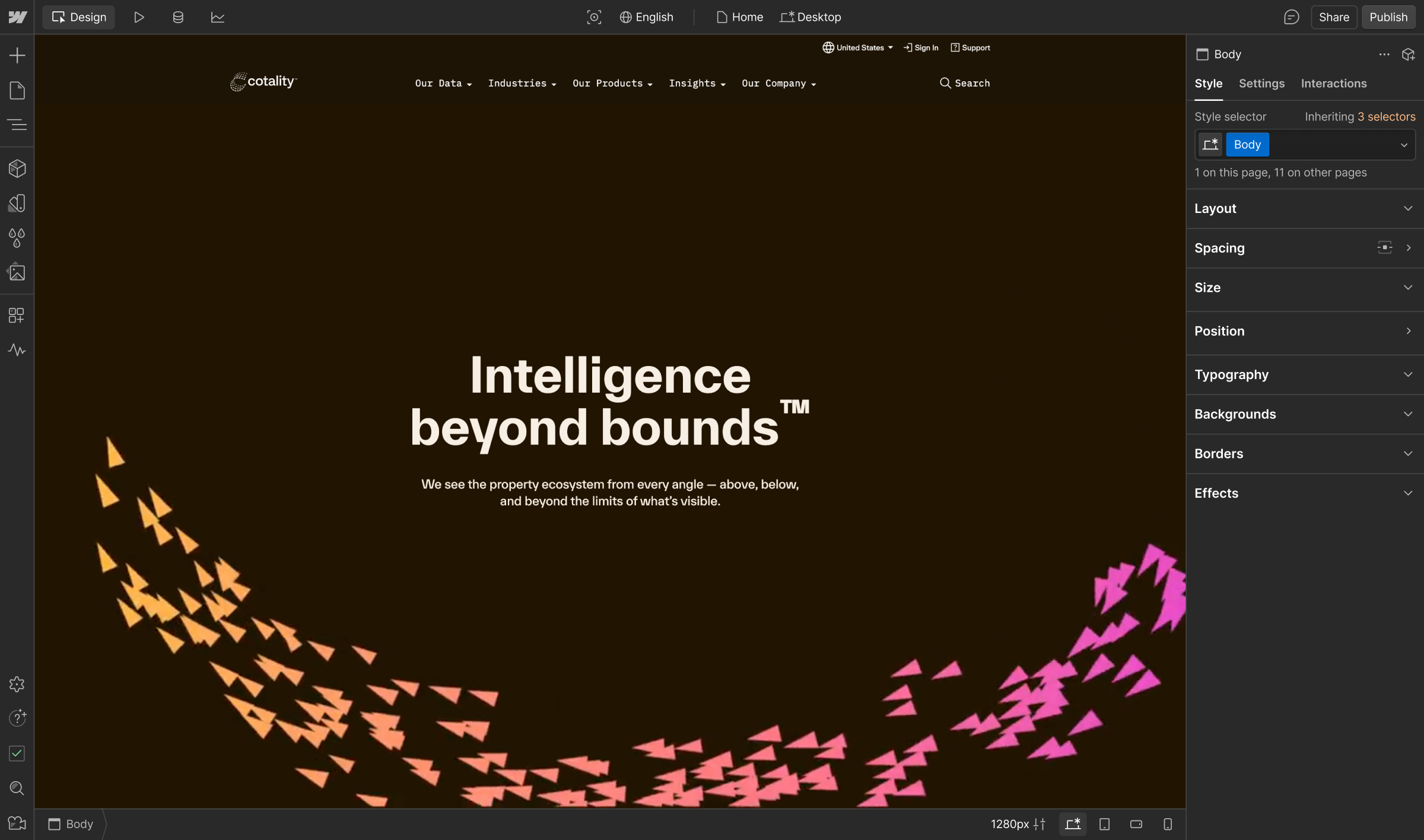
Cotality had a new name and roughly 90 days to launch it globally. At the same time, AI discovery was becoming an executive priority, making structured content, localization, and governance essential to what came next. Cotality chose Webflow to launch one global platform without disrupting revenue, creating the foundation for its next phase of AI work.

Analyze
Localization
Optimize
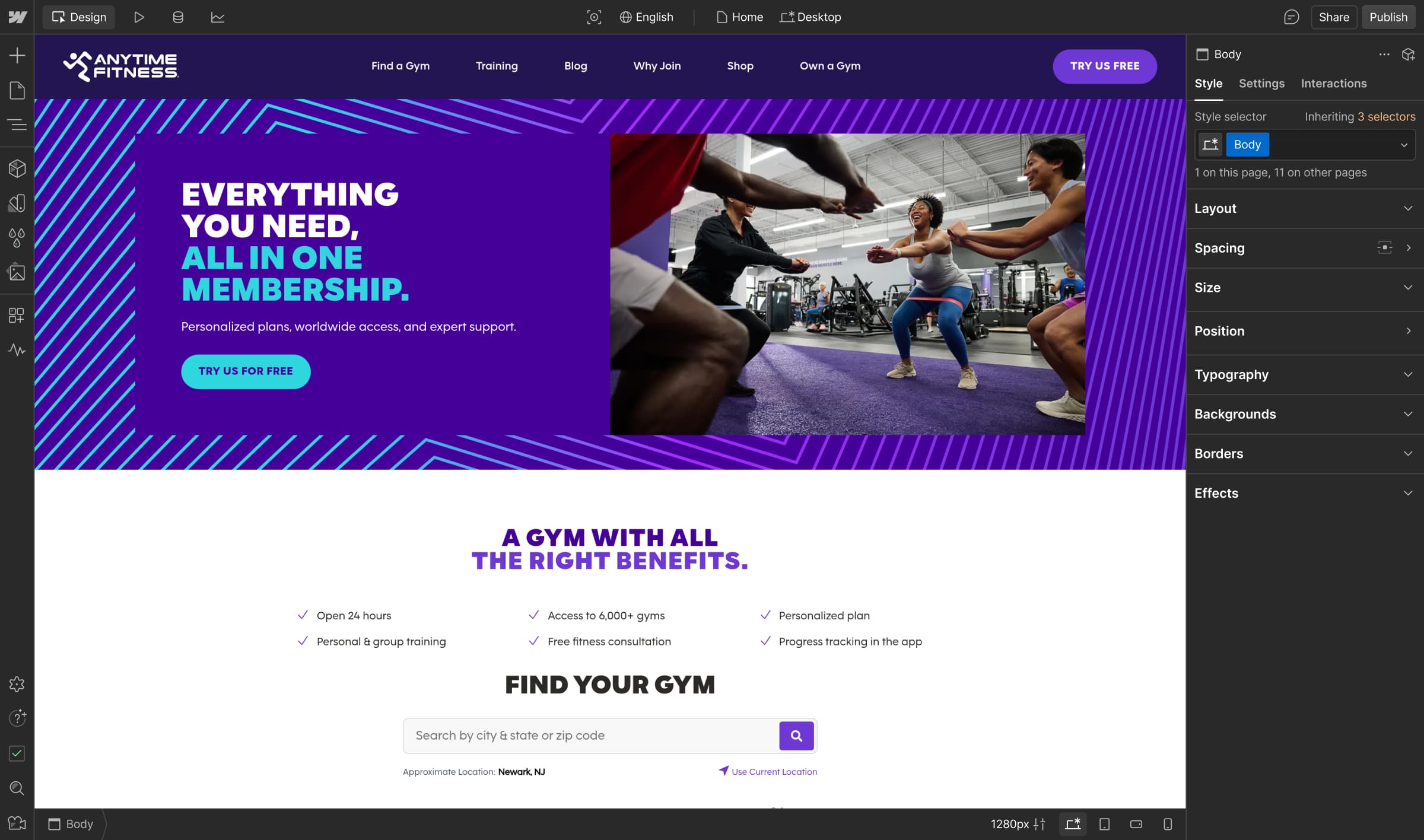
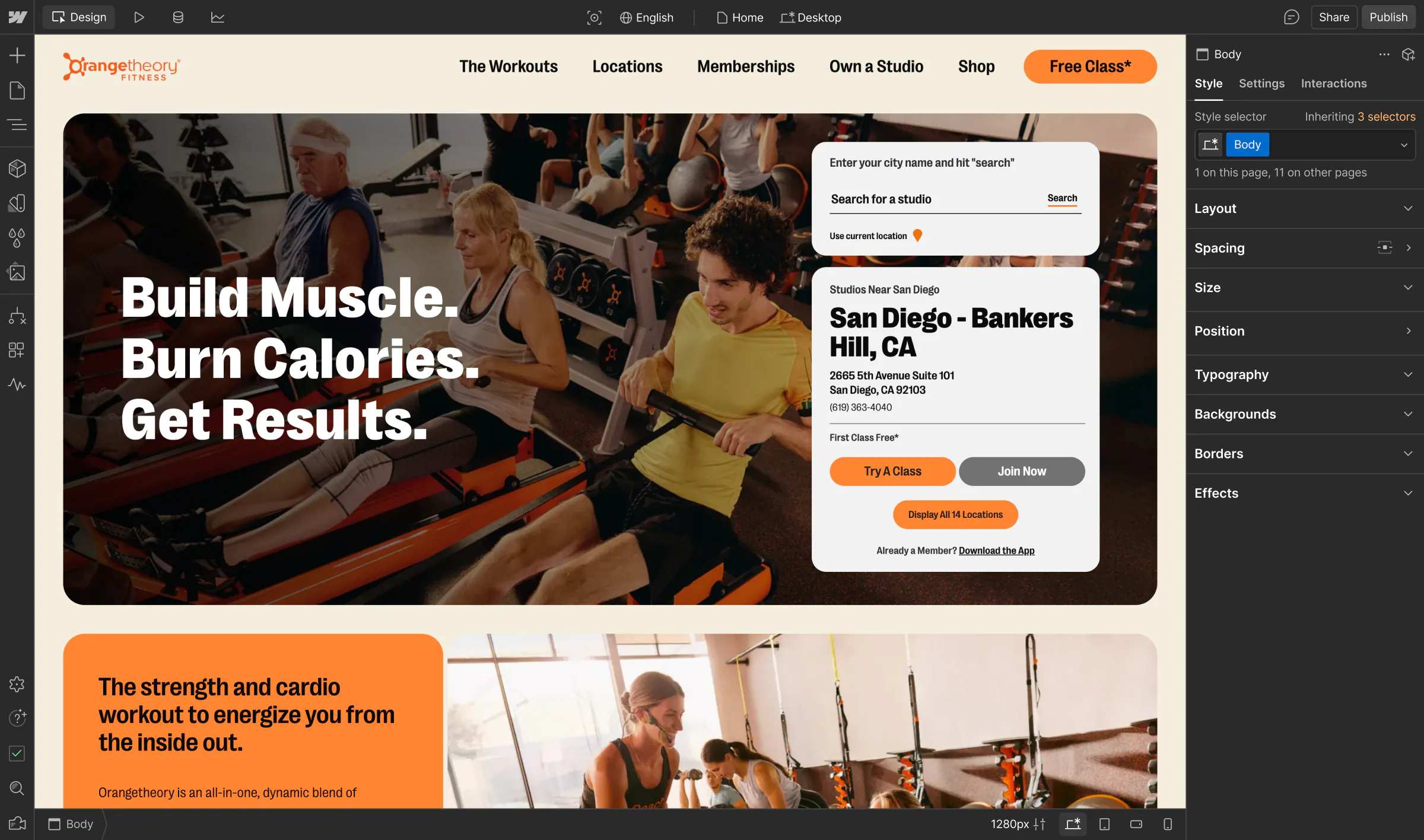
Purpose Brands brings together brands including Orangetheory Fitness, Anytime Fitness, The Bar Method, and Waxing the City within a global portfolio that reaches millions of people. With Webflow, it replaced a fragmented web footprint with one foundation, allowing new markets to launch faster and capabilities built once to scale across brands.

Analyze
Localization
Optimize
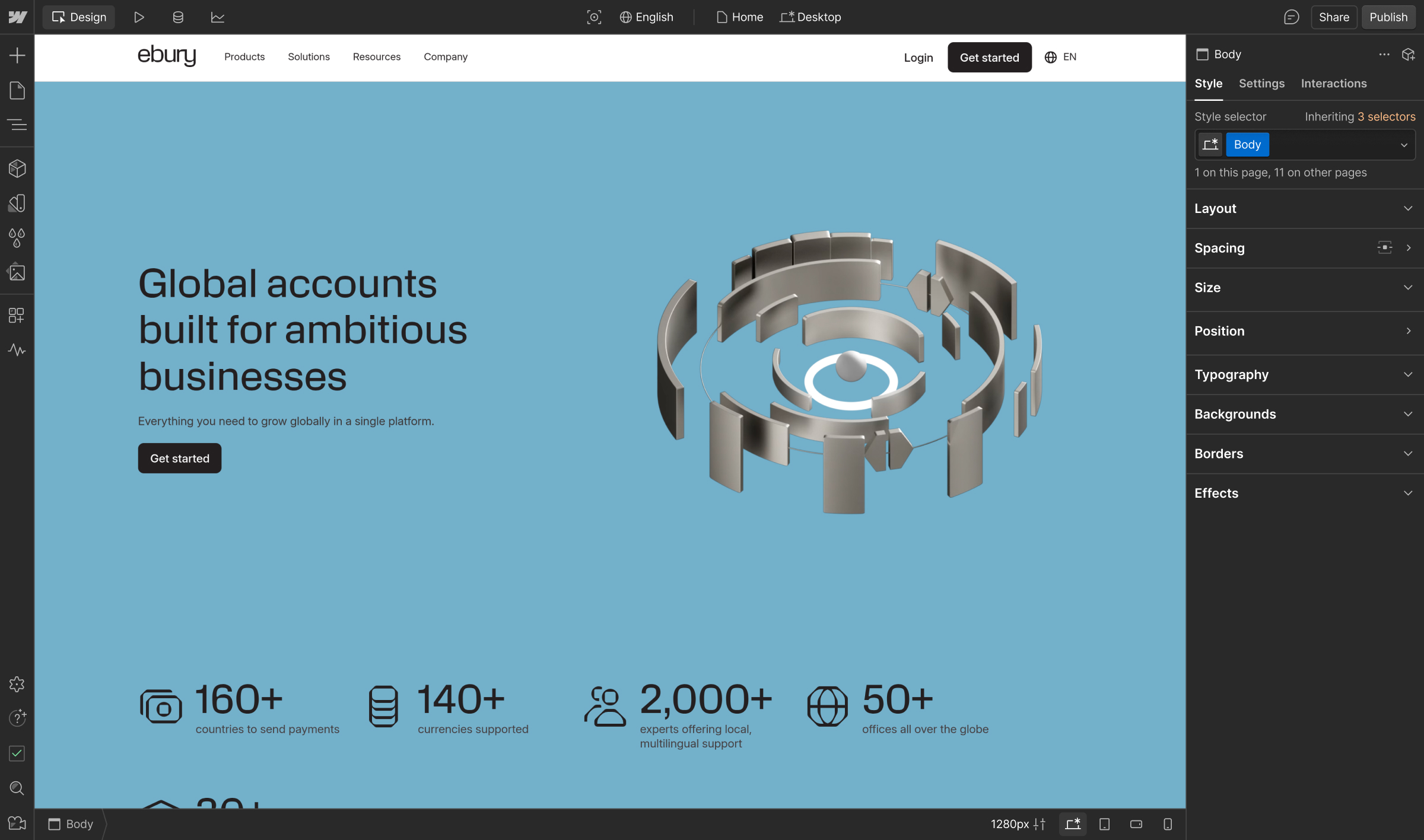
Ebury moves money across borders for 27,000 businesses in 40 countries. To match that scale, it migrated off 30 separate WordPress instances to Webflow, consolidating a fragmented brand and giving local teams control of their own markets for the first time.


Analyze
Localization
Optimize
Arkose Labs made a company-wide bet on agentic AI in early 2026: every vendor had to connect to Claude, or it was out. When their WordPress site failed the review, the team approached replacements the same way they'd started evaluating every vendor: could it run agentically through Claude? Webflow was the platform that rose to the top. They signed an agreement the same week, and the new site was live three and a half weeks later.


Analyze
Localization
Optimize
Amazon Ads' Brand Innovation Lab produces hundreds of premium ad experiences annually across Amazon's entire canvas. By adopting Webflow, they transformed their workflow: designers now own the build, technologists are freed for high-impact R&D, and development cycles have dropped by nearly 50%. This structural shift has enabled the team to scale their creative ambitions and deliver innovation to customers faster than ever.

Analyze
Localization
Optimize
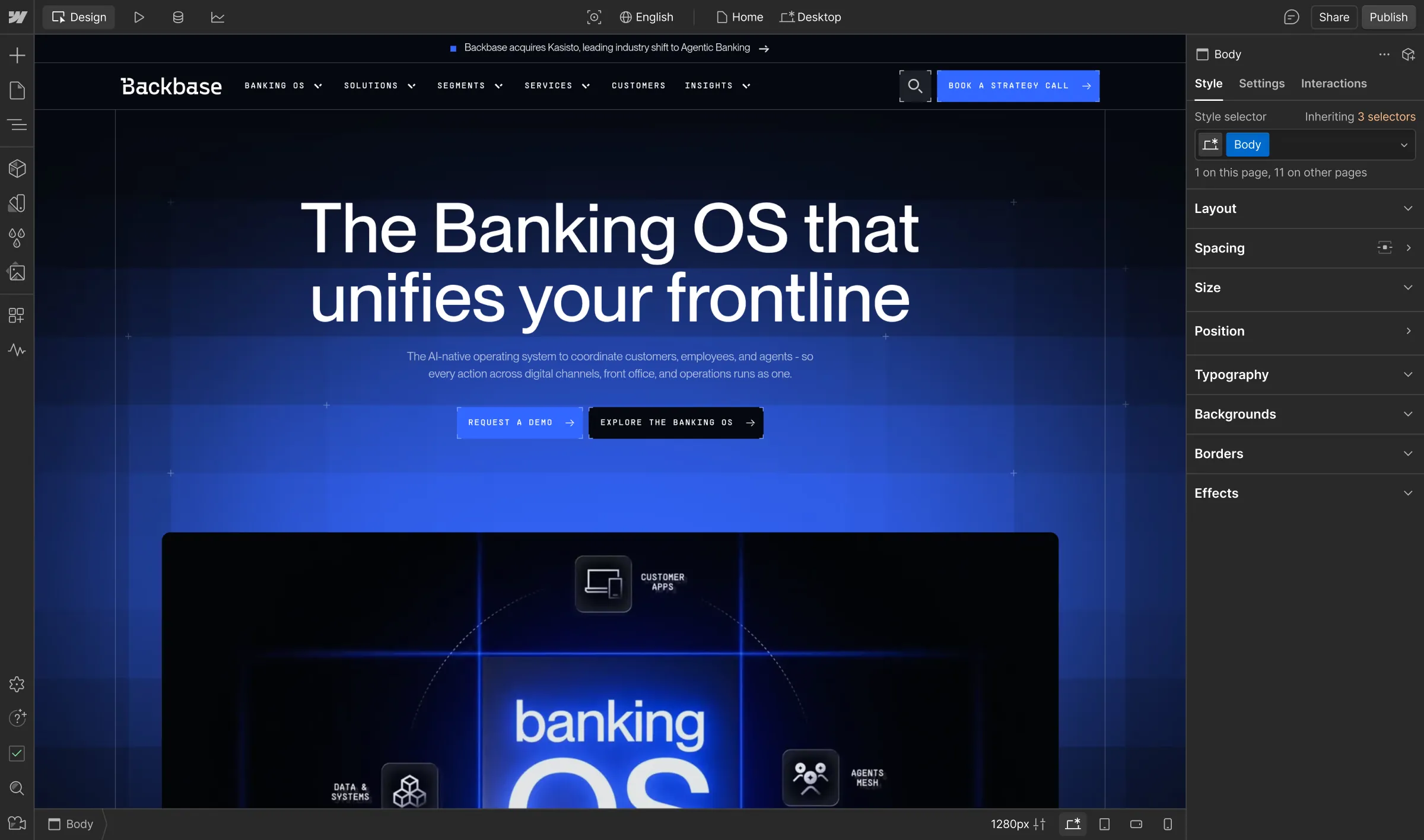
Backbase, a global AI-native banking operating system helping traditional banks compete with modern fintechs, migrated their entire website to Webflow in 8 weeks — transforming how a lean team of two brings their brand to life and empowering their marketing team to move at the speed of innovation.

Analyze
Localization
Optimize
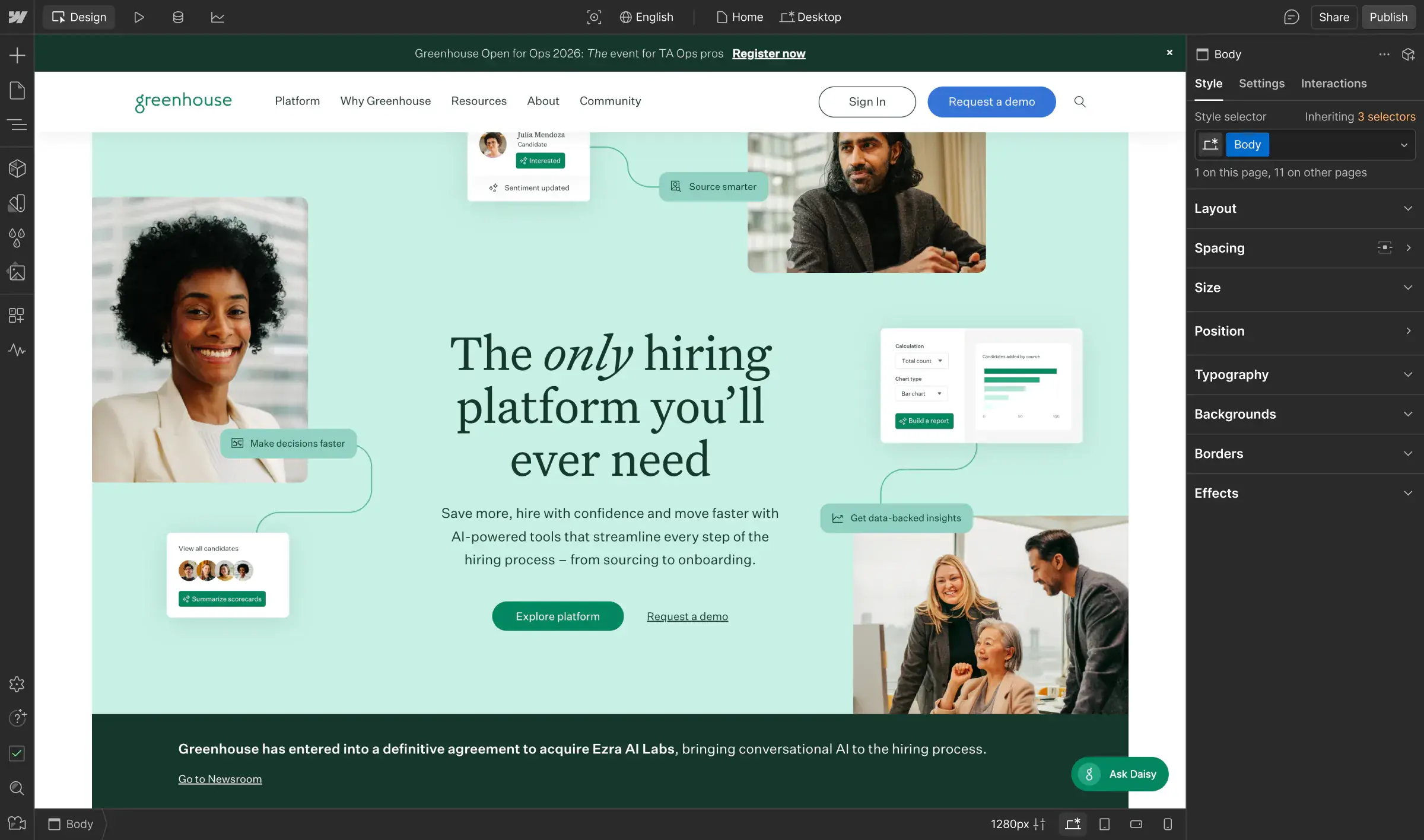
Greenhouse, a hiring platform serving 7,000+ companies, was constrained by a custom CMS that required developer involvement for every change. By migrating to Webflow with digital agency HappyCog, they transformed their website from a maintenance burden into a dynamic, marketer-owned platform, unlocking team autonomy, doubling execution speed, and improving conversion rates by up to 40%.

Analyze
Localization
Optimize
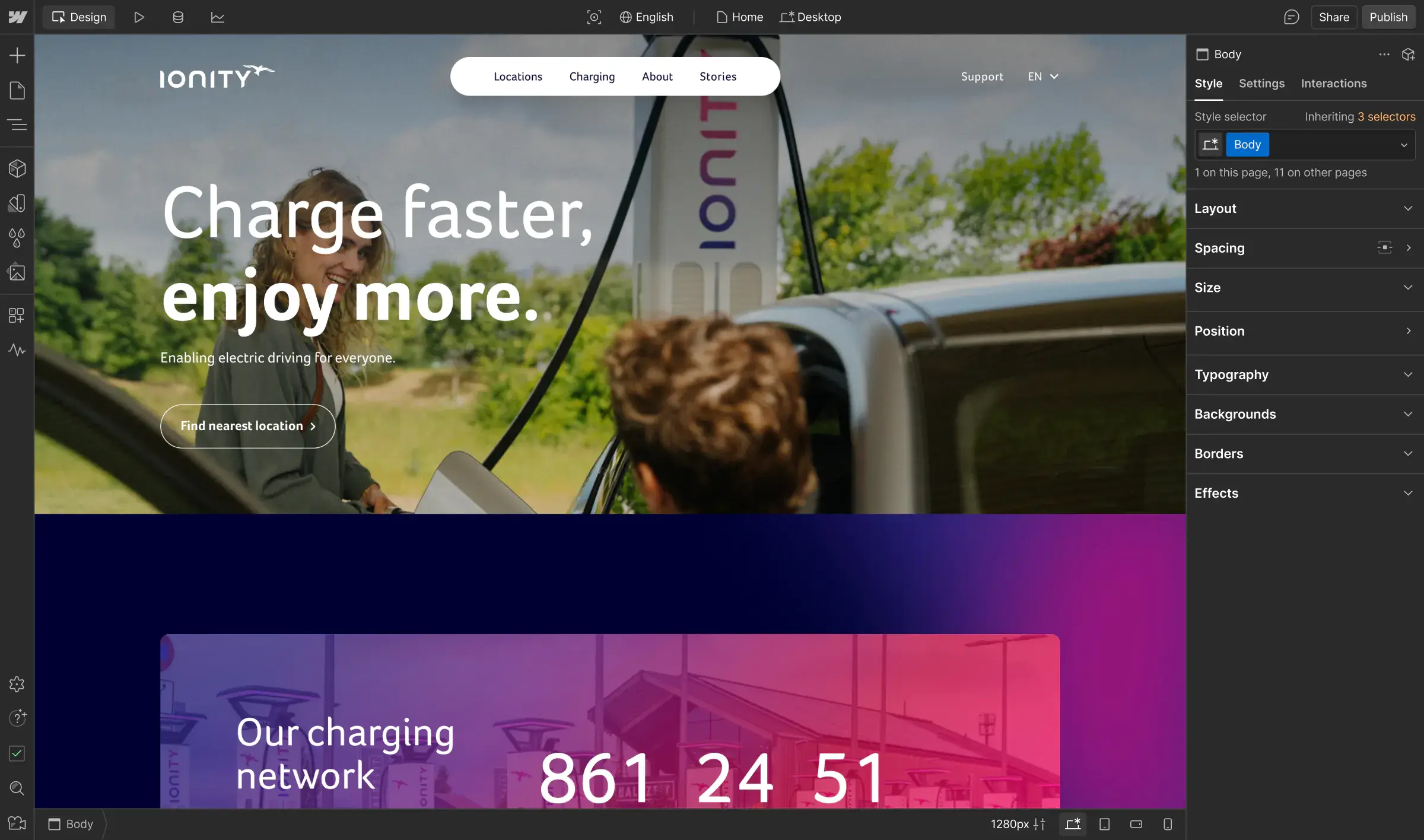
After outgrowing a developer-dependent setup, IONITY rebuilt their website on Webflow Enterprise, launching a custom-integrated, 24-market platform that has driven 64% more active users.


Analyze
Localization
Optimize
With an outdated web platform and a looming global rebrand, Verifone needed to prove their marketing team could drive the company’s next era of growth. With Webflow, they rebuilt their digital presence in just 10 days, repositioning the company for a ‘boundless’ future.

Analyze
Localization
Optimize
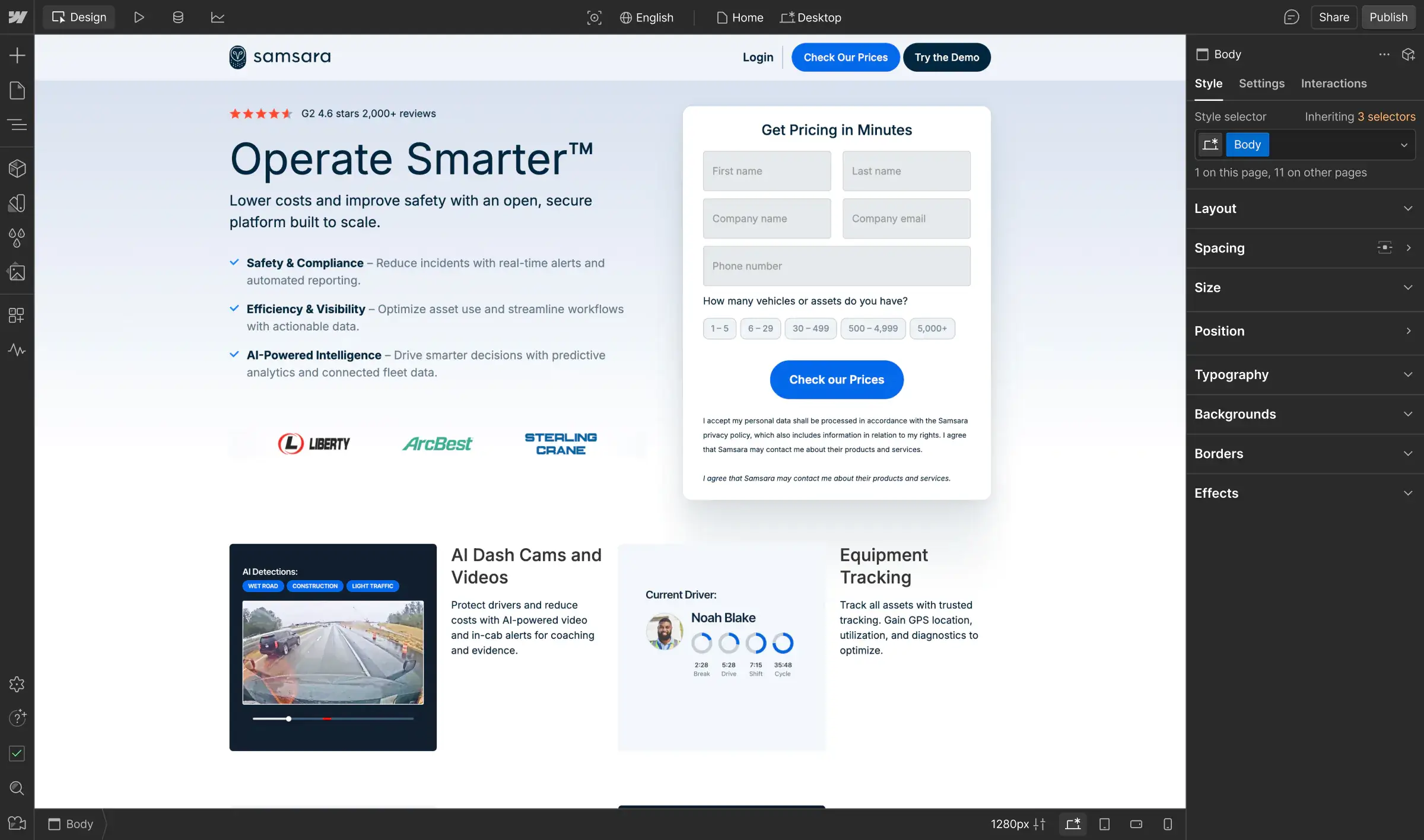
Samsara’s marketing team needed a more powerful way to test ideas and reach the right audiences. With Webflow Optimize, they took control of experimentation and can launch campaigns in days, personalize at scale, and drive stronger results across the funnel.


Analyze
Localization
Optimize
Dermalogica once relied on intuition to guide their digital strategy. With Webflow Optimize, the brand now runs hundreds of experiments across six global sites, uncovering insights that shape both their customer experience and their business investments.

Analyze
Localization
Optimize
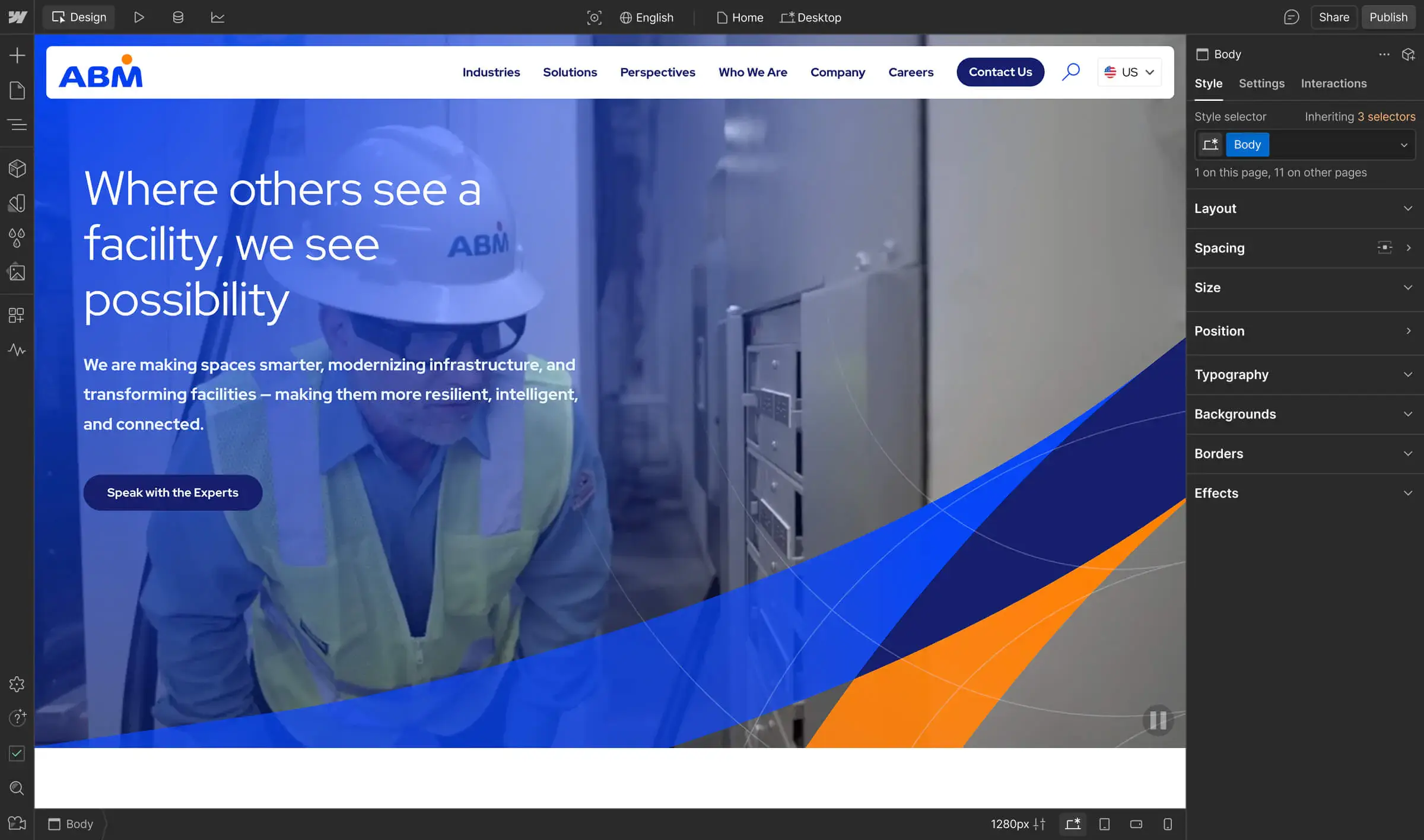
Evolving far beyond its janitorial roots, ABM sought a digital transformation that could match their growth and modern brand. With Webflow, they reshaped their story, accelerated publishing from weeks to hours, and built a website that powers global scale.

Analyze
Localization
Optimize
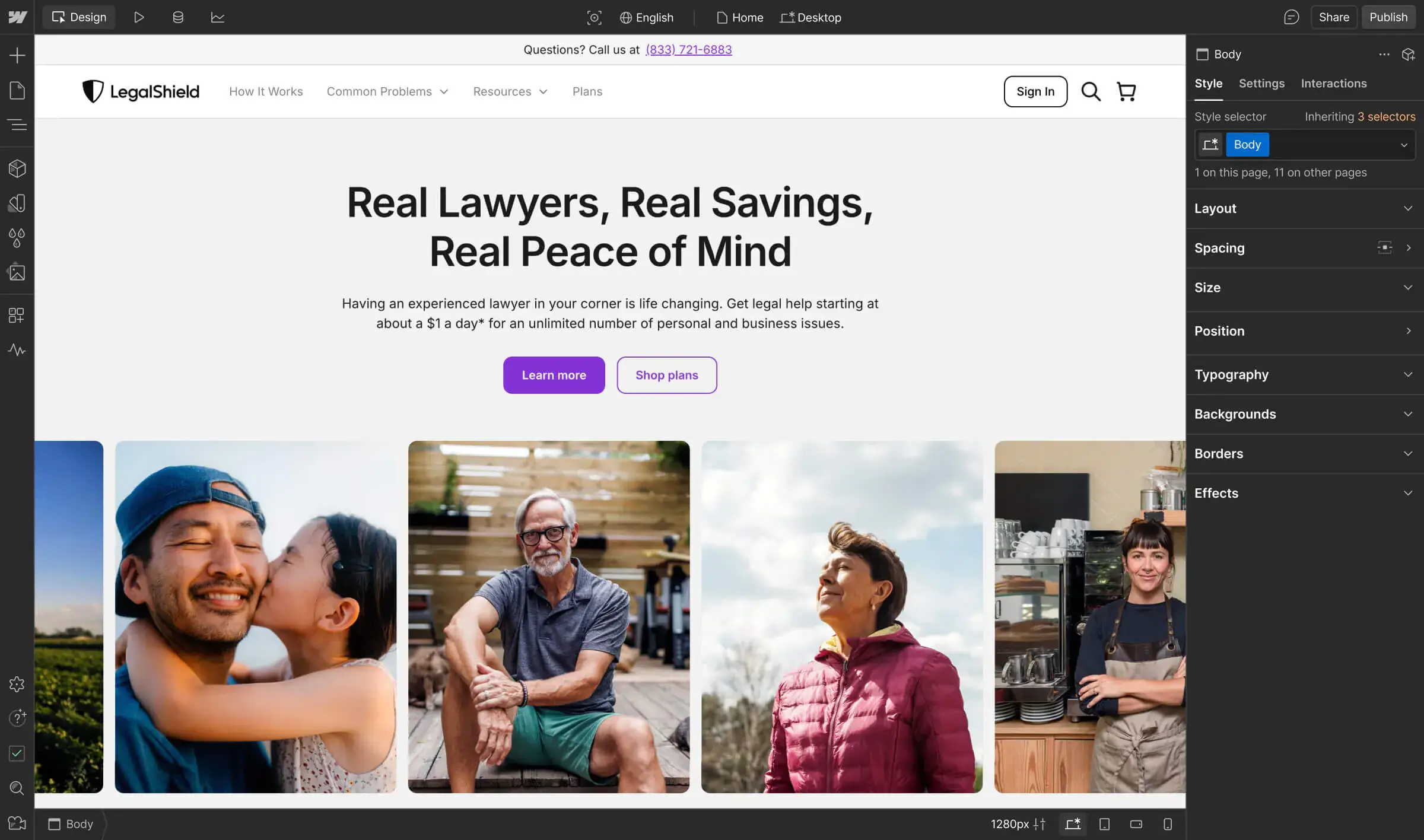
Before Webflow, the legal and identity services provider faced slow updates, engineering bottlenecks, and limited ability to test or scale content. Now, the team runs marketing-led experiments and manages localized content across three languages, no dev handoffs required.

Analyze
Localization
Optimize
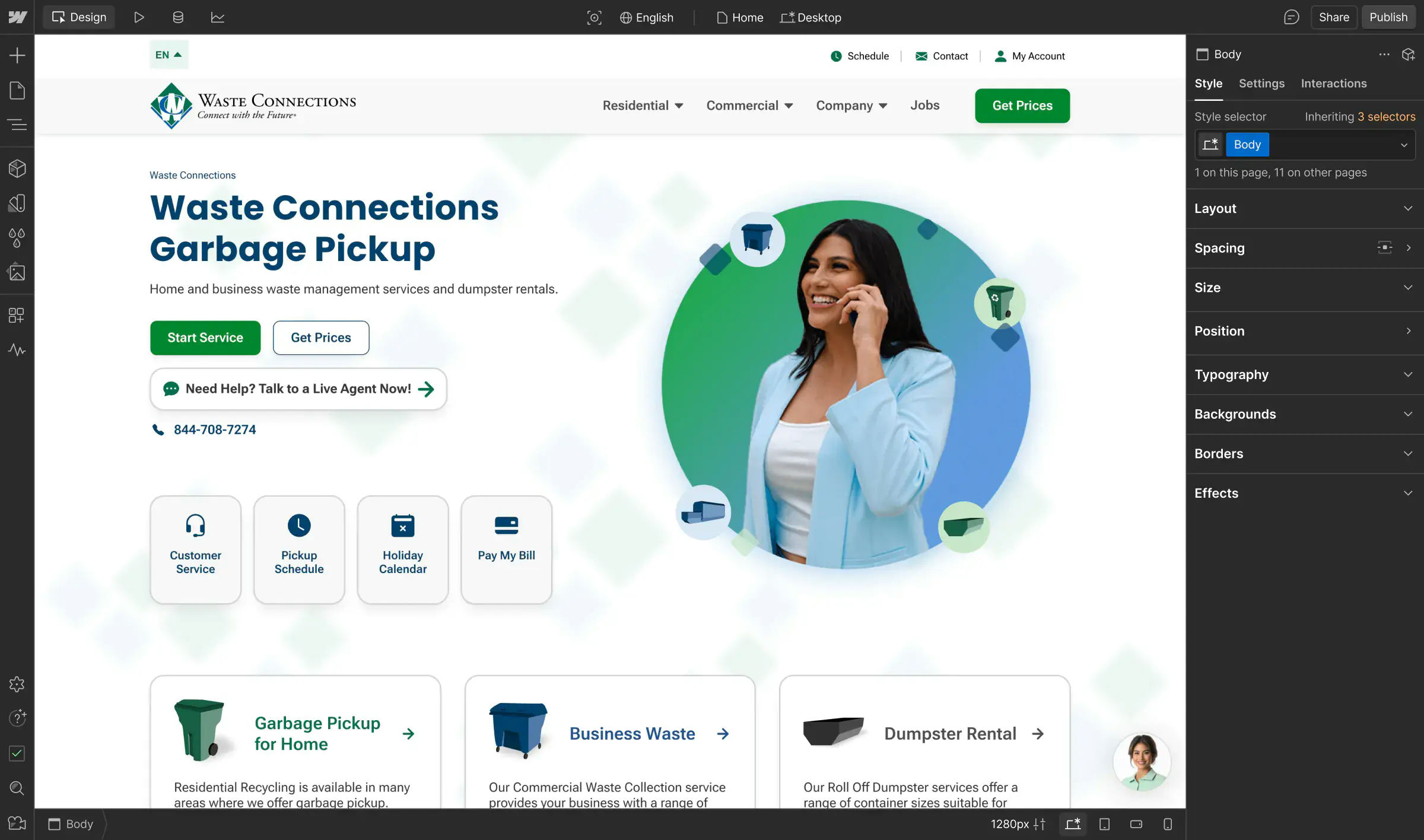
Before Webflow, Waste Connections juggled dozens of disconnected sites across 300+ brands. Now, with Webflow and Enova, they’ve unified their web presence into a scalable system that empowers their technical teams, streamlines growth, and supports ongoing acquisitions.

Analyze
Localization
Optimize
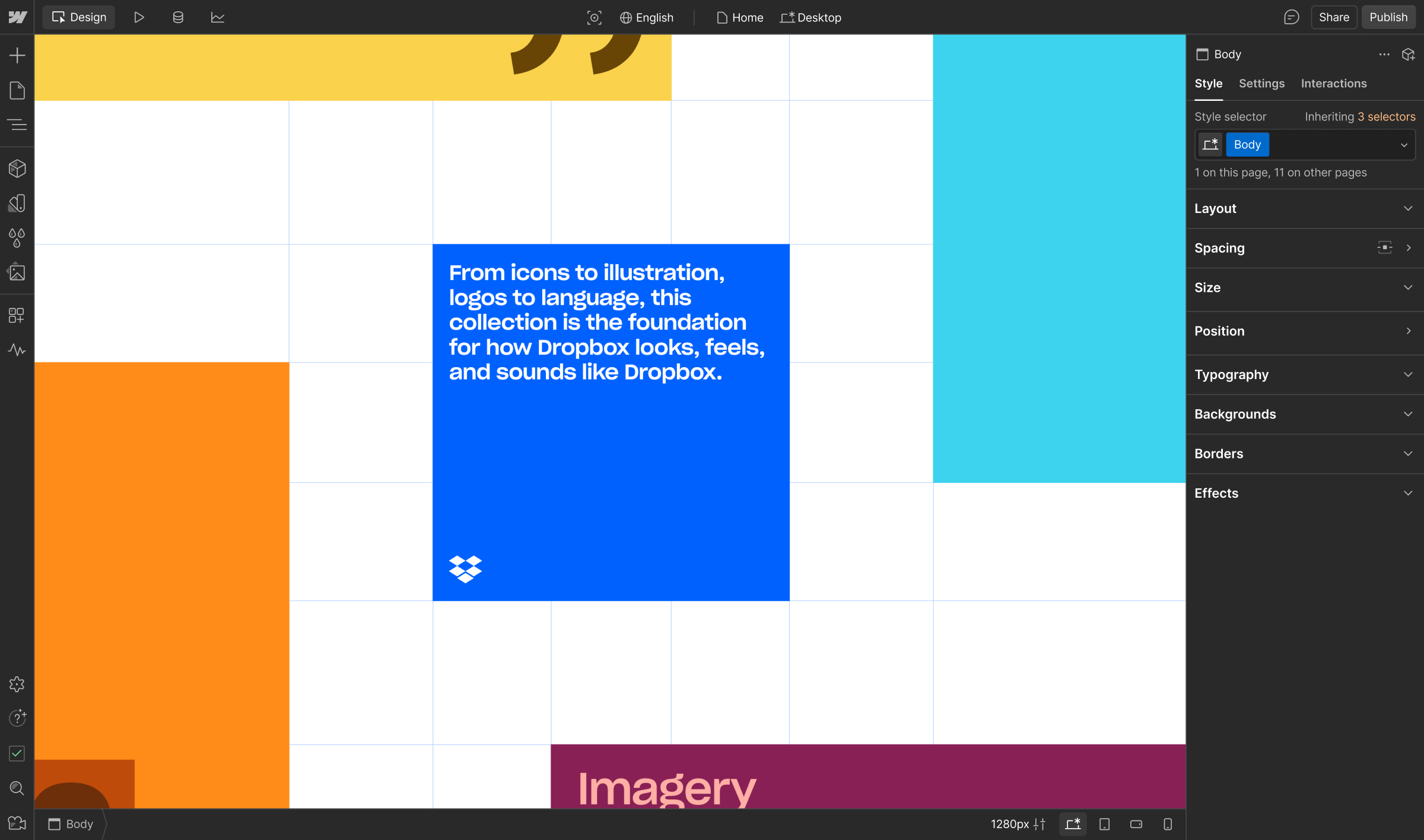
Dropbox needed to evolve their brand guidelines from a static webpage to an interactive experience that reinforced their brand ethos. With Webflow Partner Daybreak, they used Webflow's visual-first CMS to enrich collaboration, building a site that brings their brand to life.

Analyze
Localization
Optimize
Driven to disrupt the industry and transform beyond their legacy roots, Docusign needed a powerful web solution. With Webflow and strategic agency experts, they gained creative freedom and global recognition in the emerging Intelligent Agreement Management space.

Analyze
Localization
Optimize
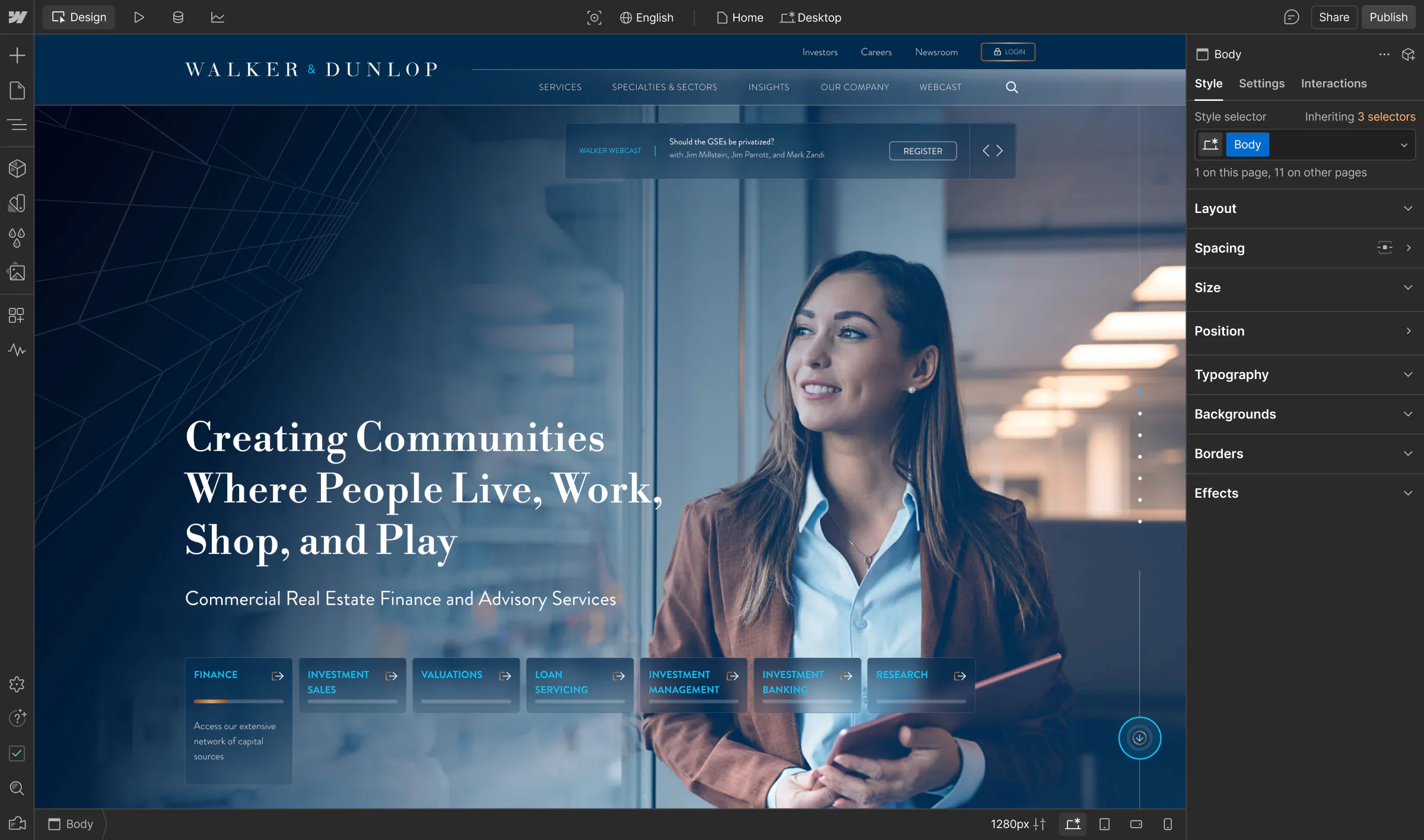
Once struggling to update a static, outdated CMS that didn’t reflect their modern brand, Walker & Dunlop tapped into Webflow to transform their website into a dynamic, high-performing sales and marketing tool that boosts engagement and drives meaningful business results.

Analyze
Localization
Optimize
The global fitness pioneer recognized the need for a more agile and efficient web platform to support its growth and innovation. With Webflow, they transformed their digital presence, unlocking new revenue streams and delivering dynamic content experiences worldwide.

Analyze
Localization
Optimize
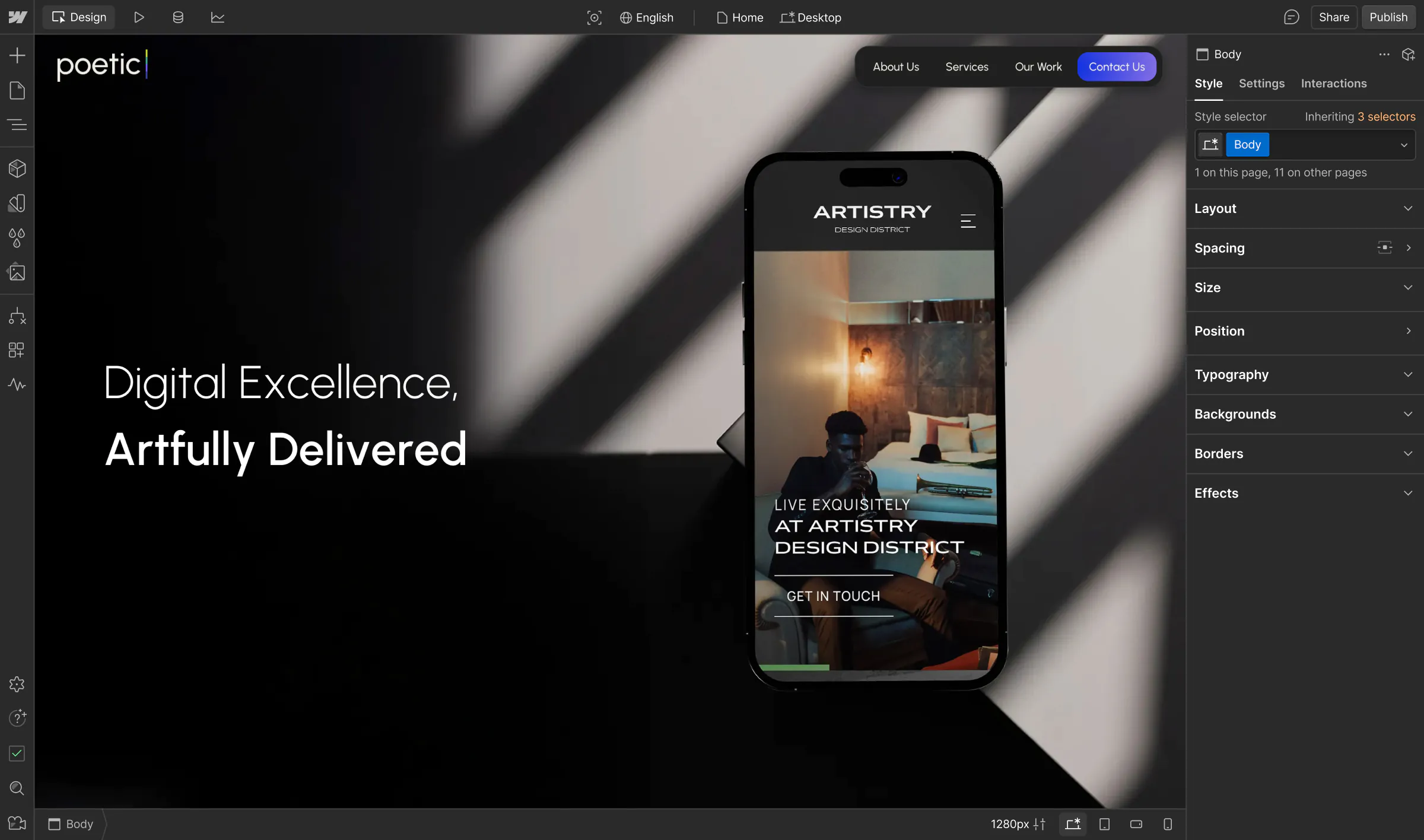
With hundreds of clients and complex site migrations, Poetic was limited by traditional webstacks that made them overly reliant on developers. With Webflow, Poetic now has the freedom to own their own website, all while helping their clients efficiently build and manage their web presence.

Analyze
Localization
Optimize
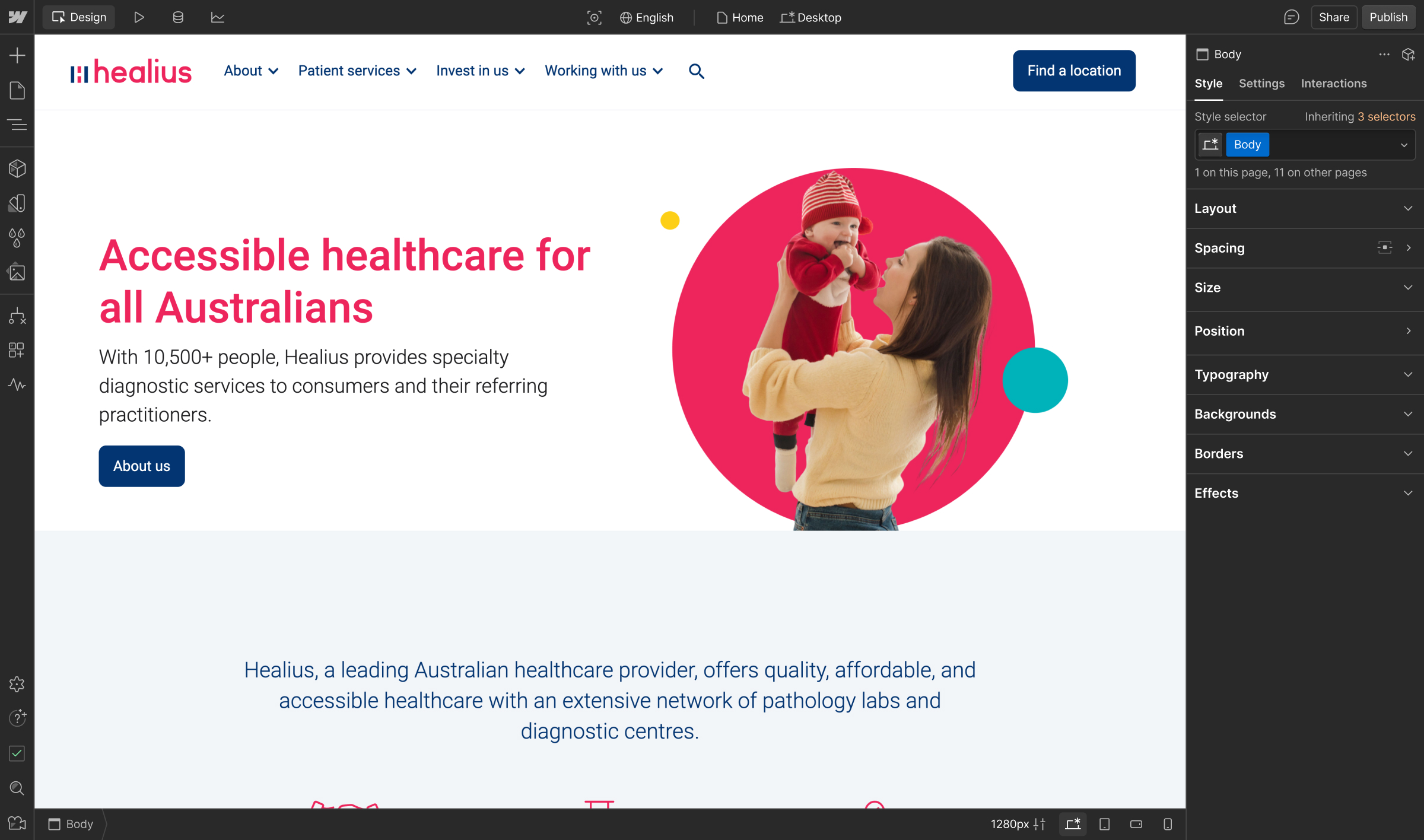
Previously reliant on developers and external resources to manage their web presence on WordPress, Healius migrated to Webflow to bring their team more flexibility, efficiency, and peace of mind.

Analyze
Localization
Optimize
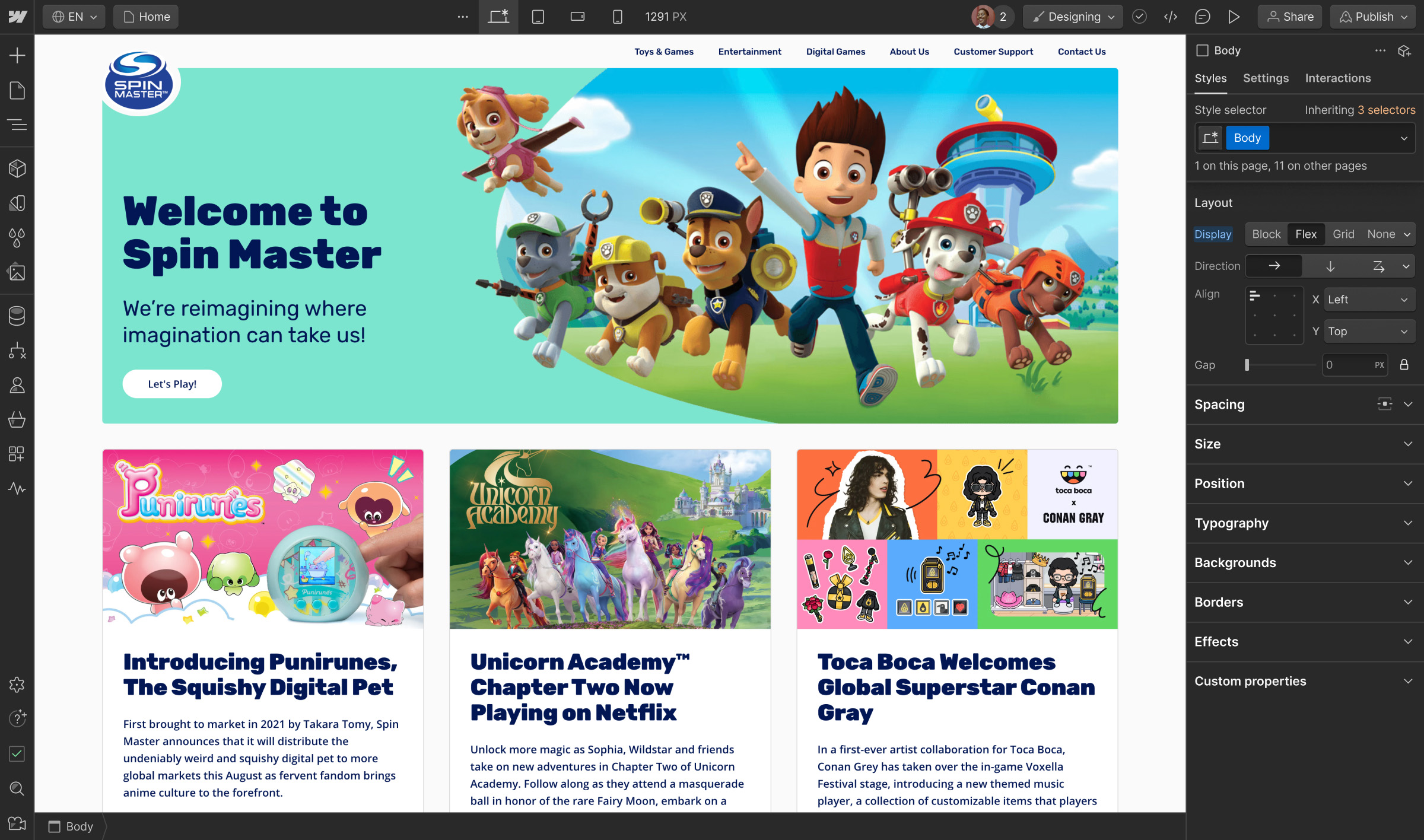
A global leader in children’s entertainment, Spin Master was looking to grow their web presence without relying on limited developer resources. With Webflow, their creative and engineering teams have transformed internal collaboration and efficiency–and can now deliver professional website experiences at scale.

Analyze
Localization
Optimize
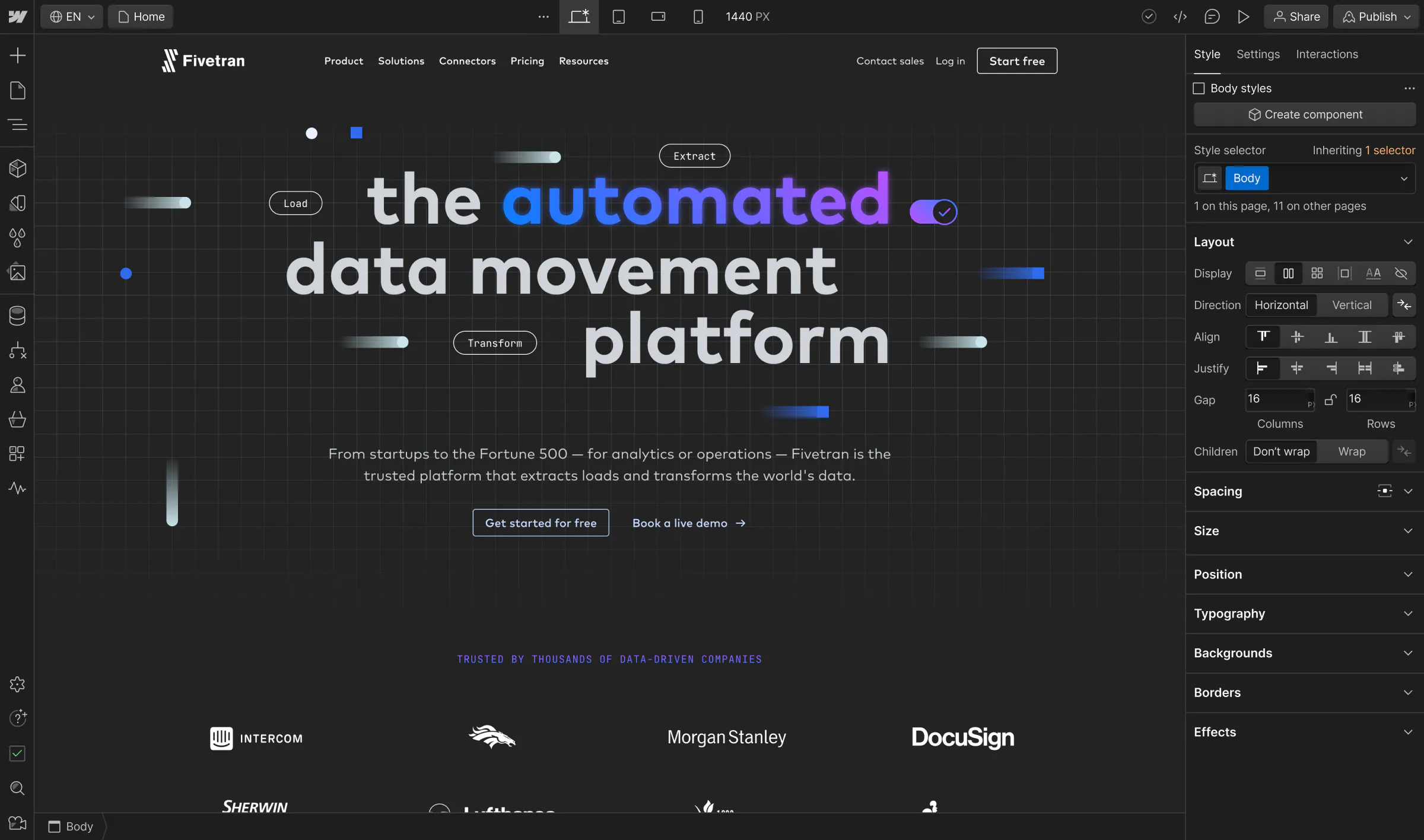
Looking for a web development platform that could support ambitious business goals, Fivetran turned to Webflow to accelerate their speed to market, improve internal collaboration, and take their digital presence to the next level.

Analyze
Localization
Optimize
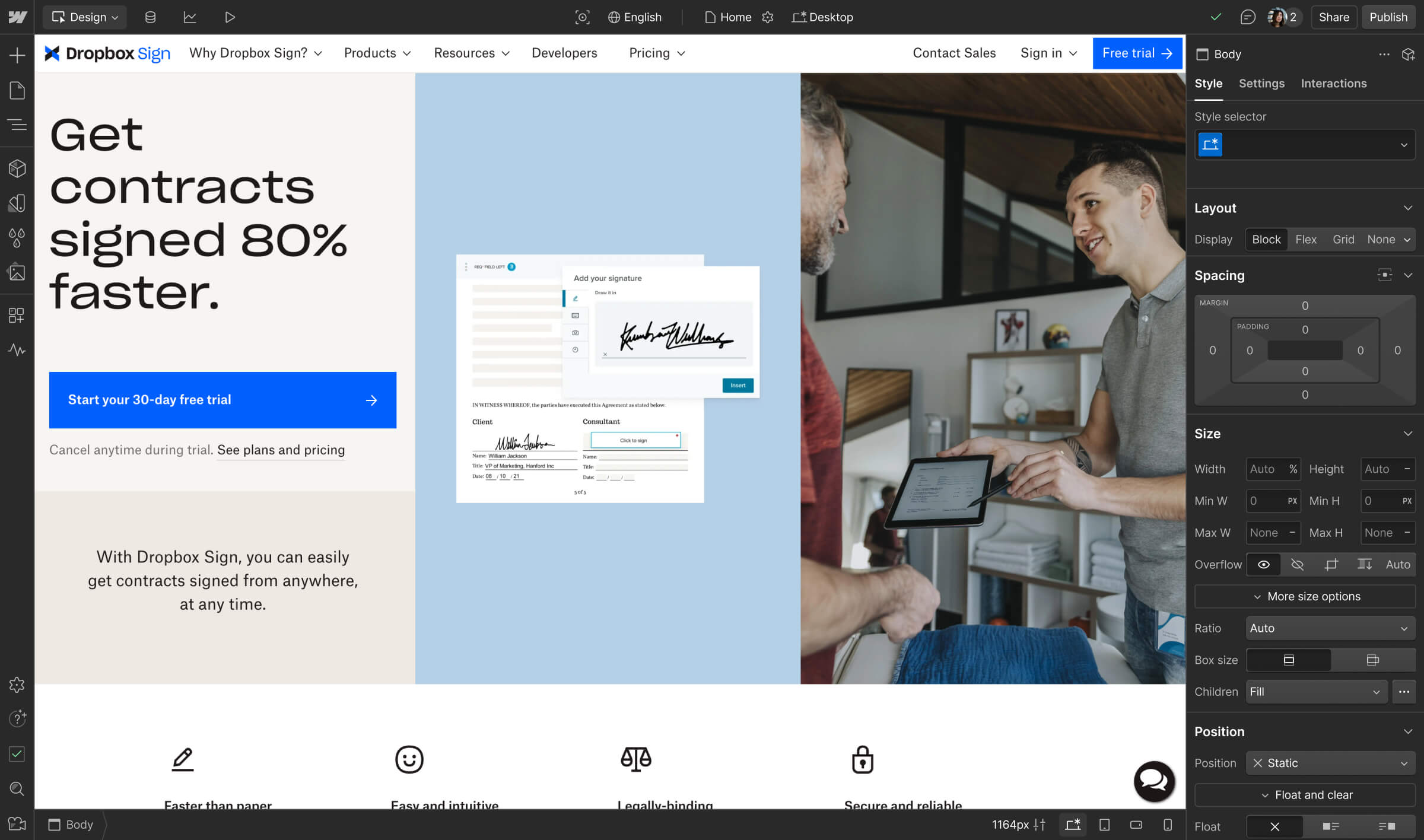
An integral part of the Dropbox suite, Dropbox Sign used Webflow to streamline development processes, empowering its design and marketing teams to deliver the most impactful services, faster.

Analyze
Localization
Optimize
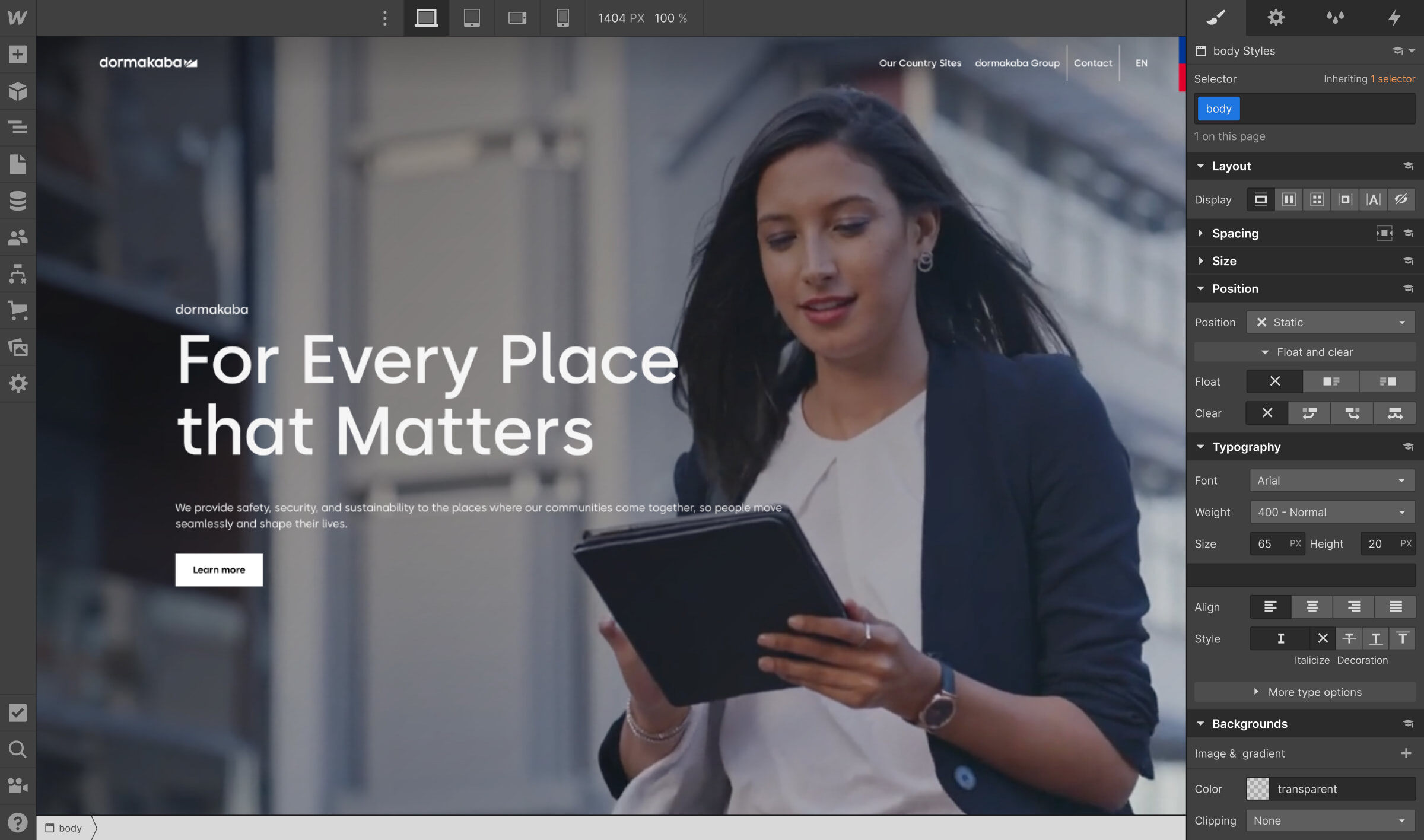
Searching for a platform to easily build microsites, reduce costs, and unify their brand, the leading access control company turned to Webflow to build new web pages that met their global brand standards.

Analyze
Localization
Optimize
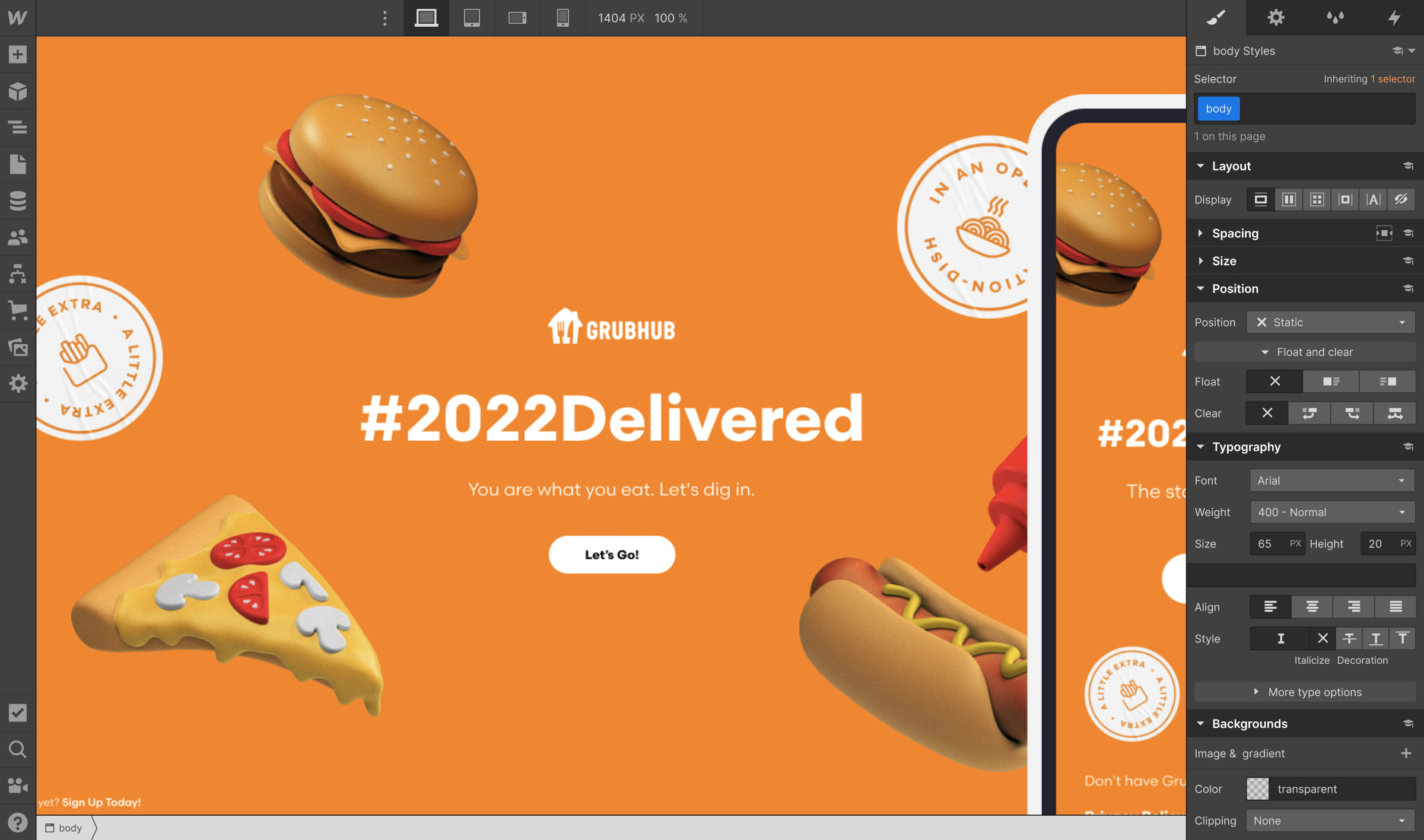
Grubhub worked with certified Webflow Expert, Wondersauce, and leveraged Webflow Enterprise to bring a viral brand moment to life in 7 weeks.

Analyze
Localization
Optimize
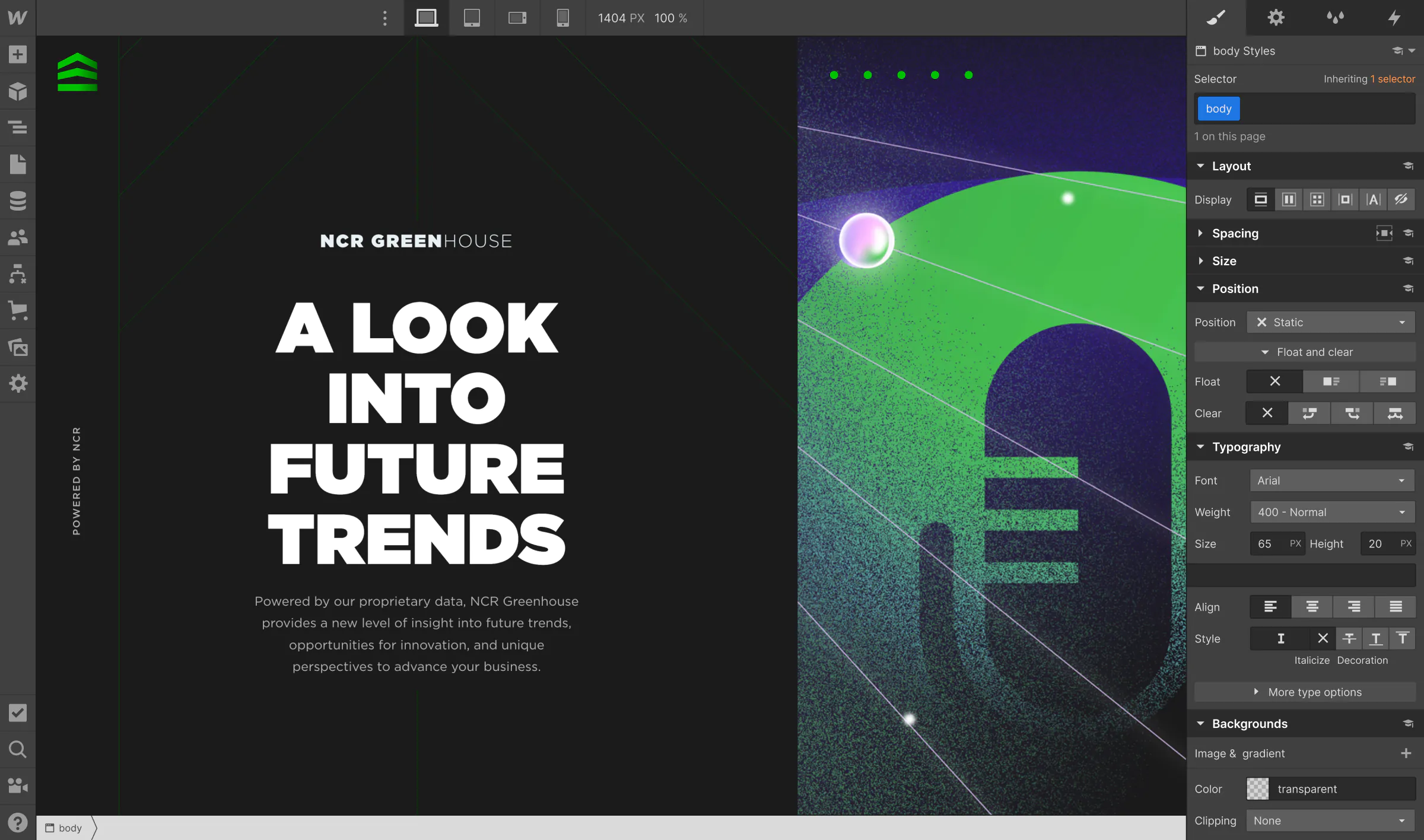
Looking to modernize their tech stack and bring more experiences to life on the web, NCR turned to Webflow to accelerate their time to launch.

Analyze
Localization
Optimize
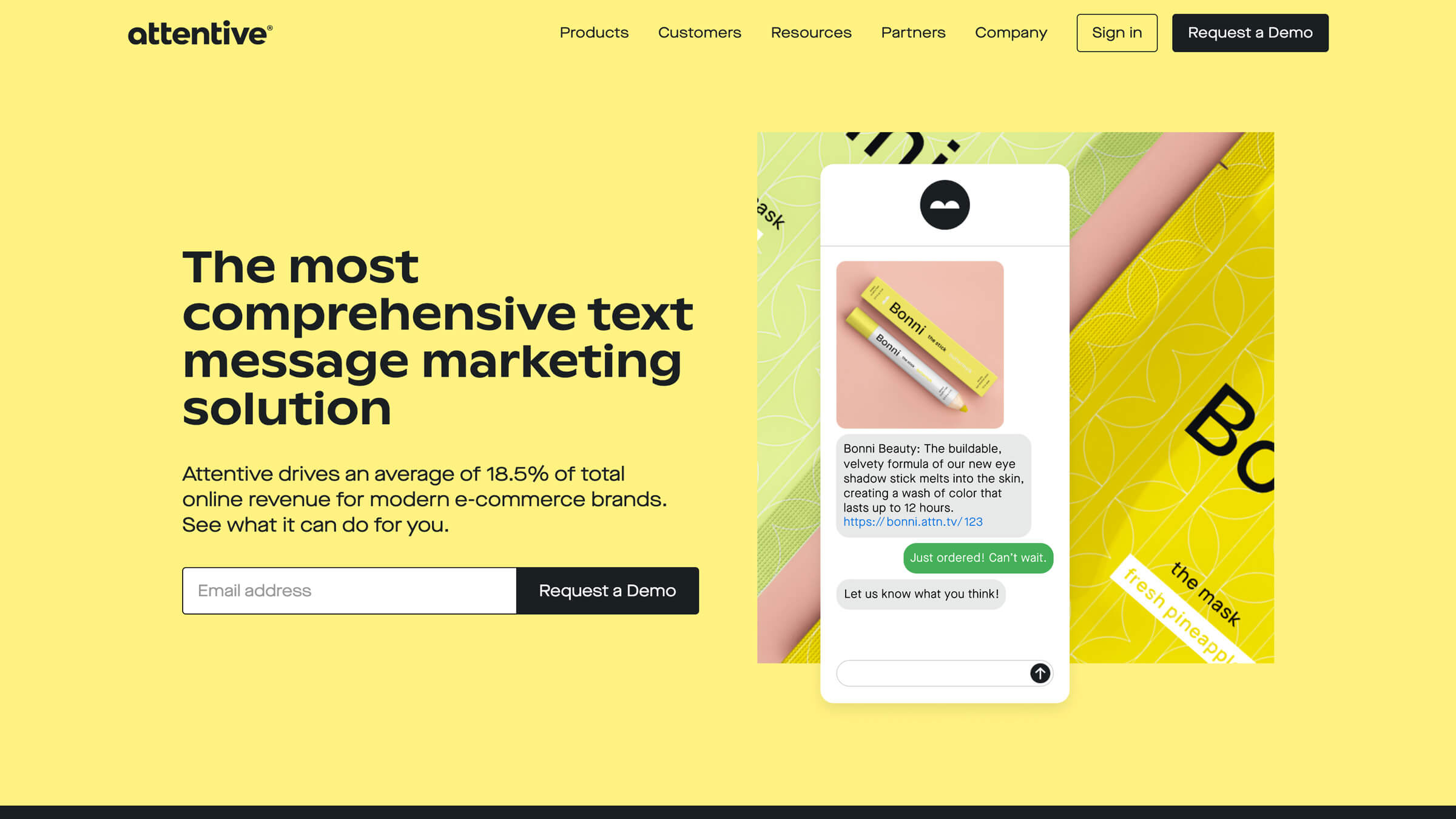
In the midst of a major rebrand, Attentive moved from WordPress to Webflow to unlock the creative potential of their website. From refresh to rebrand: Webflow as a catalyst for growth.

Analyze
Localization
Optimize
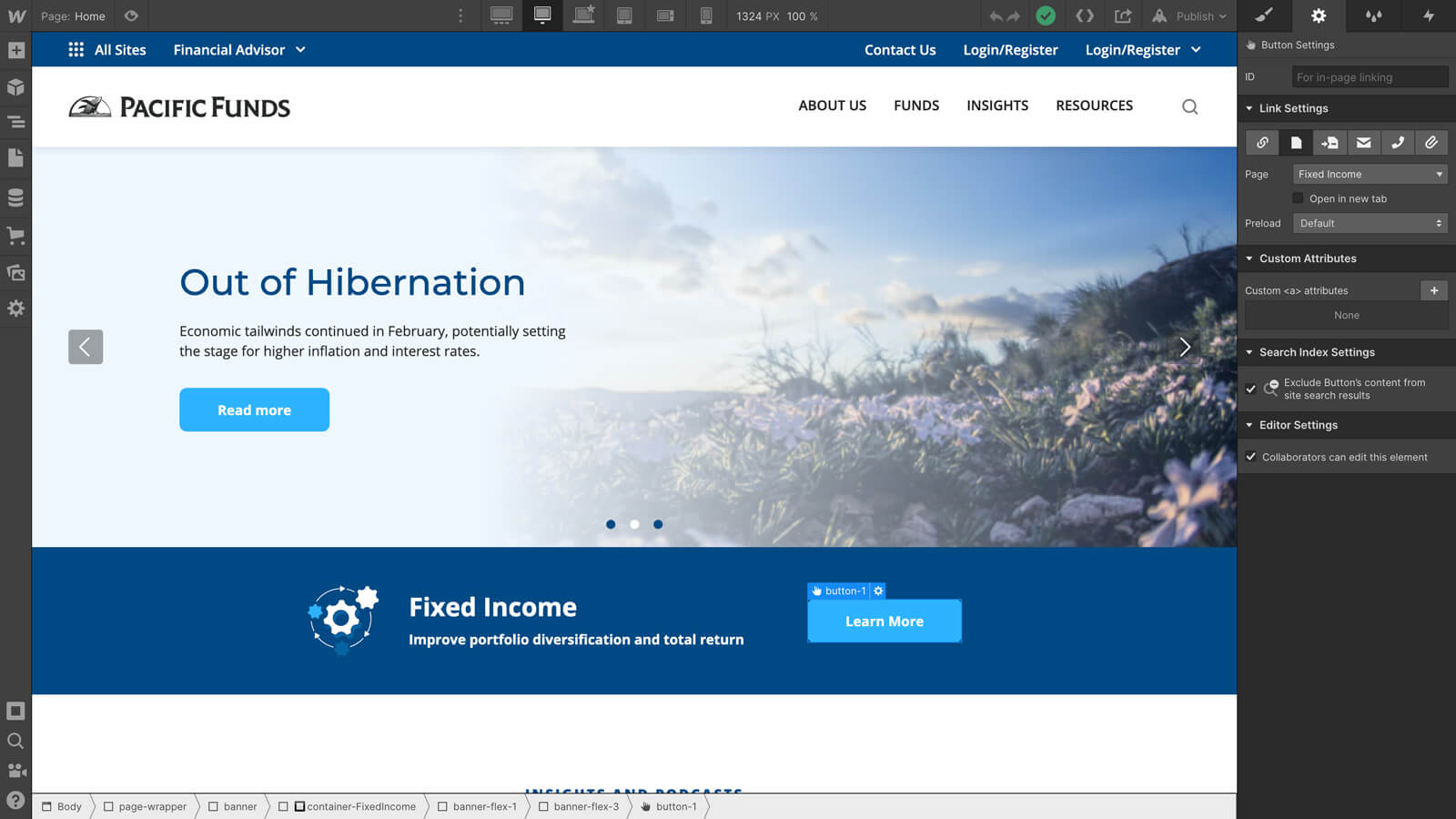
The Pacific Funds team moved from their existing CMS implementation to take control of their site and create a better customer experience.

Analyze
Localization
Optimize
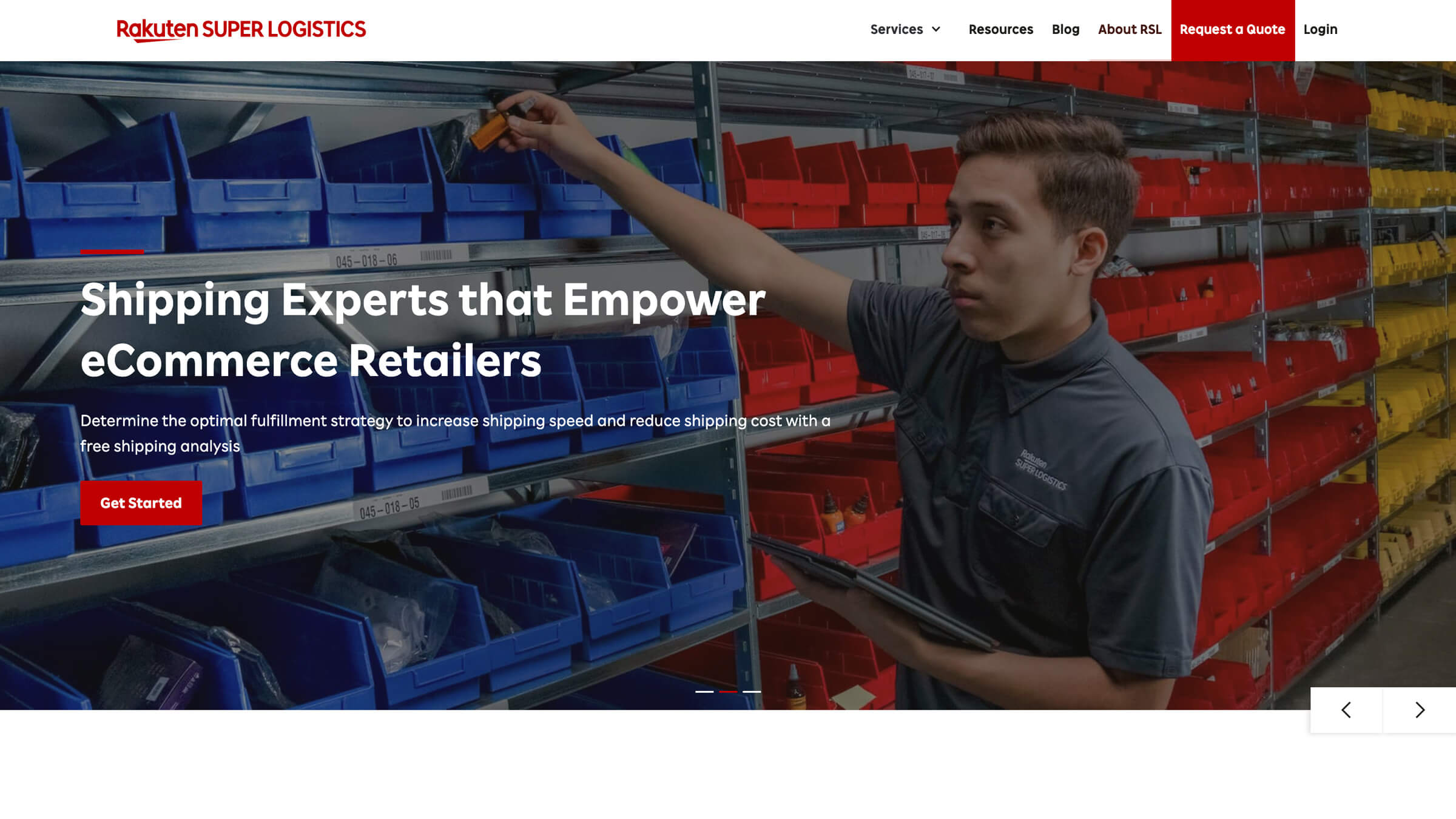
Rakuten SL saved time, money, and security headaches by switching from WordPress to Webflow.
Explore more stories

Analyze
Localization
Optimize
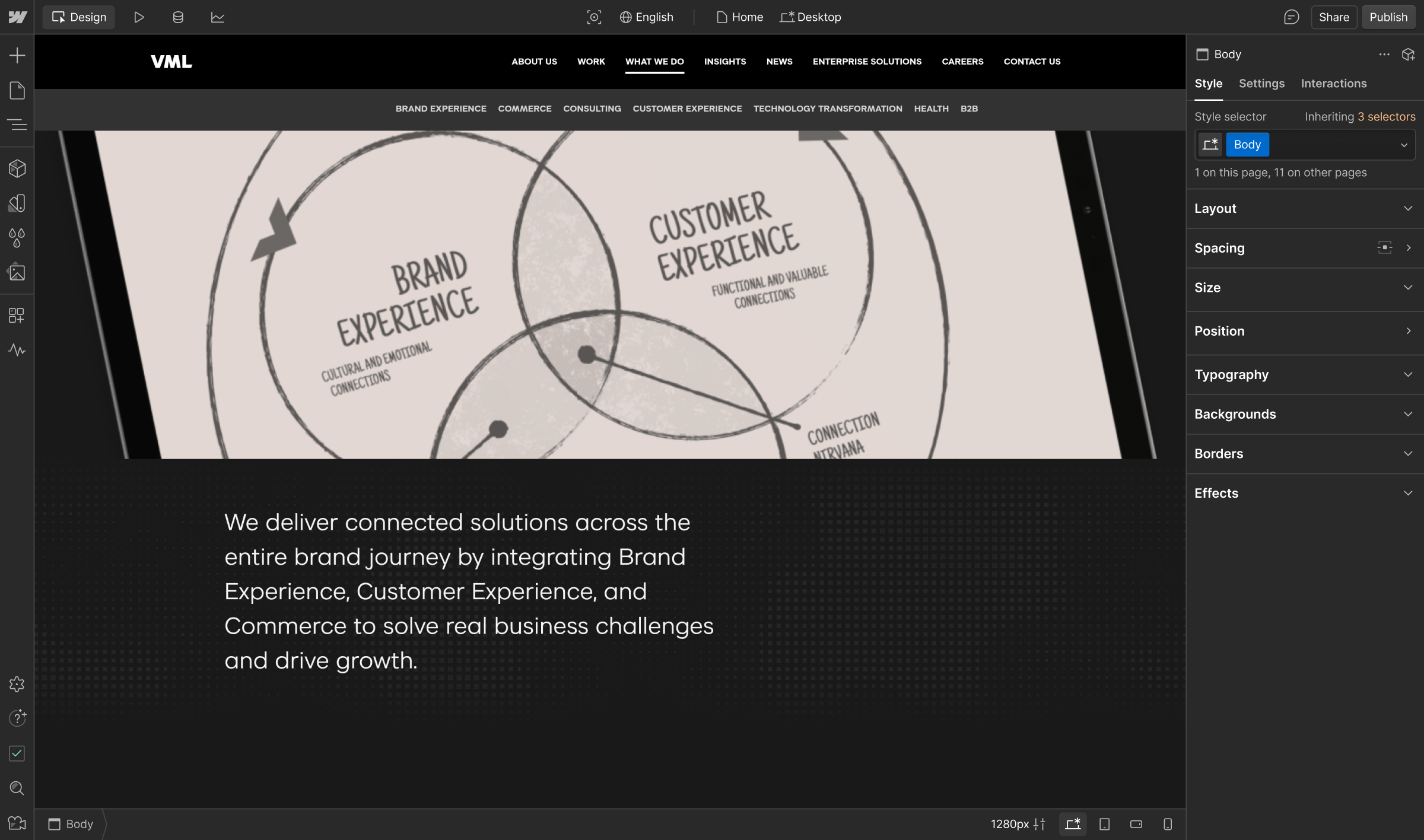
VML builds and manages web experiences for some of the world's most recognizable brands, from Ford to Wendy's to the Brisbane 2032 Olympic and Paralympic Games, as well as much-loved local destinations like South Bank. As client expectations shifted, brands started asking for a faster, more flexible alternative to heavyweight builds, without trading away an ounce of craft. That led VML to Webflow, where its teams now build at pace, at scale, and with plenty of room to play.

Analyze
Localization
Optimize
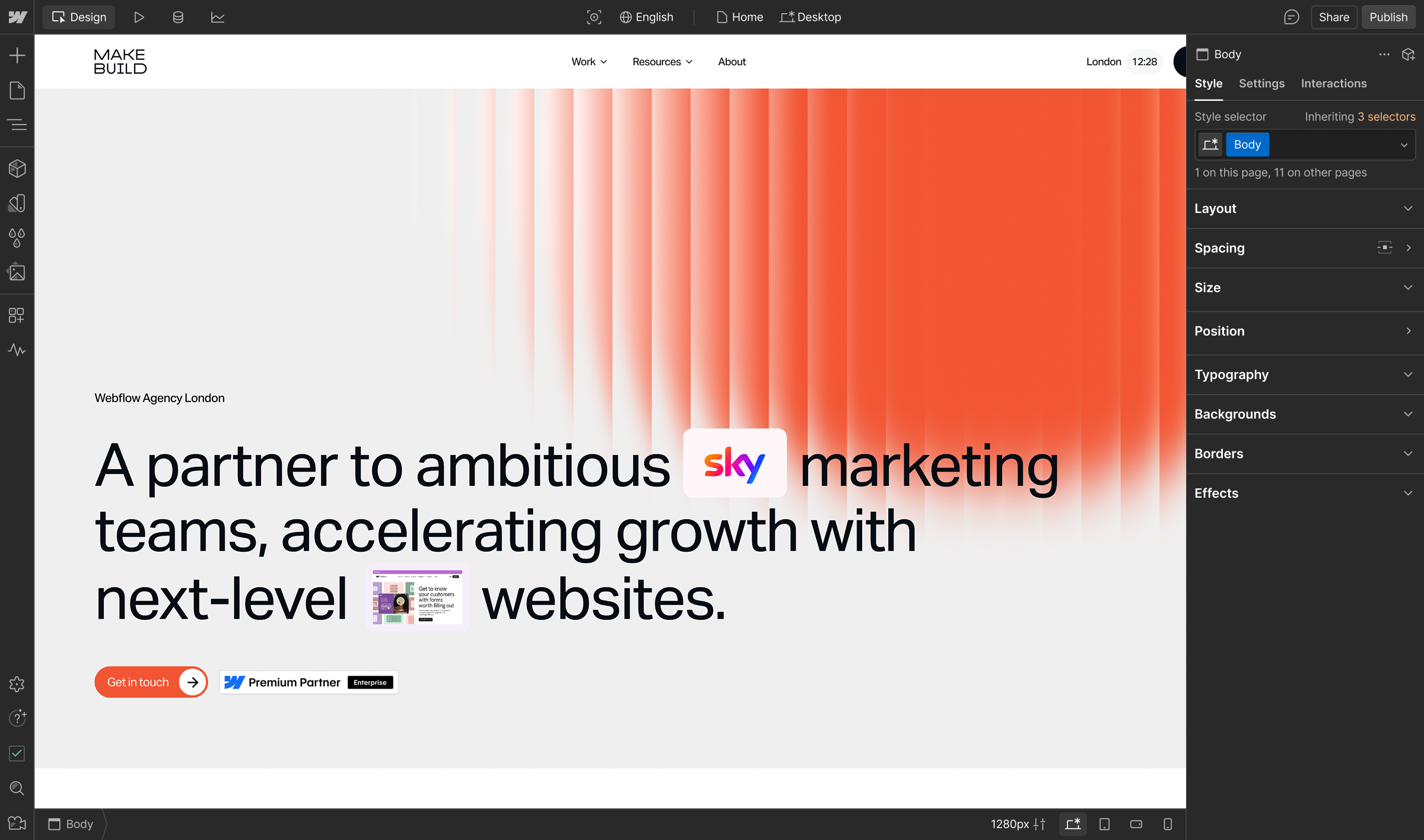
MakeBuild treats a website launch as the starting point, building sites that are designed to grow, adapt, and drive measurable commercial outcomes over time. MakeBuild brings together strategic clarity, considered design, and deep Webflow expertise to solve problems that go beyond the brief, from helping marketing teams take back control of their web presence, to building the kind of flexible, high-performing sites that compound in value as the business scales.

Analyze
Localization
Optimize
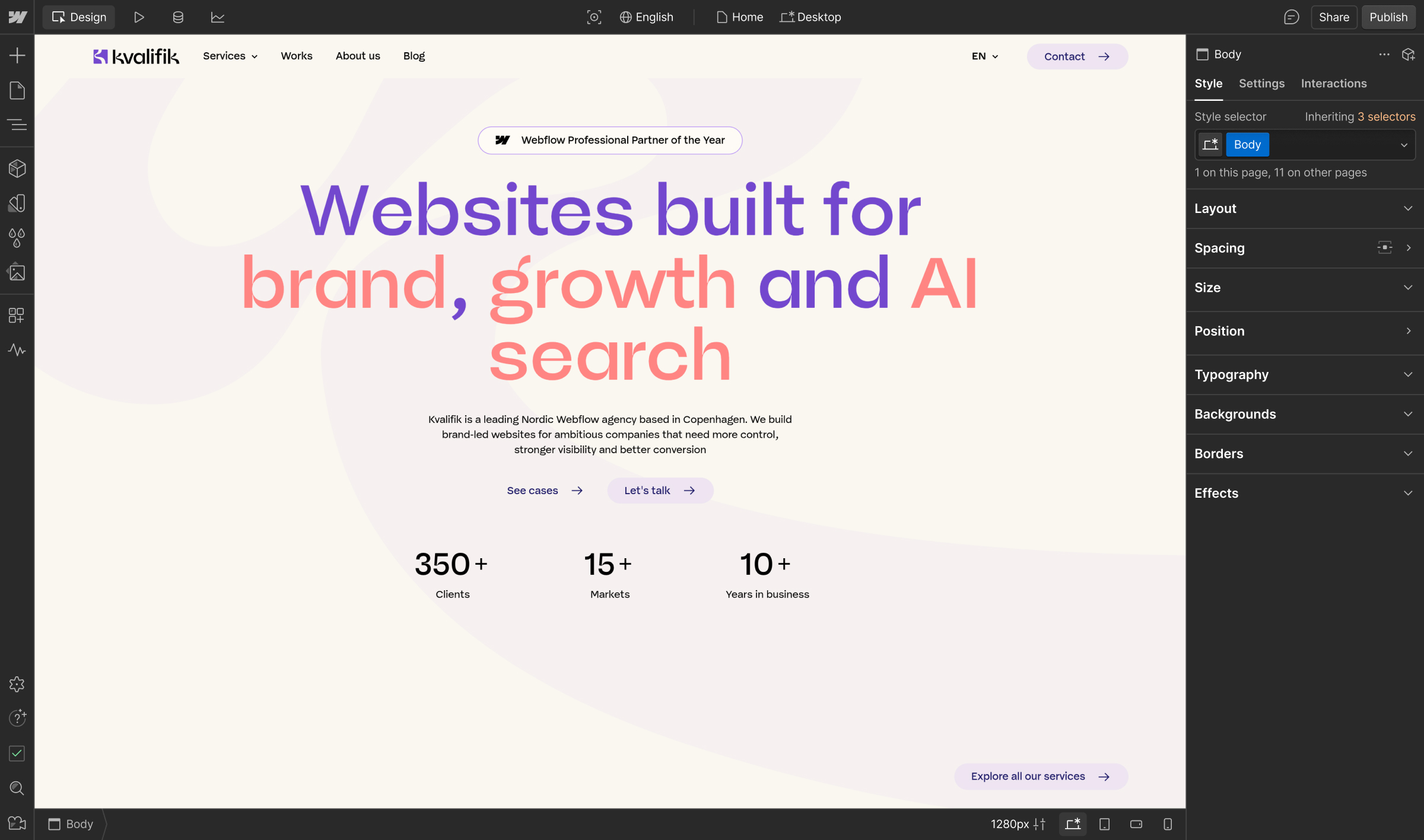
Since 2015, Kvalifik has bet on something many agencies weren't ready for: the people who grow a business should also shape its website. That belief led the Danish agency to Webflow before it became an enterprise platform. Today, Kvalifik has delivered 100+ Webflow projects, migrated 20,000+ pages, and earned Webflow's 2025 Professional Partner of the Year award. Kvalifik now helps European companies build sites that let marketing teams move fast while designers and developers focus on higher-value work — backed by enterprise-grade governance, scalability, and security.

Analyze
Localization
Optimize
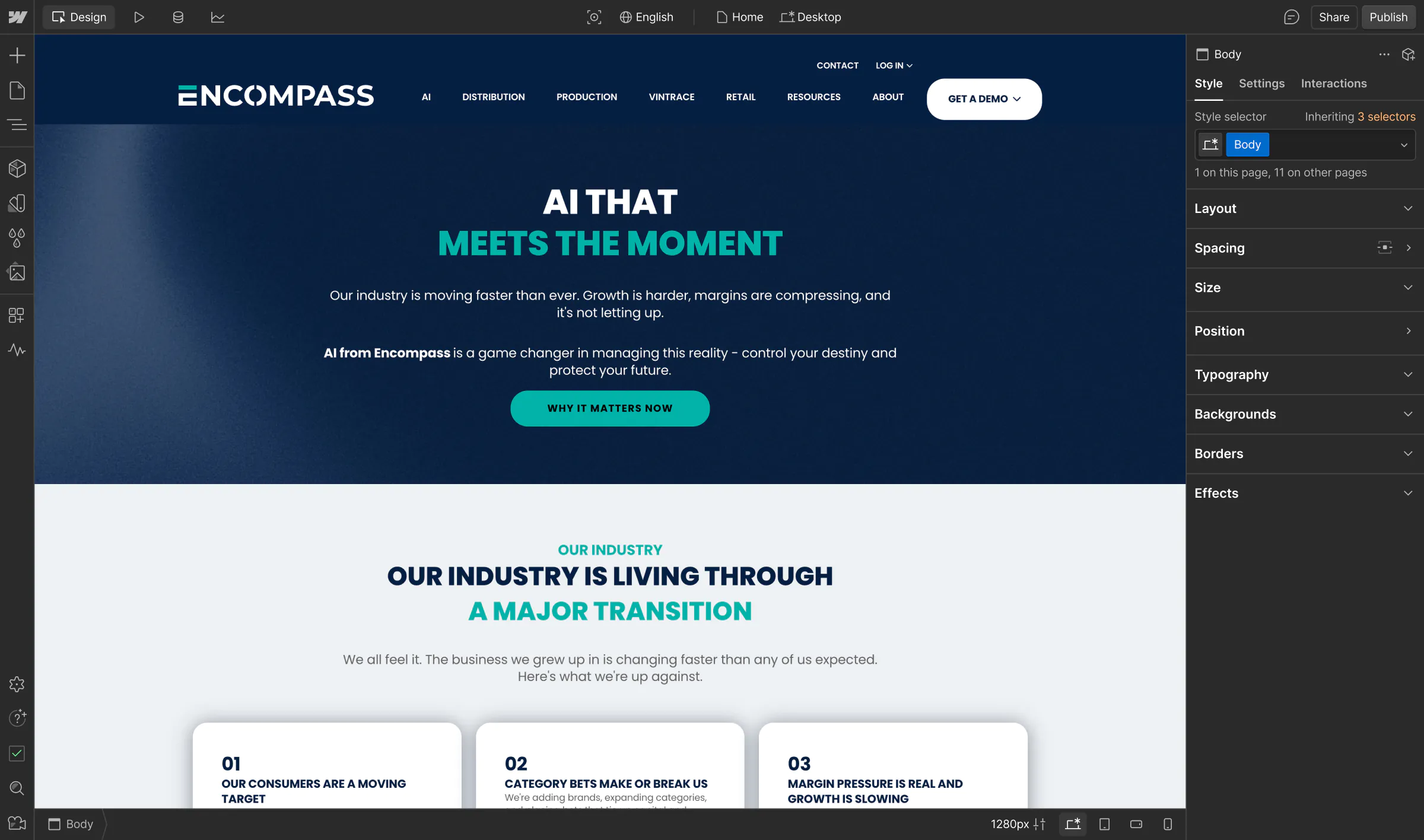
When Encompass's marketing team wanted to make a change, they filed a ticket and waited. Three acquired brands meant three disconnected sites and zero publishing autonomy. After migrating to Webflow, they consolidated everything and took full ownership of their digital front door.
Analyze
Localization
Optimize
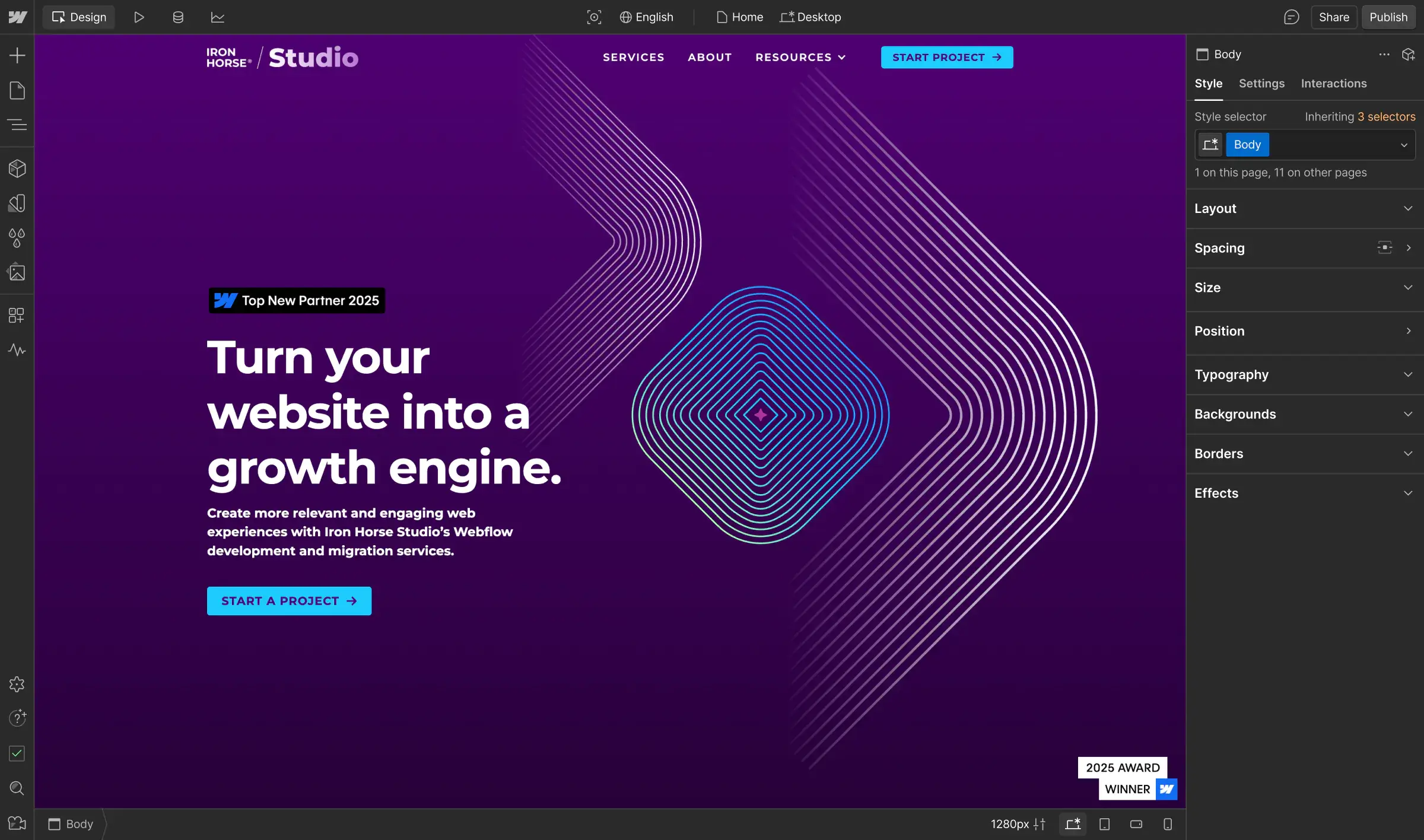
After 26 years building growth strategies for enterprise brands, Iron Horse discovered Webflow in October 2024 — and went all in. With Webflow Enterprise, Optimize, and Cloud, they broke free from developer bottlenecks, doubled win rates on web-led deals, and launched an entirely new business: Iron Horse Studio


Analyze
Localization
Optimize
N4 went all-in on Webflow Enterprise three years ago, evolving from a multi-platform agency into a specialized partner that tackles the most complex migrations and digital transformations. By deeply embedding Webflow's capabilities — especially Optimize — into their strategic approach, they've become the go-to partner for enterprises looking to break free from legacy platforms like Adobe Experience Manager.

Analyze
Localization
Optimize
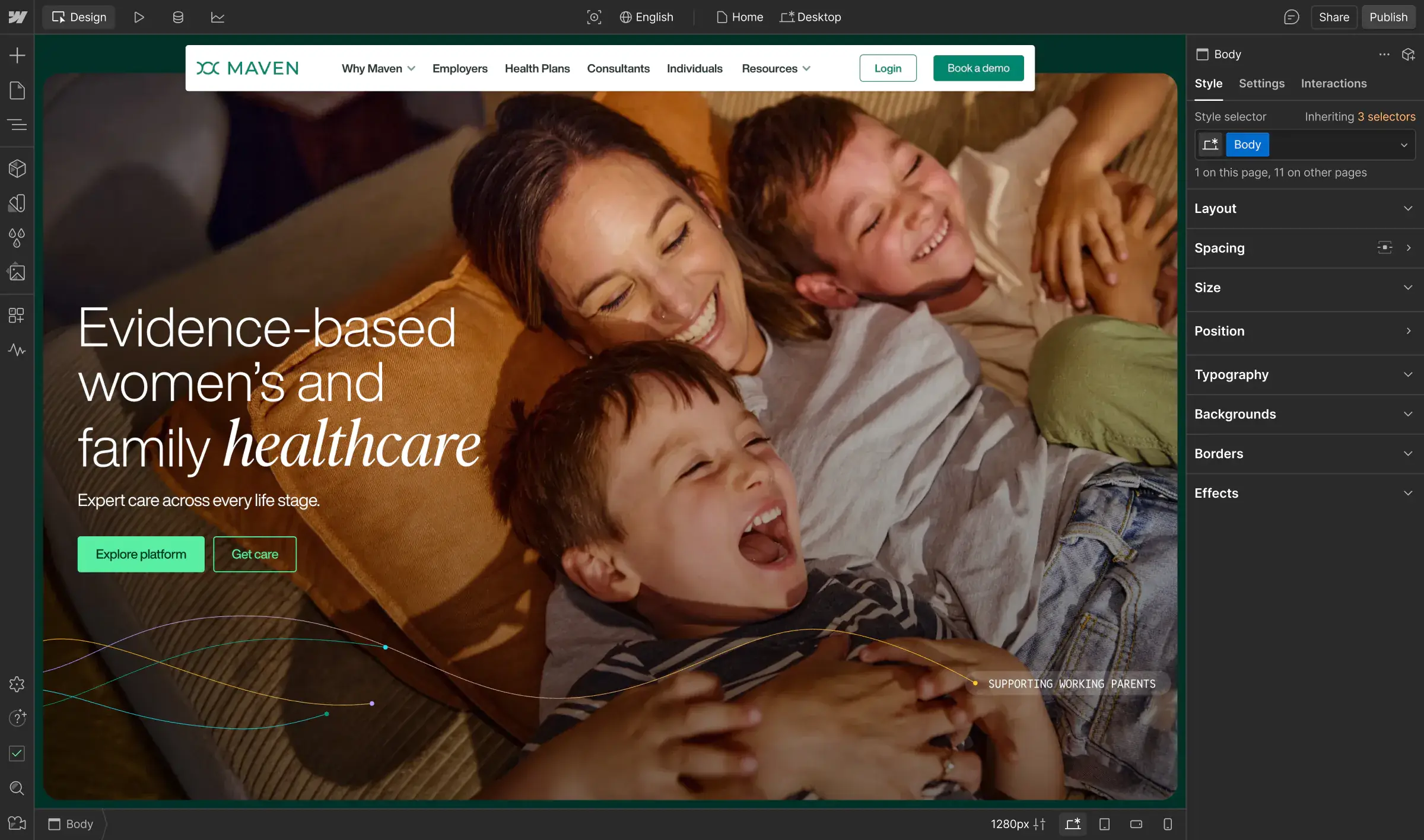
After struggling with a one-size-fits-all site, Maven rebuilt with Webflow Partner N4 on Webflow Enterprise to better serve multiple audiences. The modern, modular system supports real testing, global localization, and smoother collaboration across marketing and design.

Analyze
Localization
Optimize
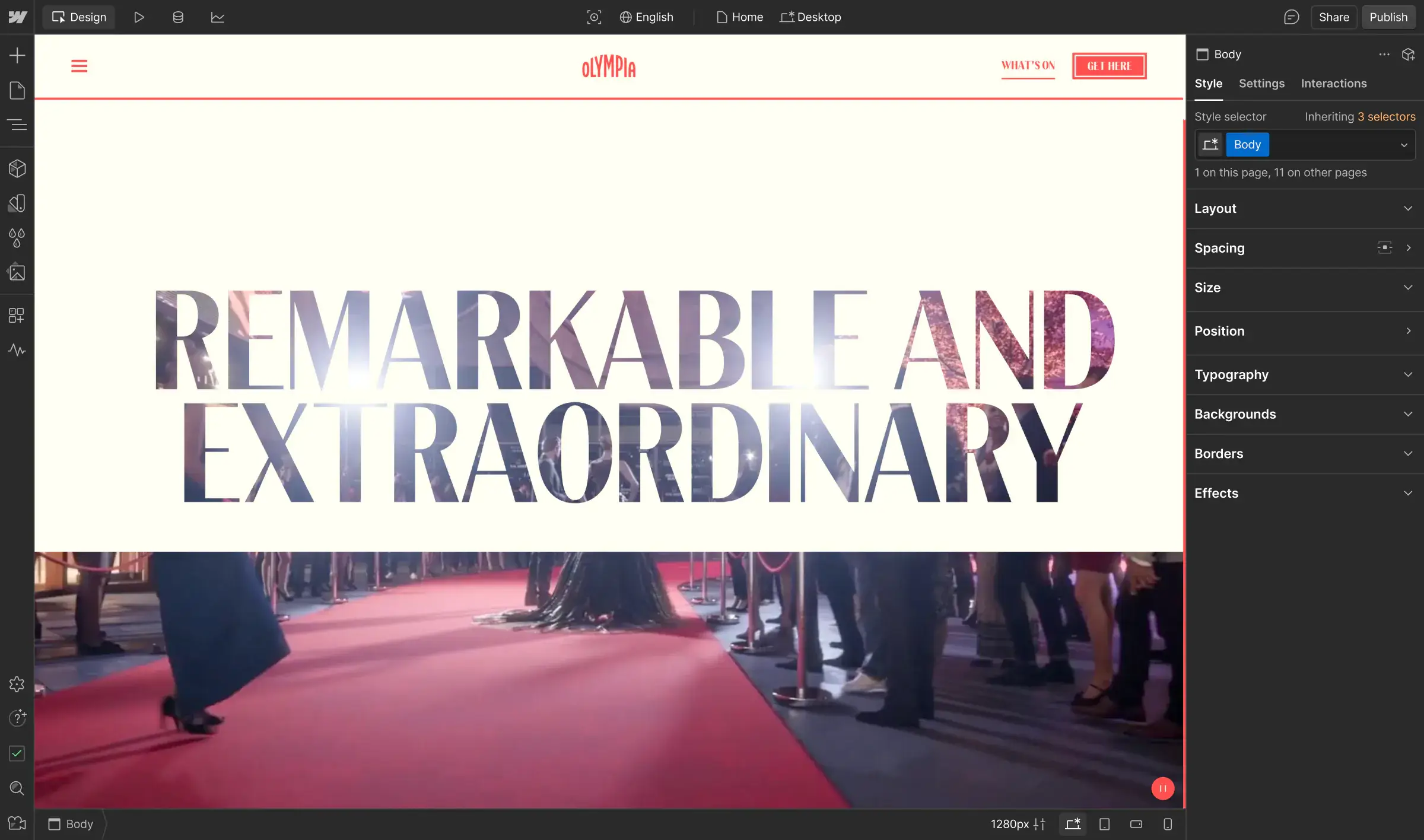
In anticipation of opening their newly reimagined physical destination, Olympia needed a digital home to match a £1.3bn investment into the transformation of this iconic London location from exhibition venue to the capital’s newest entertainment destination. With Webflow and N4, the team now runs a flexible, scalable site built for unprecedented personalization and growth.

Analyze
Localization
Optimize
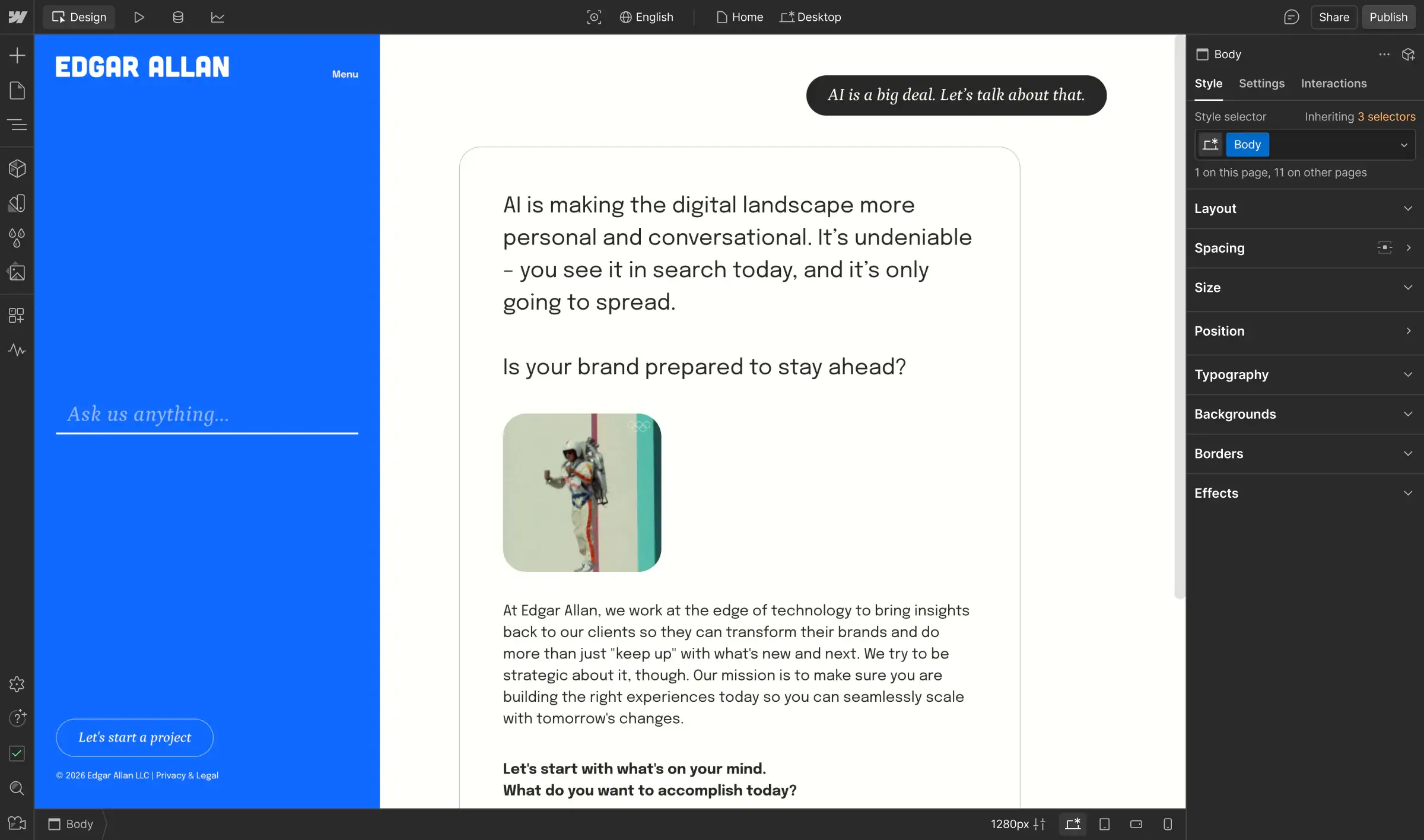
Like many agencies, Edgar Allan wasn’t satisfied with sluggish platforms, heavy handoffs, and post-launch slow-downs. By adopting Webflow more than a decade ago, they embraced a modern agency model that enables a more innovative, scalable way to design, build, and optimize.

Analyze
Localization
Optimize
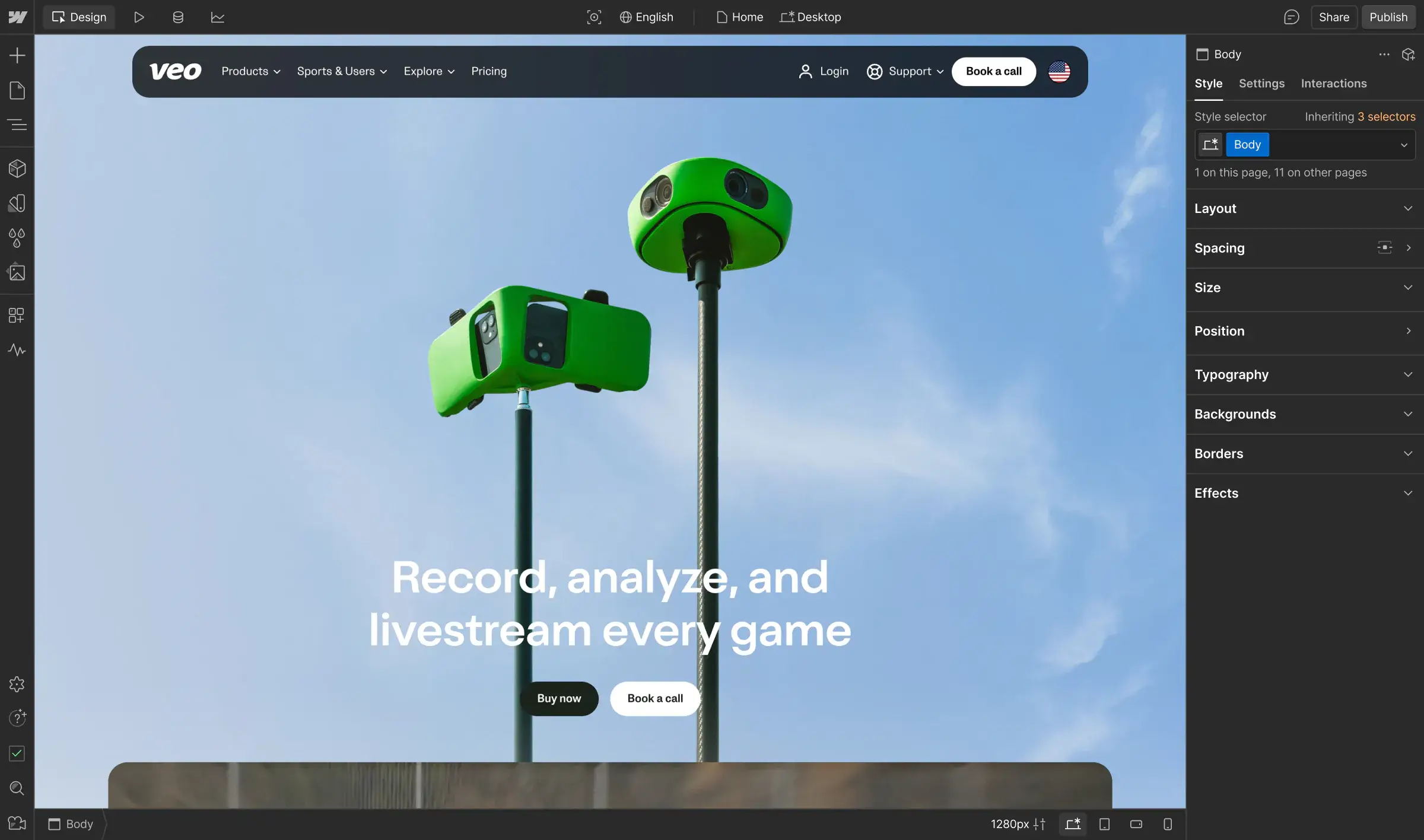
After years of slow, developer-heavy workflows, Veo took back control of their site with Webflow Enterprise and Enterprise Partner Kvalifik. Now the team moves quickly, ships global content with ease, and tailors customer journeys for every sport and market.

Analyze
Localization
Optimize
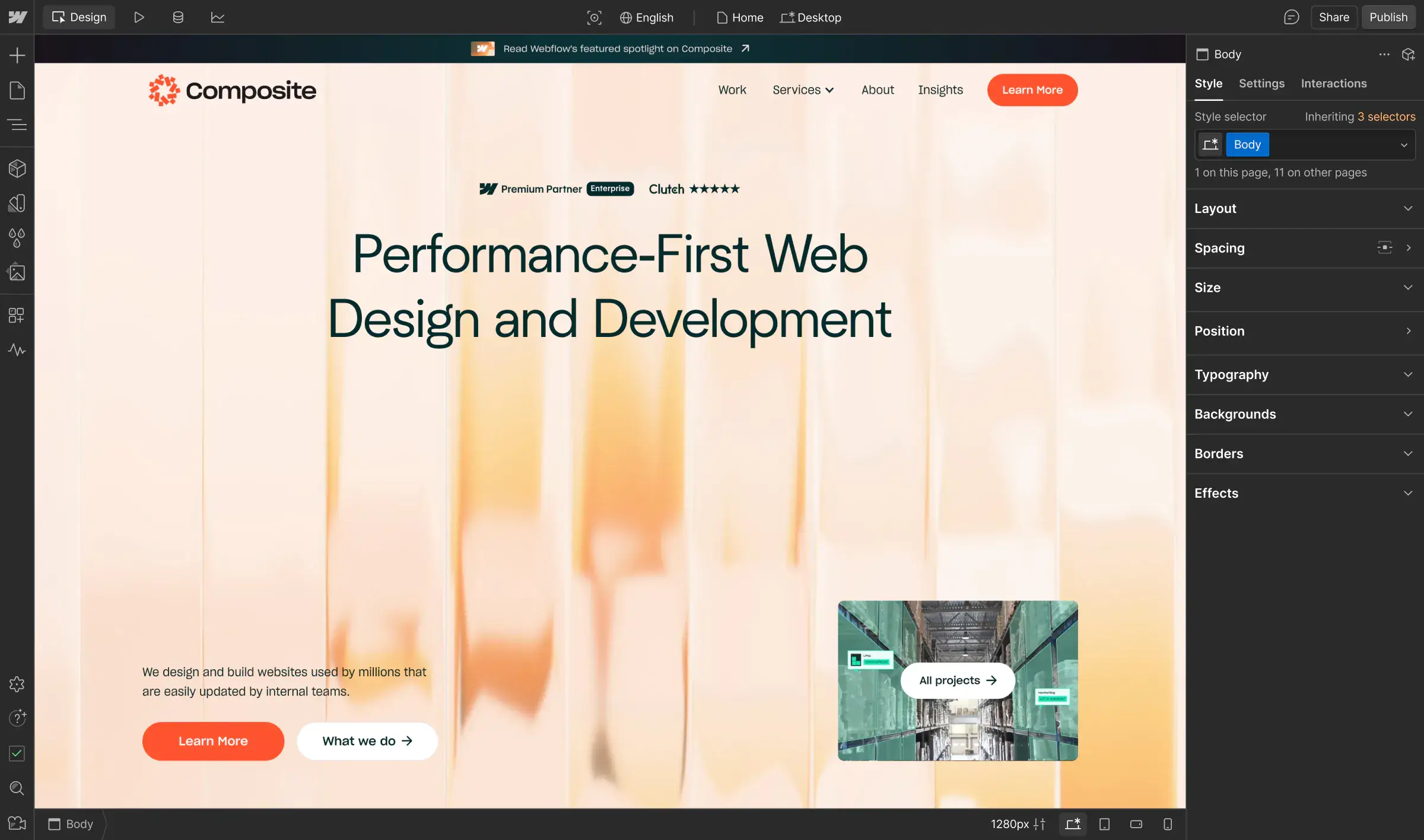
With Webflow, Composite gives enterprise clients the freedom to move faster and own their digital presence. By replacing code-heavy builds with a visual workflow, the team delivers higher-performing sites in weeks instead of months — helping clients ship, iterate, and scale with confidence.

Analyze
Localization
Optimize
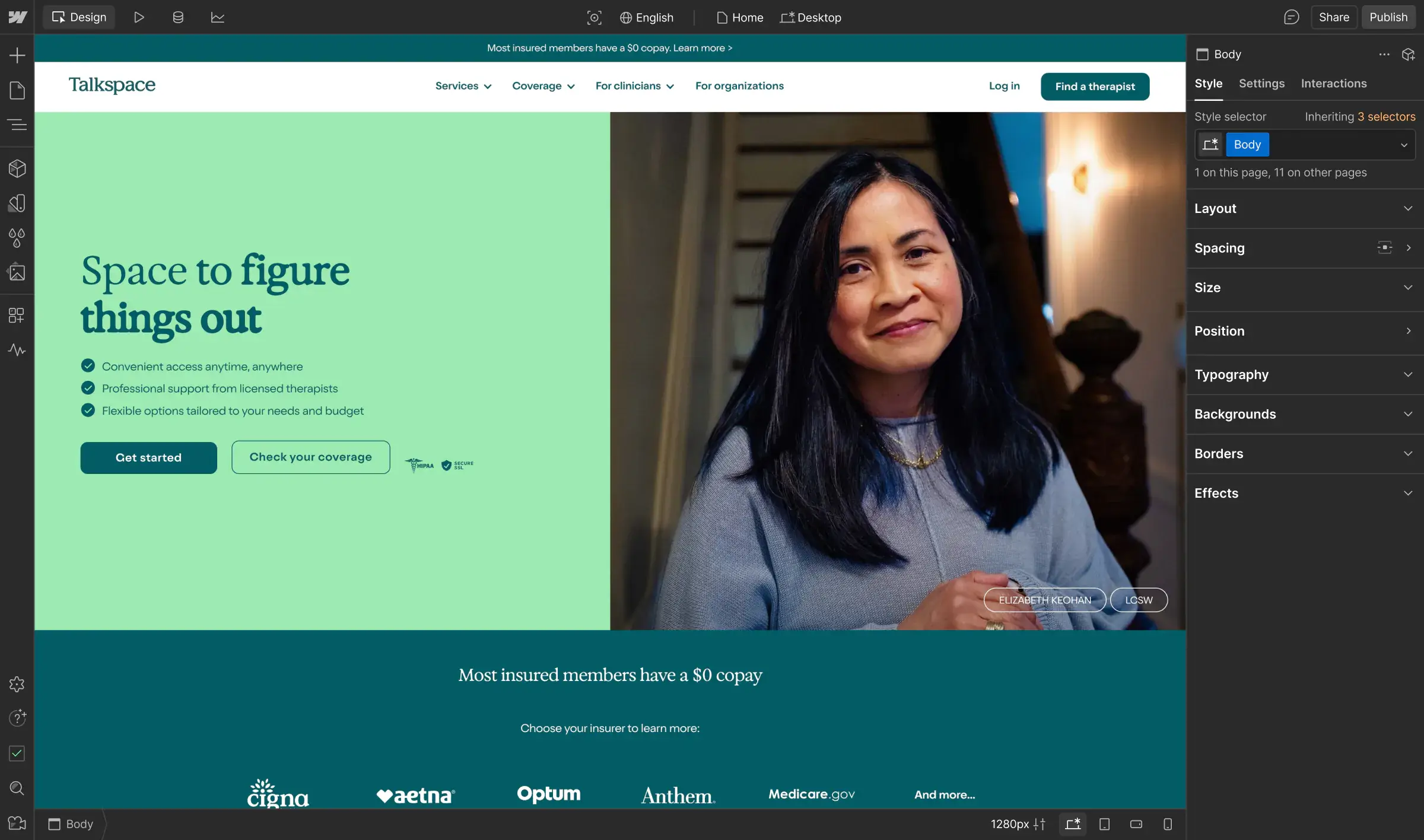
Talkspace needed a way to unify their digital presence and brand identity. With Webflow Enterprise, updates now take hours, new pages launch 7x faster, and the team can focus on their mission to expand access to mental health care.

Analyze
Localization
Optimize
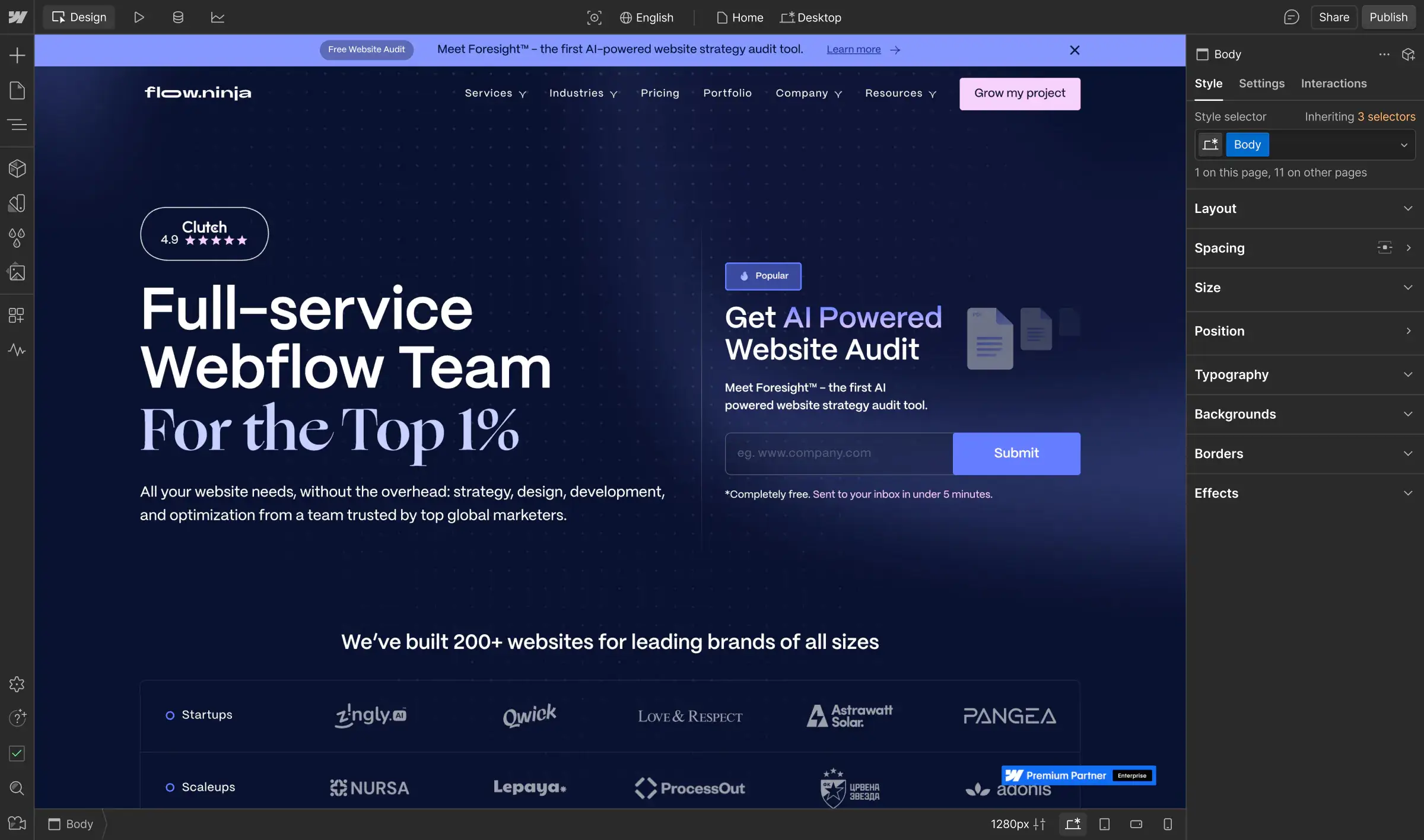
Flow Ninja rebuilt how enterprise teams launch on the web, turning complex, slow-moving sites into scalable, high-performing experiences. With Webflow, they help clients around the world move faster, cut costs, and drive measurable business impact.

Analyze
Localization
Optimize
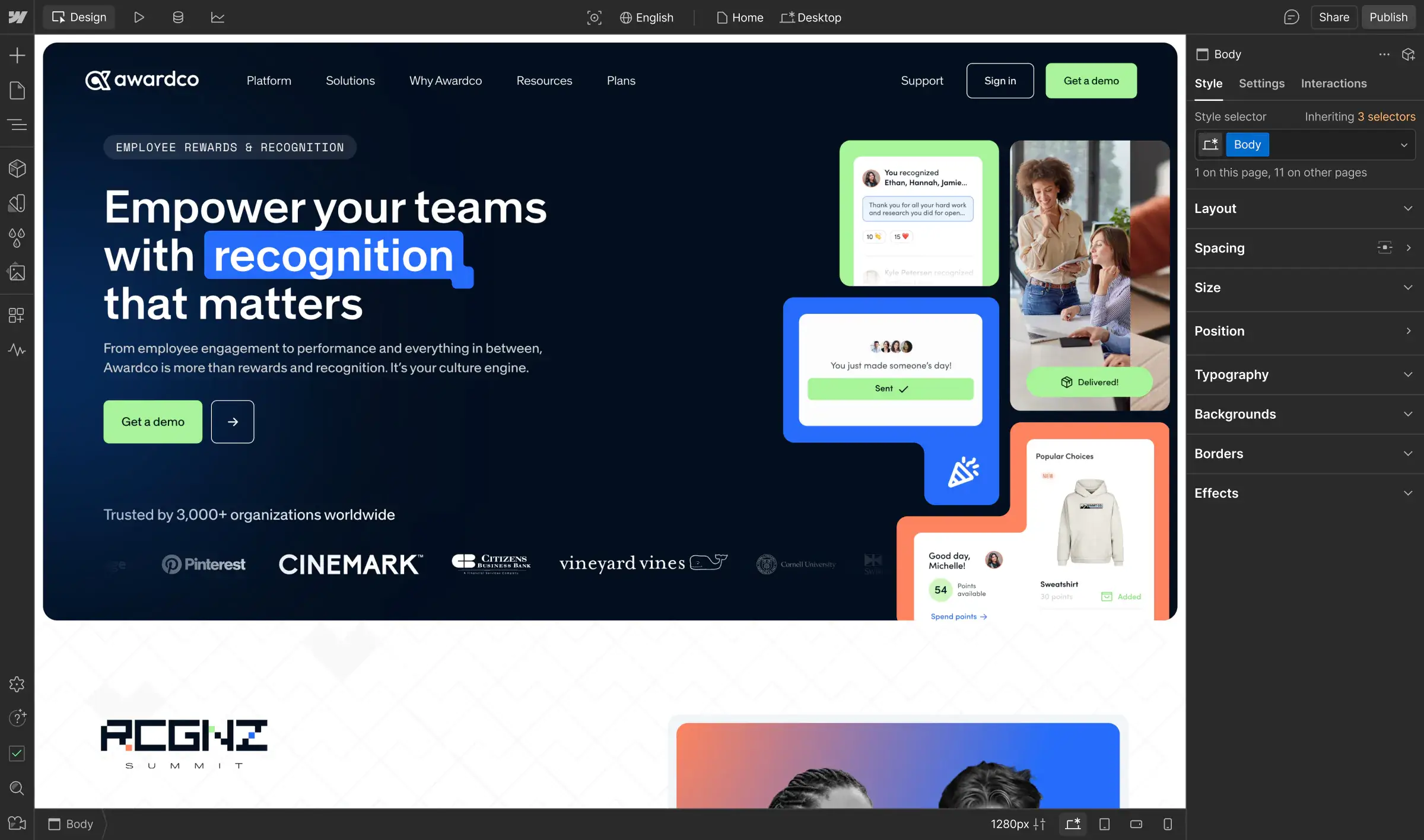
Awardco’s website was slow to update, hard to scale, and no longer reflected their billion-dollar valuation. With Webflow Enterprise and Amply, the team rebuilt in six months, launching 2,000+ pages, scaling globally, and doubling conversions while solidifying industry leadership.

Analyze
Localization
Optimize
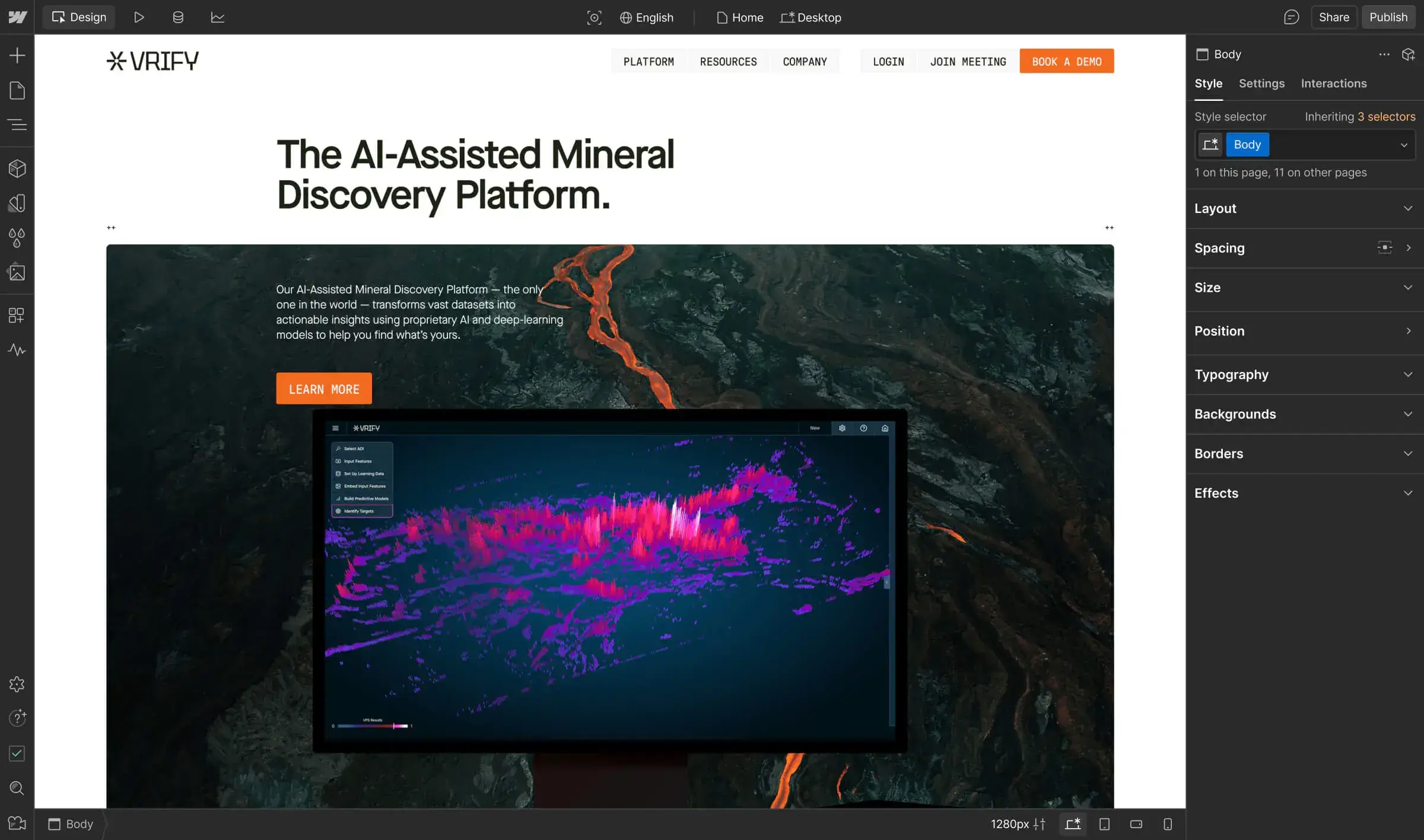
As VRIFY’s go-to-market strategy matured, their team needed a faster, more collaborative way to scale content. With Webflow Enterprise, they’ve unlocked the speed, trust, and flexibility to turn their website into a true growth engine — without adding headcount.

Analyze
Localization
Optimize
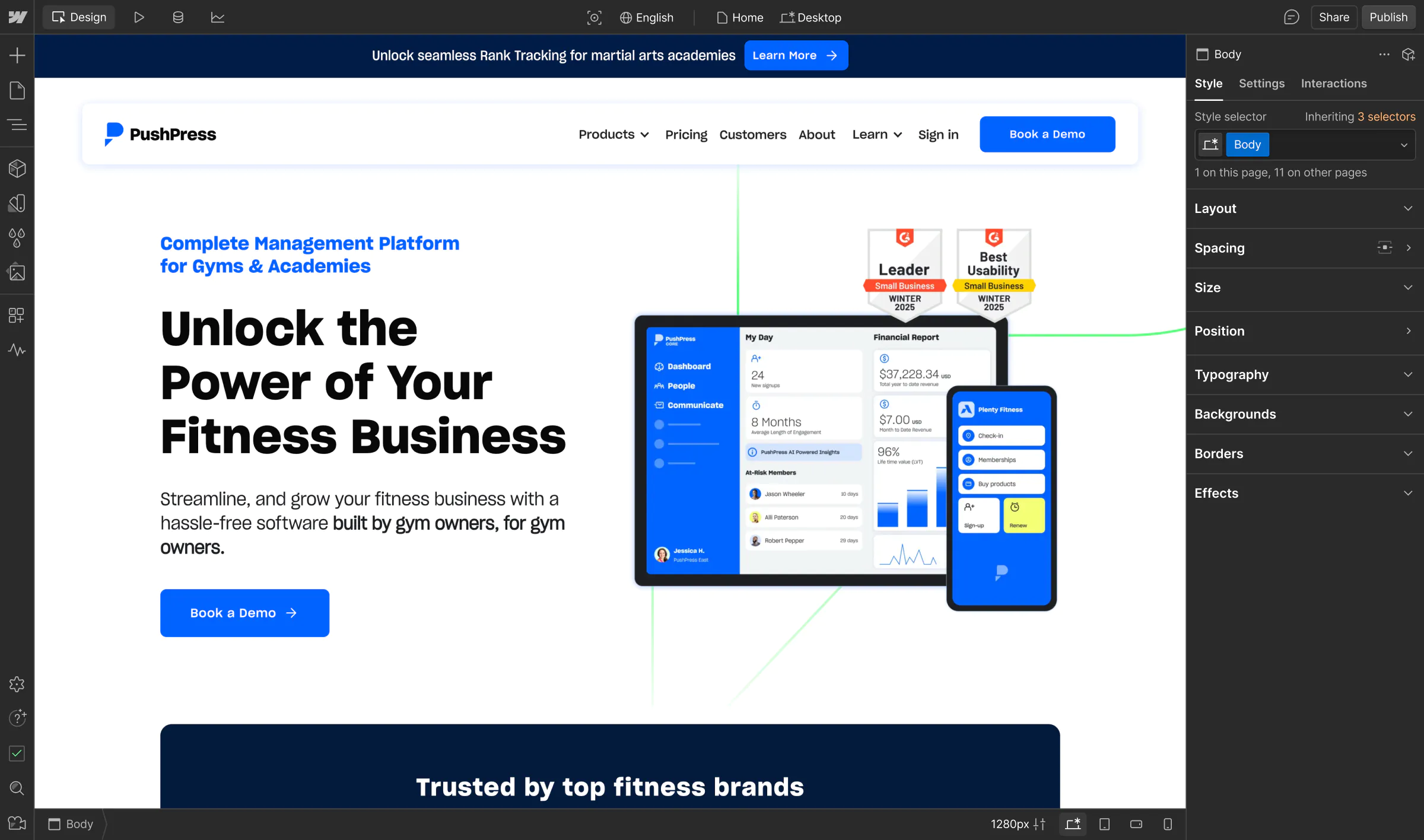
PushPress needed a faster, more flexible way to build unique, branded sites for fitness businesses. With Webflow, they can now deliver high-converting sites at scale — helping gym owners grow faster without bottlenecks or complexity.

Analyze
Localization
Optimize
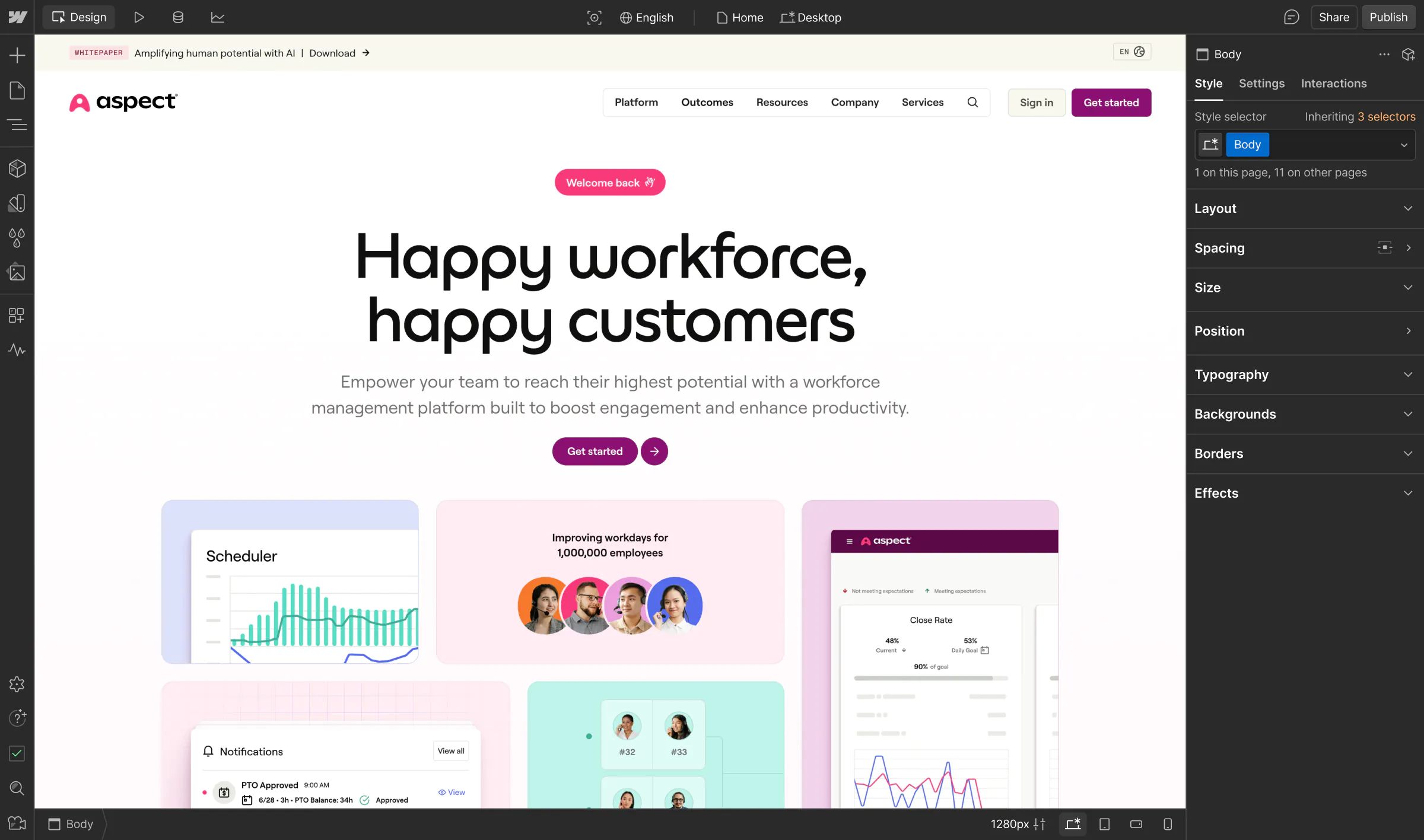
Aspect set out to create a new digital presence from scratch, while honoring their legacy brand. With Webflow, they built a global, modular, high-converting site in just two months — empowering their marketing team to move fast, experiment freely, and scale smarter.

Analyze
Localization
Optimize
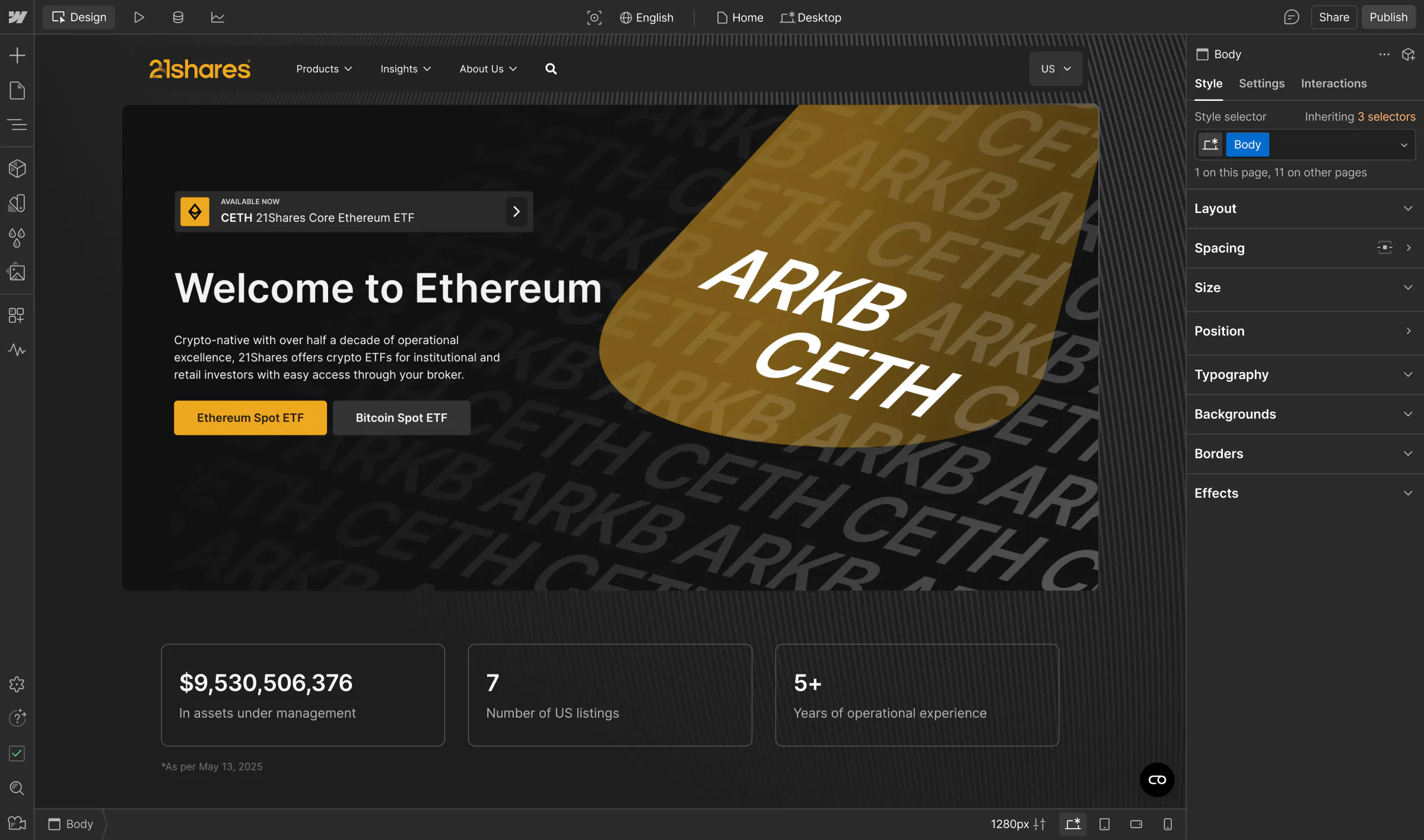
21.co previously relied on engineers for every update, hindering growth. With Webflow, the team builds better together – marketers and designers can move fast to scale content across global markets, while developers step in for more complex web builds and integrations.

Analyze
Localization
Optimize
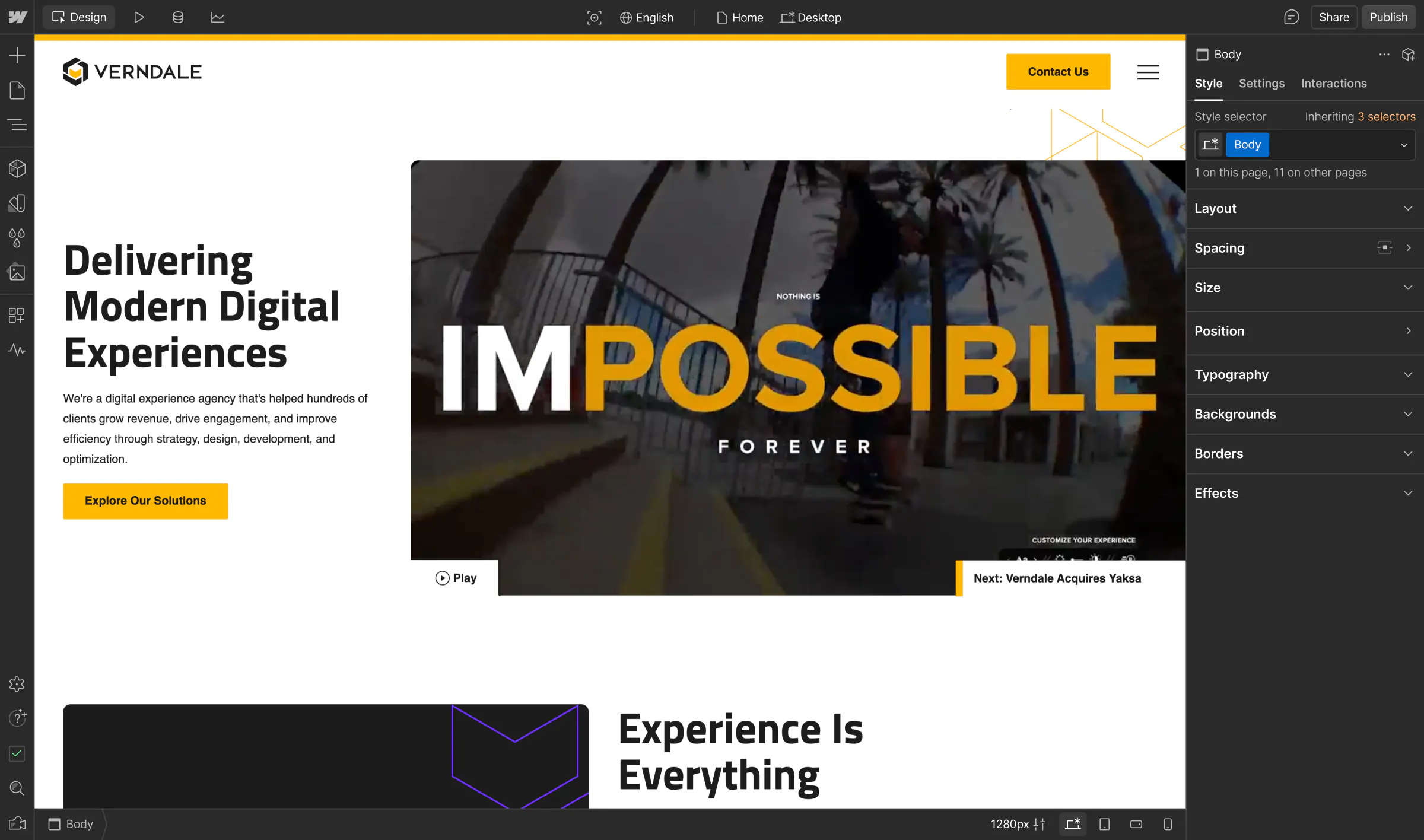
Recognizing the challenges clients face with traditional DXPs and developer-intensive headless CMSs, Verndale turned to Webflow. The visual-first, composable CMS allows Verndale to create high-impact digital experiences for their clients – minus the technical overhead.

Analyze
Localization
Optimize
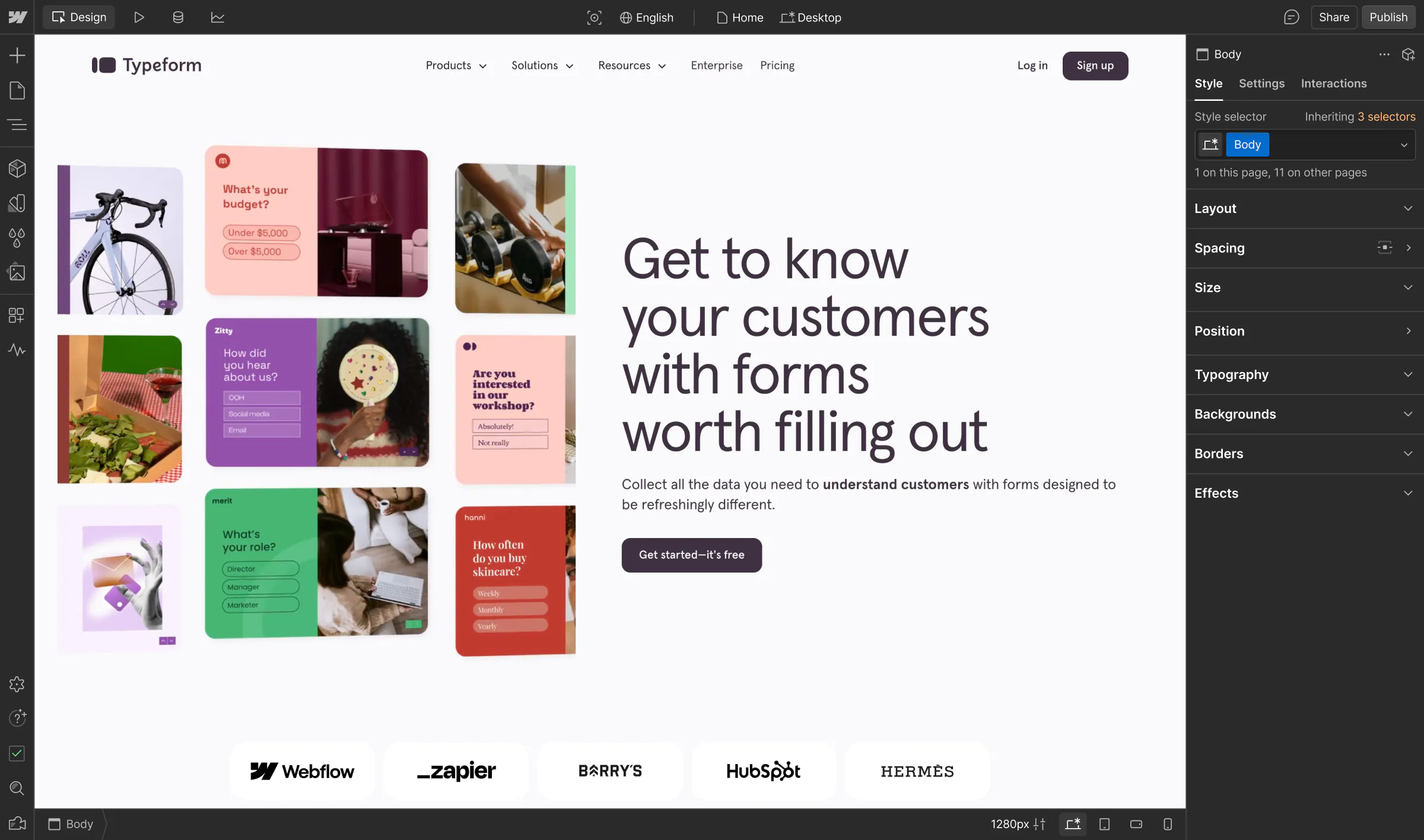
Typeform’s marketing team struggled with a CMS that hindered agility, experimentation, and digital growth. After partnering with Webflow and MakeBuild, they reclaimed website ownership, improved SEO performance, and accelerated speed-to-market.

Analyze
Localization
Optimize
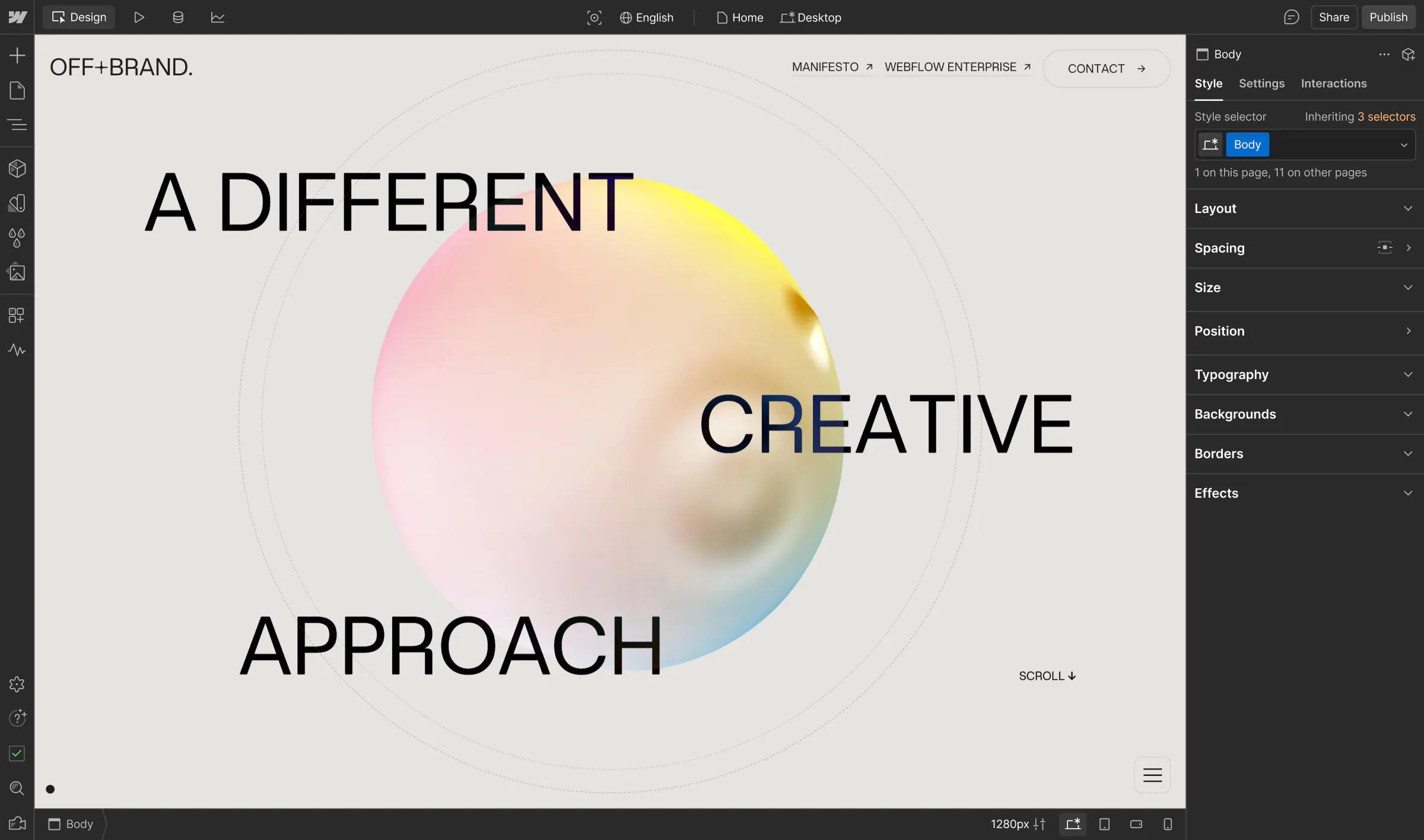
Known for delivering award-winning sites in record time, OFF+BRAND. uses Webflow to create high-performance, scalable content that blends striking design with seamless functionality, enabling clients to manage their sites independently while achieving real business impact.

Analyze
Localization
Optimize
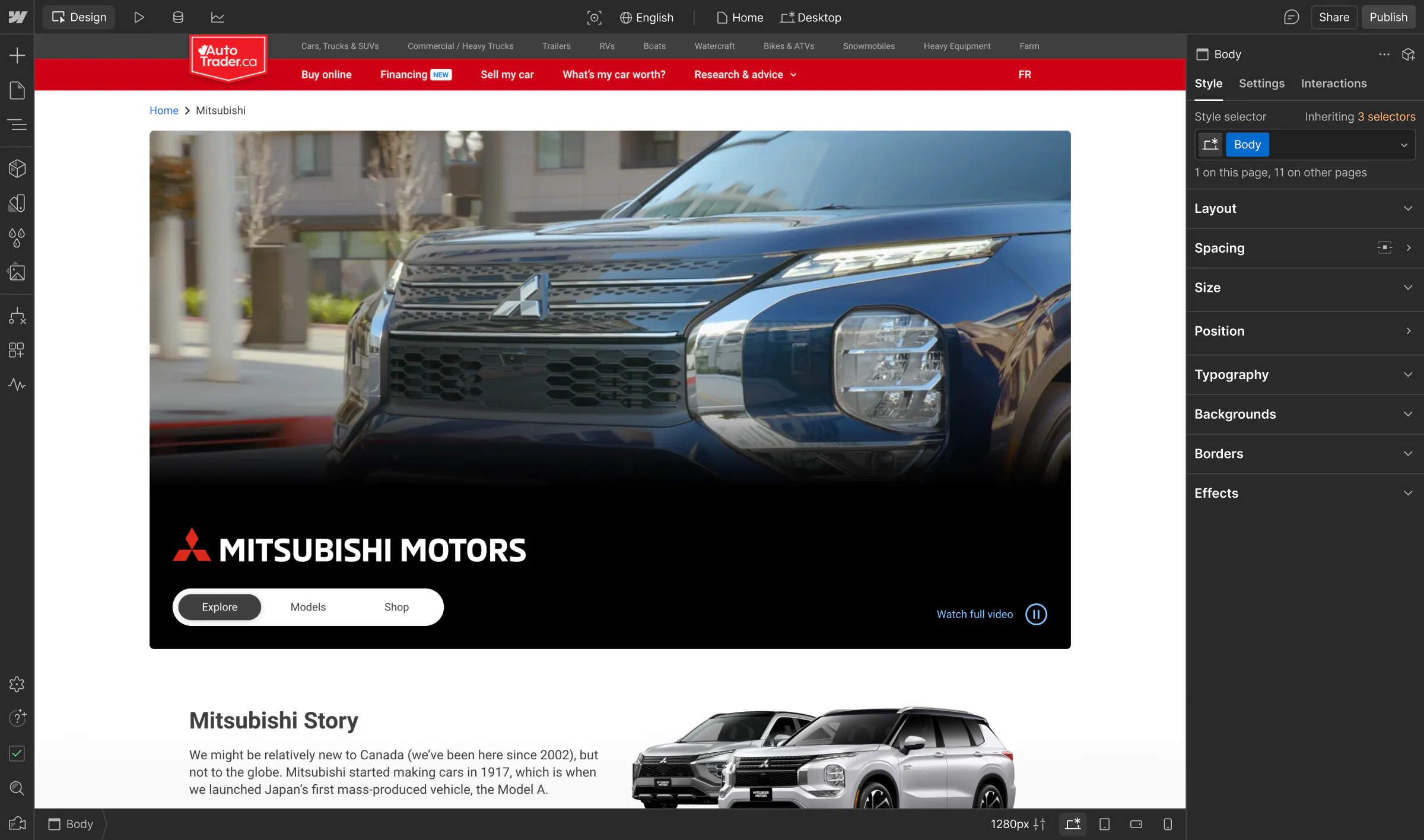
AutoTrader aimed to scale high-performance shopping experiences for individual car brands. By partnering with Composite and Webflow, they improved development efficiency and accelerated speed to market.

Analyze
Localization
Optimize
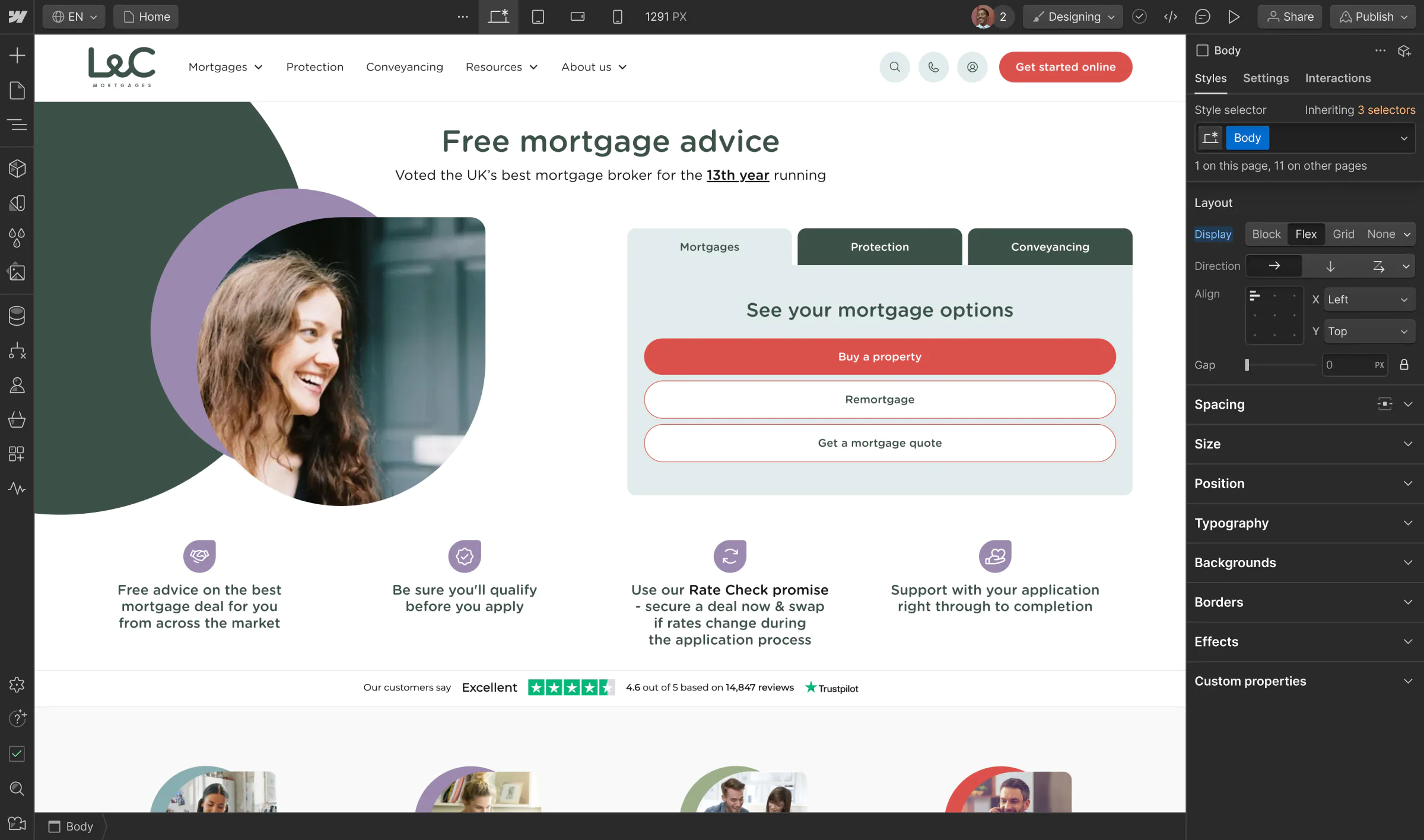
For years, a custom-coded legacy website stifled the fee-free mortgage broker’s creativity, and long development cycles made even the simplest edits cumbersome. Now, L&C’s marketing team has the flexibility to truly own their growth with a more scalable web presence.

Analyze
Localization
Optimize
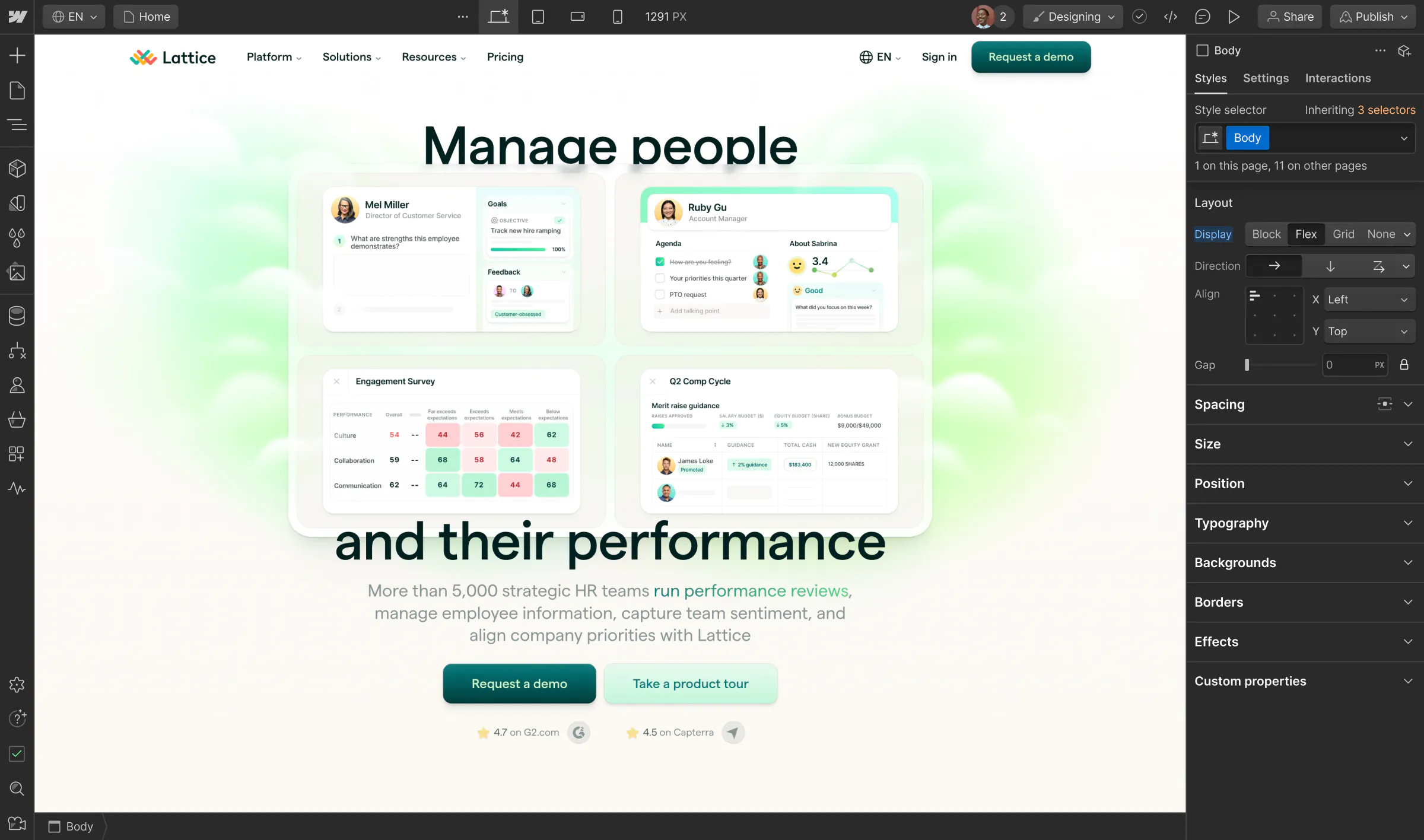
With an ambitious vision of evolving from a talent management tool to an end-to-end HR platform, Lattice bet on Webflow Enterprise to transform their website into a revenue-driving engine that empowers HR professionals around the world.

Analyze
Localization
Optimize
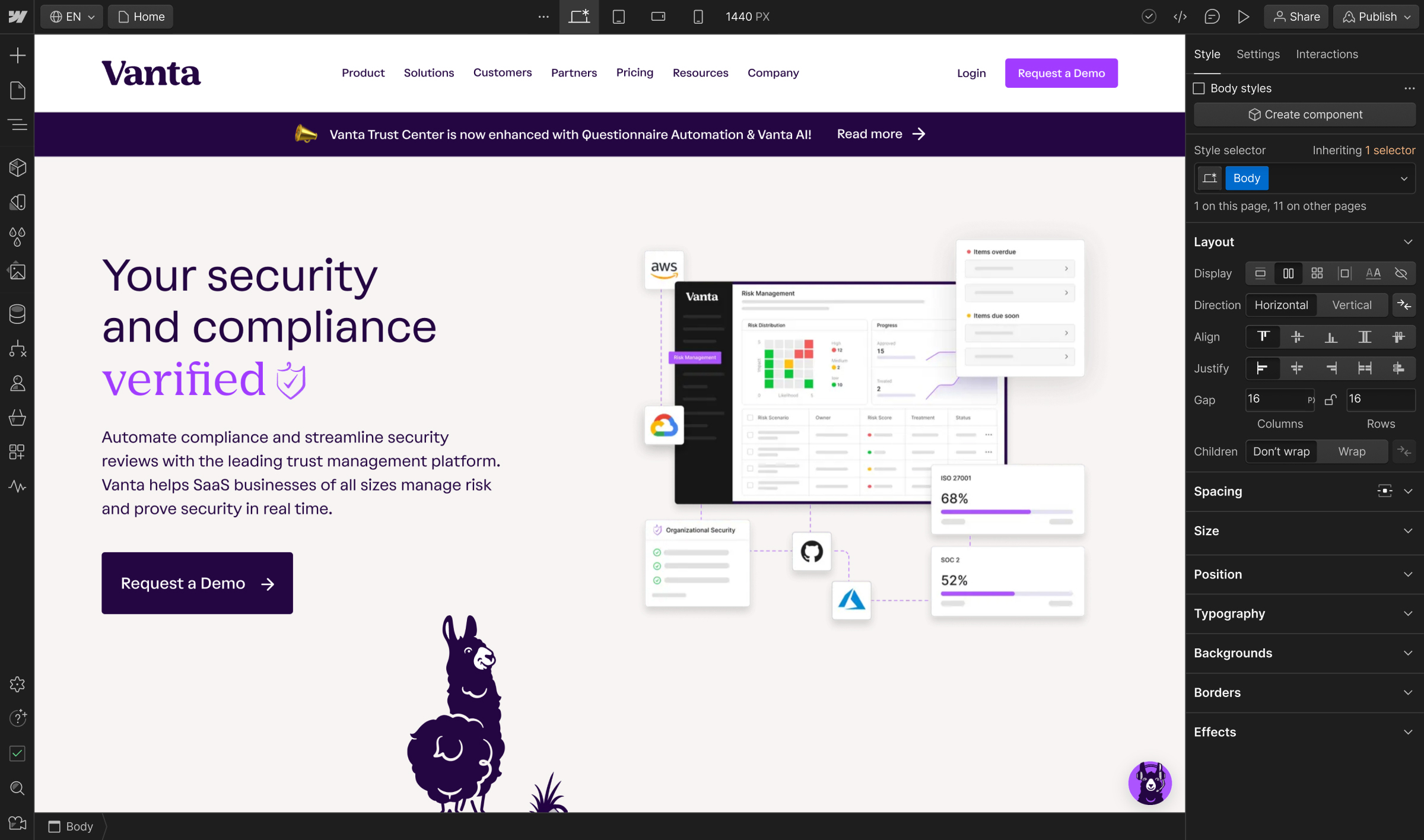
Vanta had ambitious plans to stand out in a competitive space. To bring their new brand to life while unlocking greater flexibility and collaboration, they upgraded to Webflow Enterprise and worked with trusted Webflow partners.

Analyze
Localization
Optimize
Previously reliant on developers to launch and manage custom sites, the cultural exchange group has optimized localization with Webflow Enterprise, significantly increasing speed to market and providing bespoke, branded experiences globally.

Analyze
Localization
Optimize
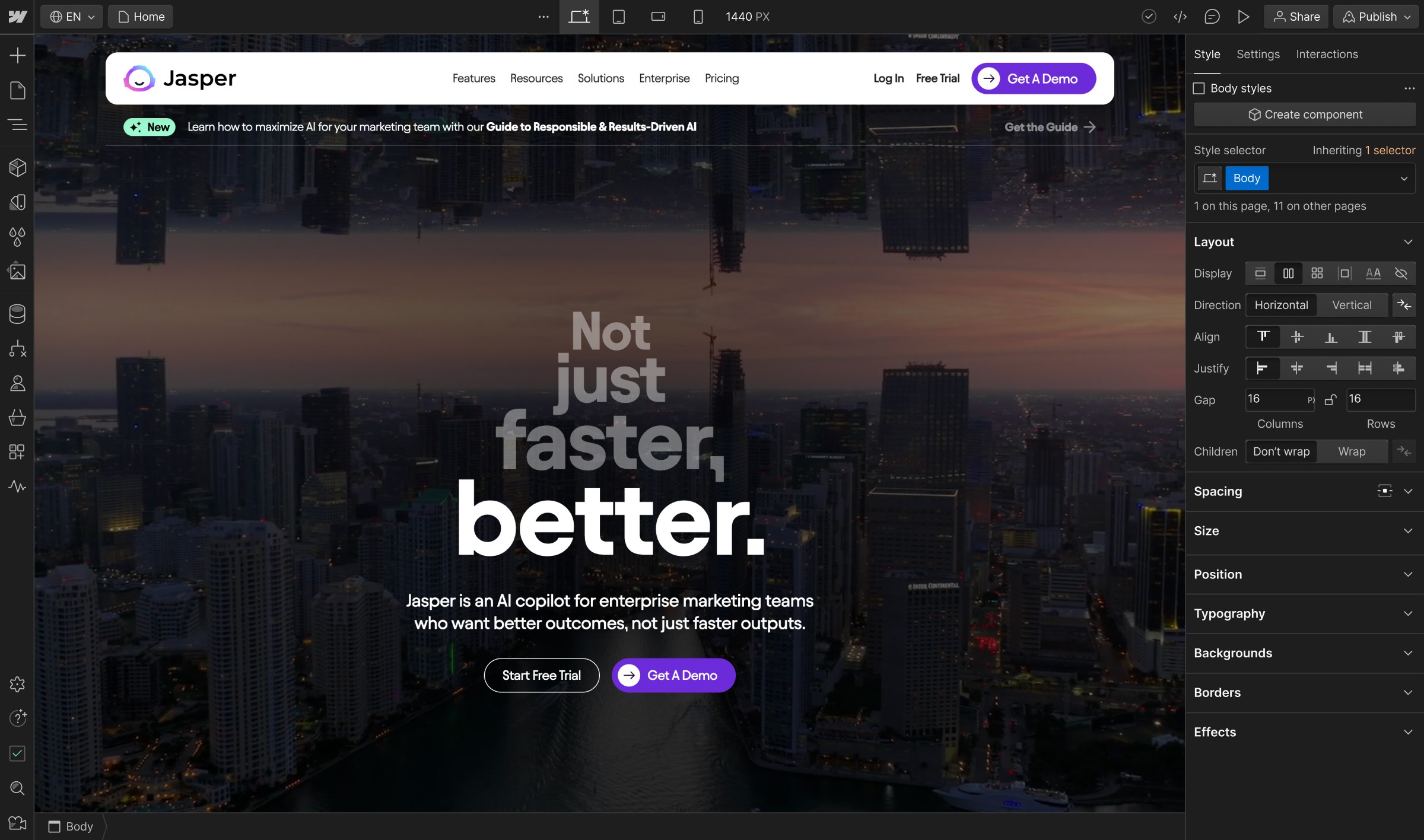
As the company shifted their focus upmarket, they needed a powerful solution to turn their website into their biggest strategic asset. With Webflow and its expansive Apps ecosystem, Jasper has supercharged their workflows to deliver the most performant web experiences.

Analyze
Localization
Optimize
As a Webflow Enterprise Partner, Refokus uses Webflow as a key part of their innovation toolkit to reduce development times and costs while delivering websites that increase engagement and help brands emotionally connect to global audiences.

Analyze
Localization
Optimize
Fueled by the power of Webflow, Outliant drives dramatic reductions in tech costs while empowering enterprise clients to dominate their industry with best-in-class digital experiences.

Analyze
Localization
Optimize
Quickly growing past the limits of Webflow self-serve for their global web presence, Kajabi upgraded to Enterprise to empower internal partners to build more robust web experiences, while ensuring governance.

Analyze
Localization
Optimize
Boutique agencies can often lose business due to long production timelines and tedious feedback loops—but DIKO has moved beyond those constraints to deliver even the most technically challenging projects for big clients.

Analyze
Localization
Optimize
Without a centralized design approach, the global HR company was dealing with an inconsistent brand presence. The team upgraded from self-serve to Webflow Enterprise to uplevel team collaboration, scale global web initiatives, and elevate their brand.

Analyze
Localization
Optimize
Instead of hoping front-end developers can execute on his big ideas, Kinetic Studio’s Hunter Thompson uses Webflow to control his entire vision, from executing design to setting up hosting and domains, publishing sites, and optimizing SEO.

Analyze
Localization
Optimize
Die Full-Service-Kreativagentur kann ihre charakteristische Hochdesign-Arbeit liefern, ohne auf Entwickler warten zu müssen, was letztendlich Zeit spart und die Tür zu weiteren Kundenmöglichkeiten öffnet.

Analyze
Localization
Optimize
Since migrating to Webflow, the recruitment marketing agency has bypassed the need to outsource web development, attracted bigger clients, and introduced a new revenue stream.

Analyze
Localization
Optimize
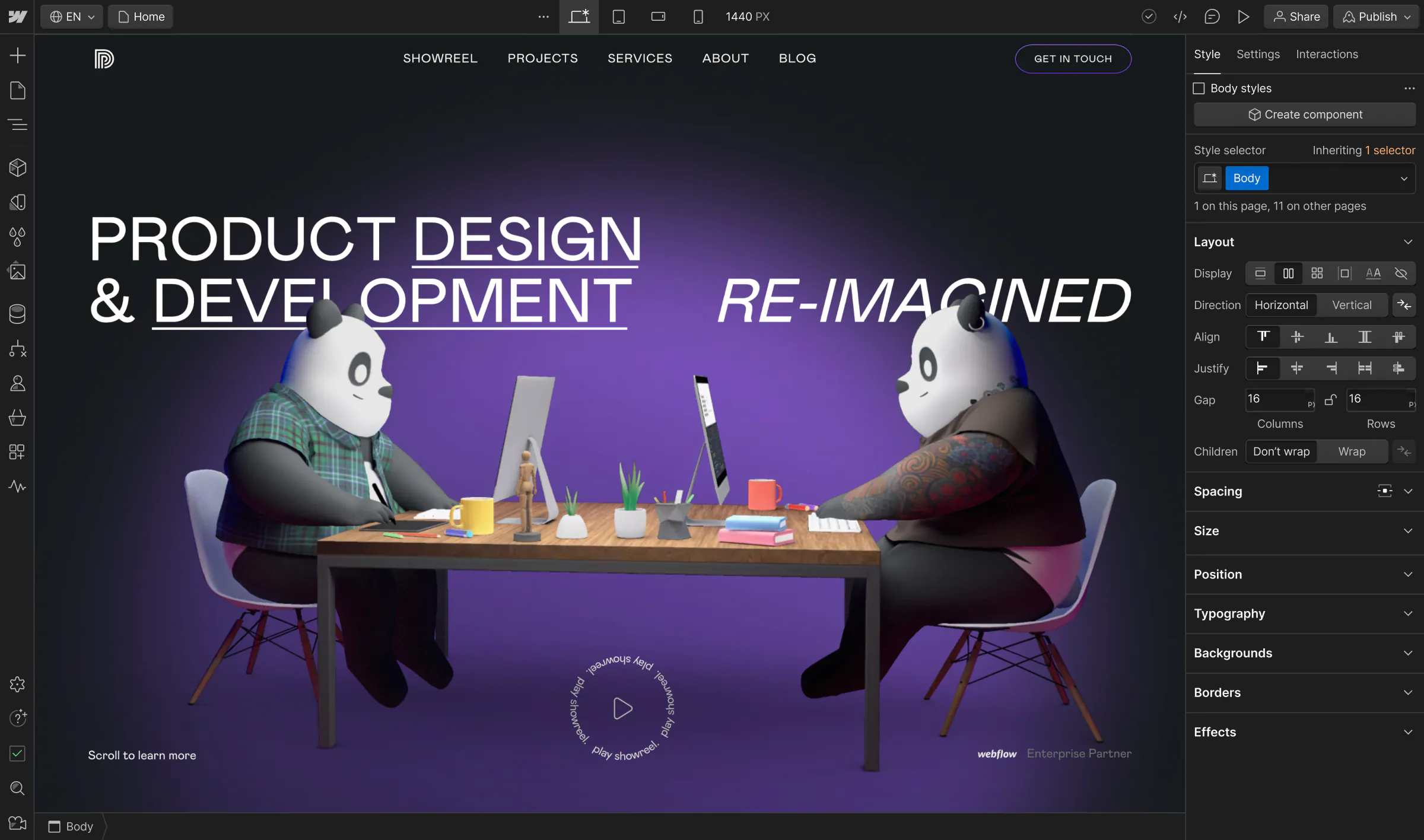
Once hindered by traditional development processes, The Digital Panda’s team of global visionaries now use Webflow to efficiently deliver more powerful web experiences to enterprise clients.

Analyze
Localization
Optimize
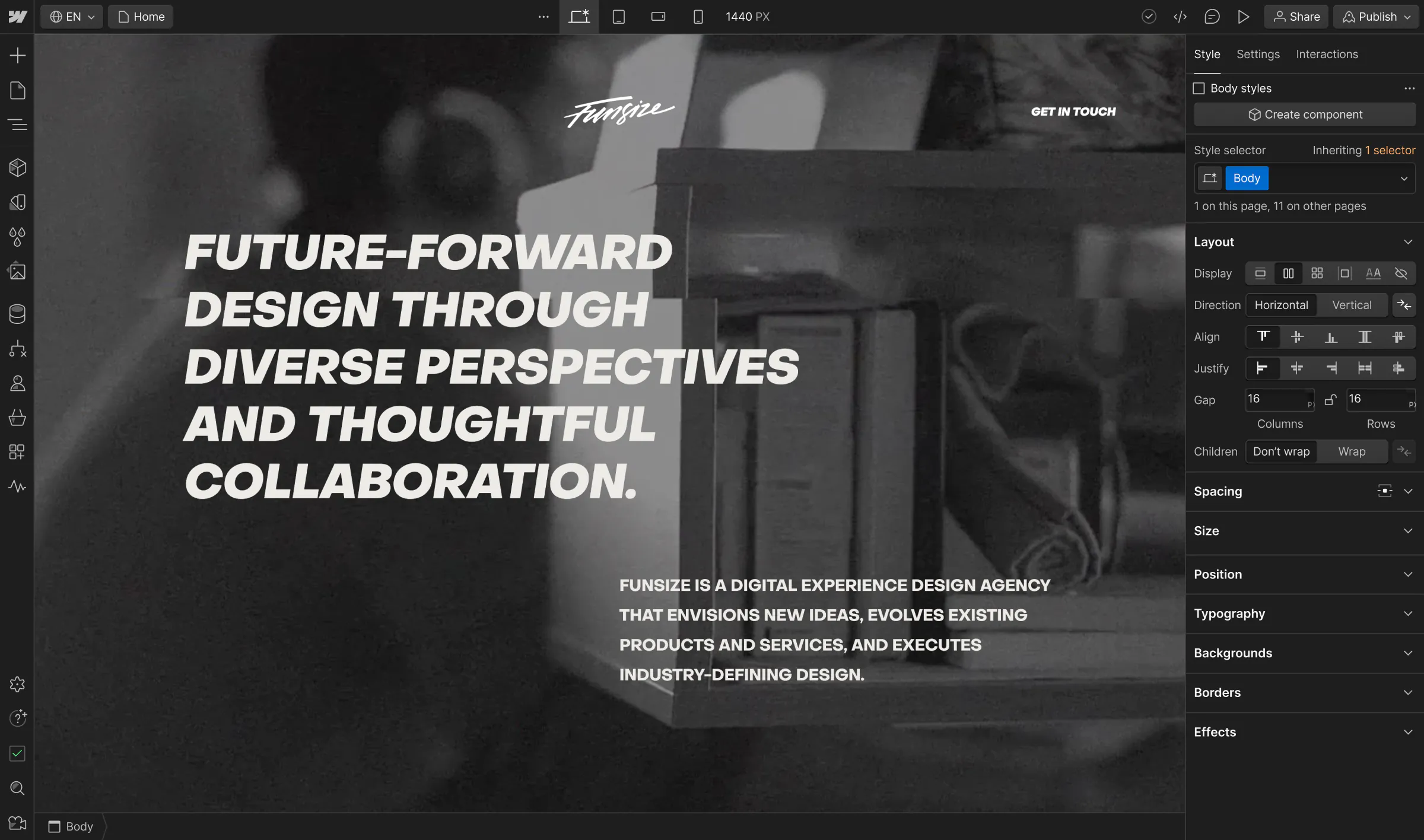
With limited resources and no in-house developers, the Funsize team can tap into the power of Webflow to push creative boundaries and exceed client expectations—delivering better work, faster.

Analyze
Localization
Optimize
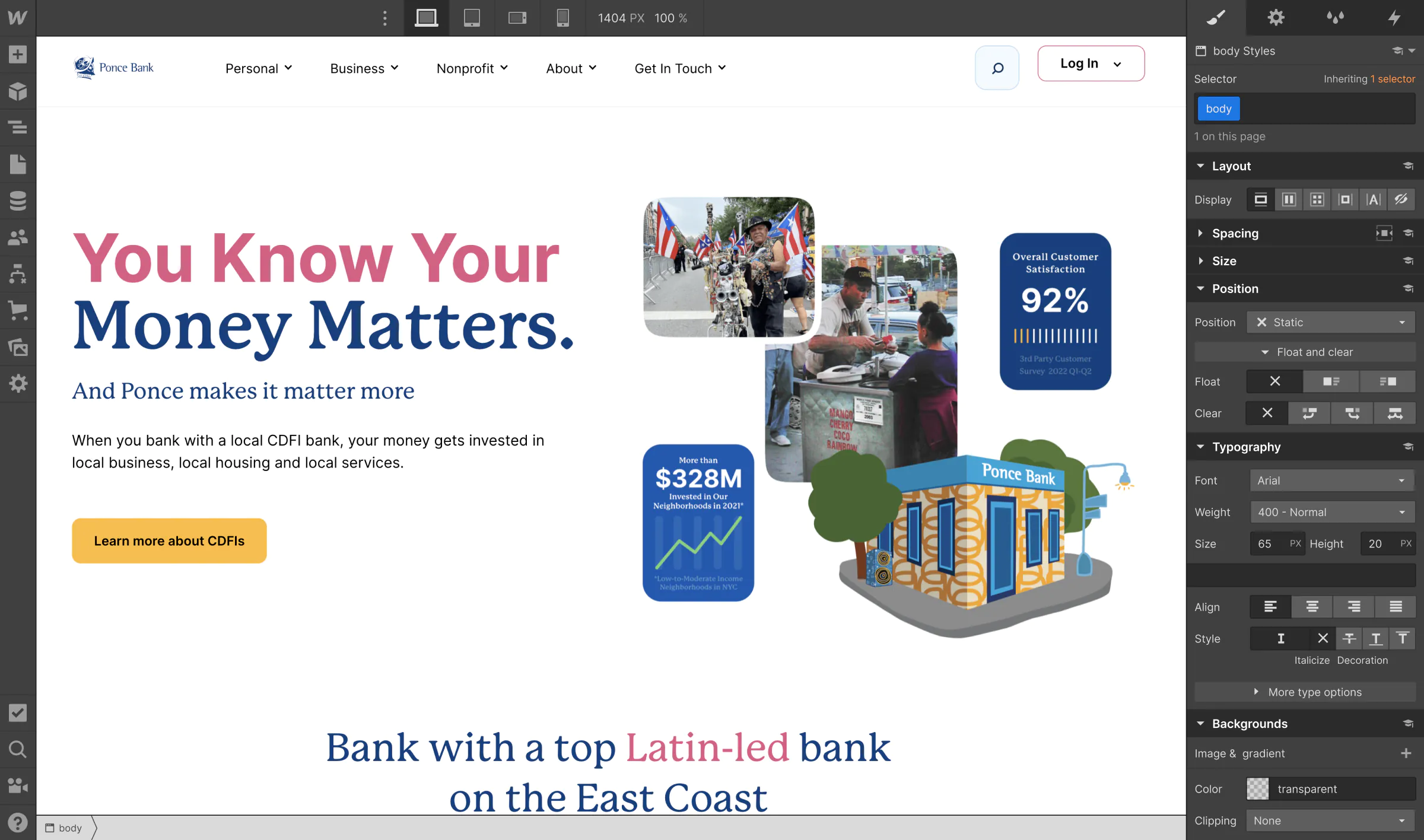
To break free from the traditional web development tools that often limit community banks, Ponce Bank turned to Webflow to deliver higher-quality digital experiences.

Analyze
Localization
Optimize
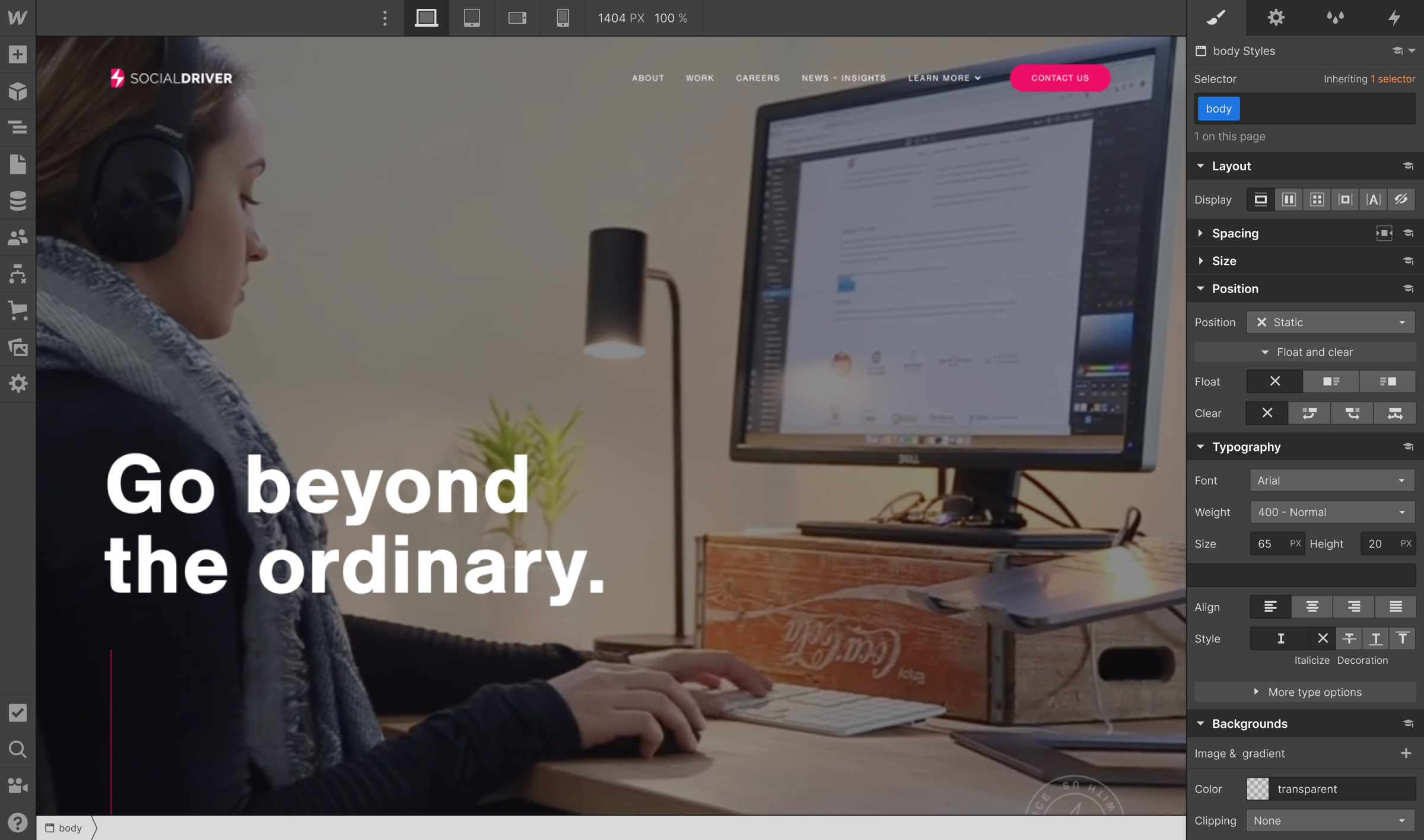
As a Webflow Enterprise Partner, Social Driver expands their client base and leverages comprehensive features to tackle custom builds with high security standards — all while moving quickly with less reliance on developers.

Analyze
Localization
Optimize
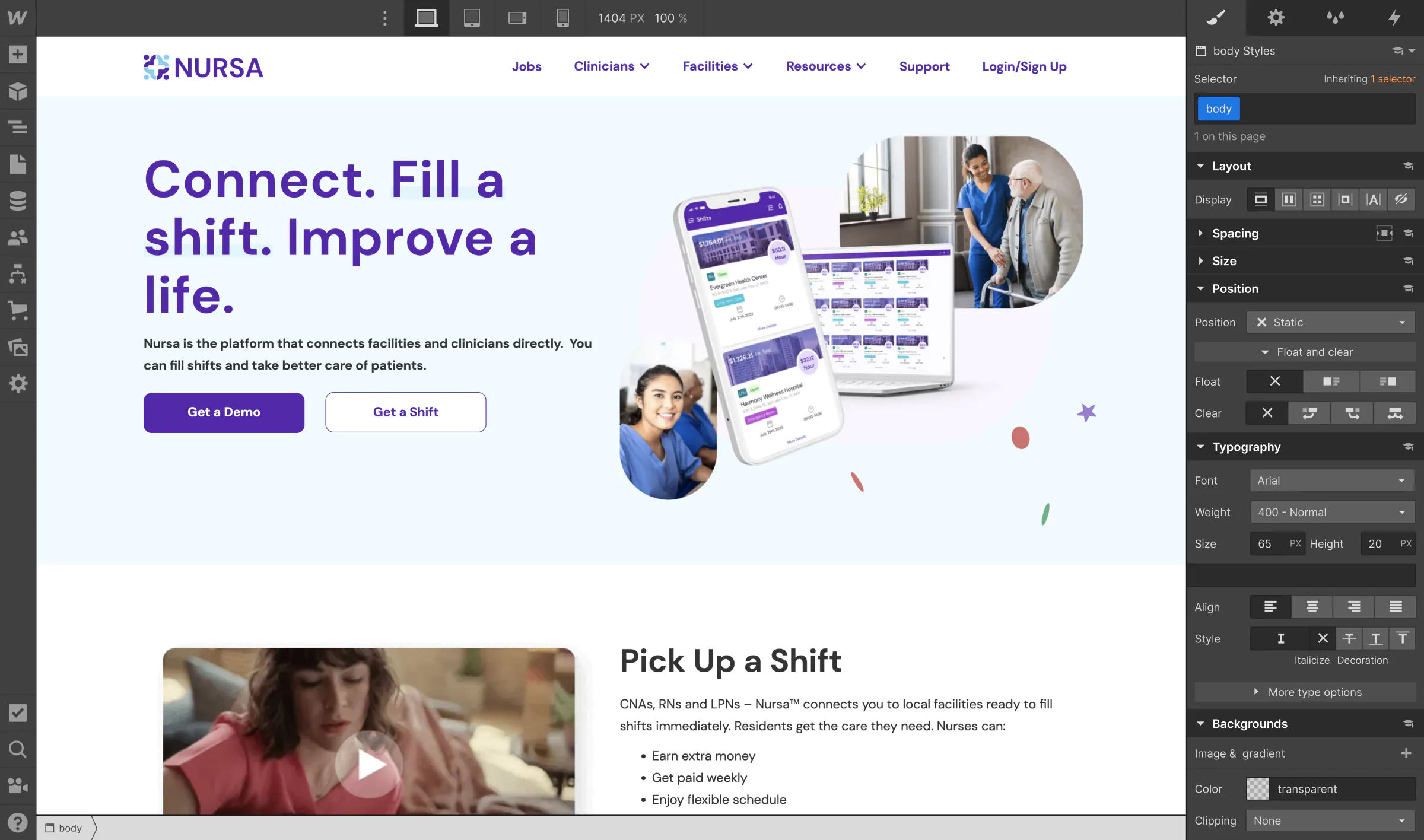
To match nurses to facilities in real time, Nursa moved 40,000 pages and complex marketplace data to Webflow. The team now scales dynamic experiences faster, reduces engineering overhead, and enables AI discovery across a growing healthcare platform.

Analyze
Localization
Optimize
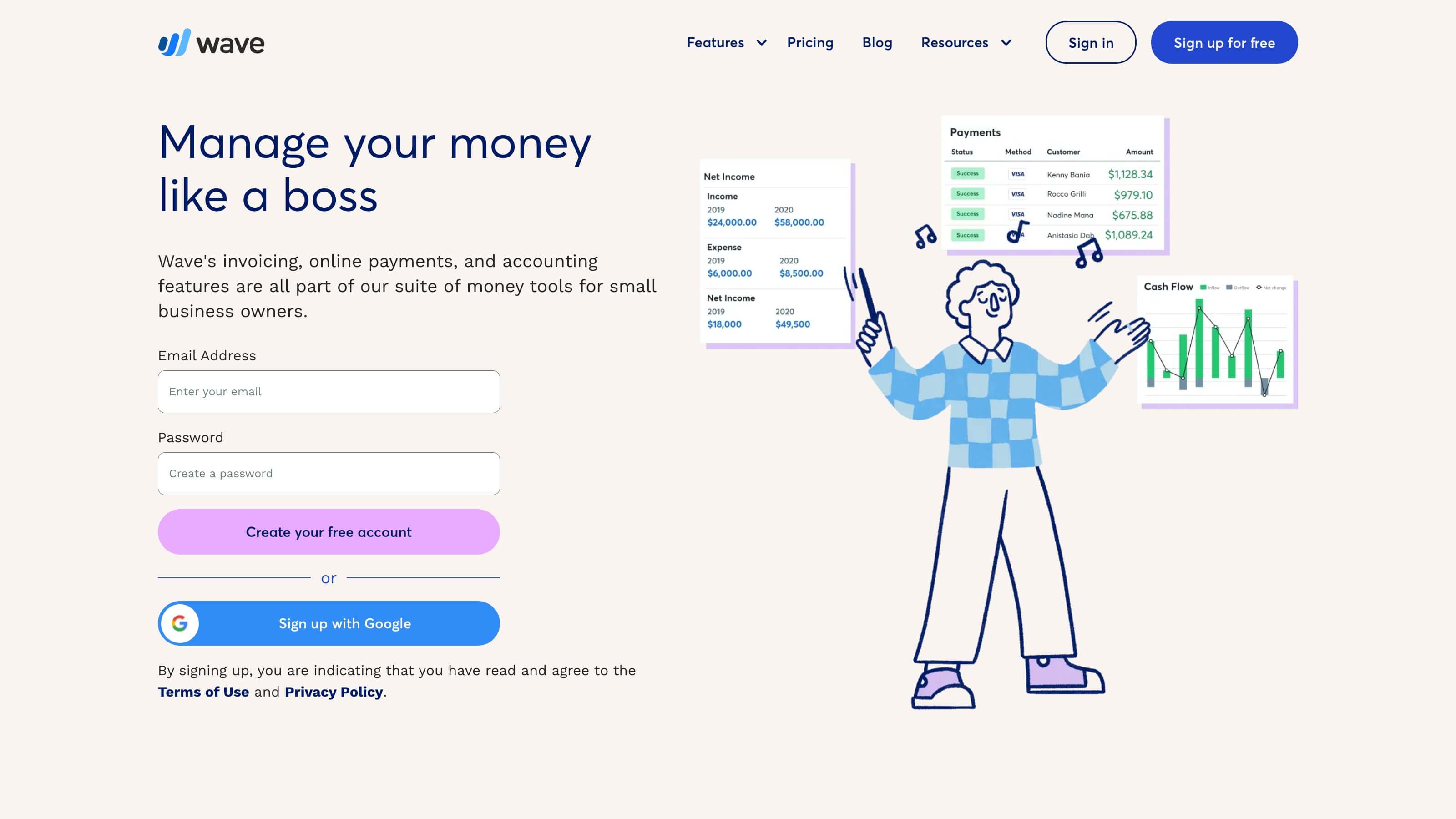
Looking for more design flexibility and the ability to empower more of the team to manage site updates, Wave turned to Webflow Enterprise to reduce their developer dependency.

Analyze
Localization
Optimize
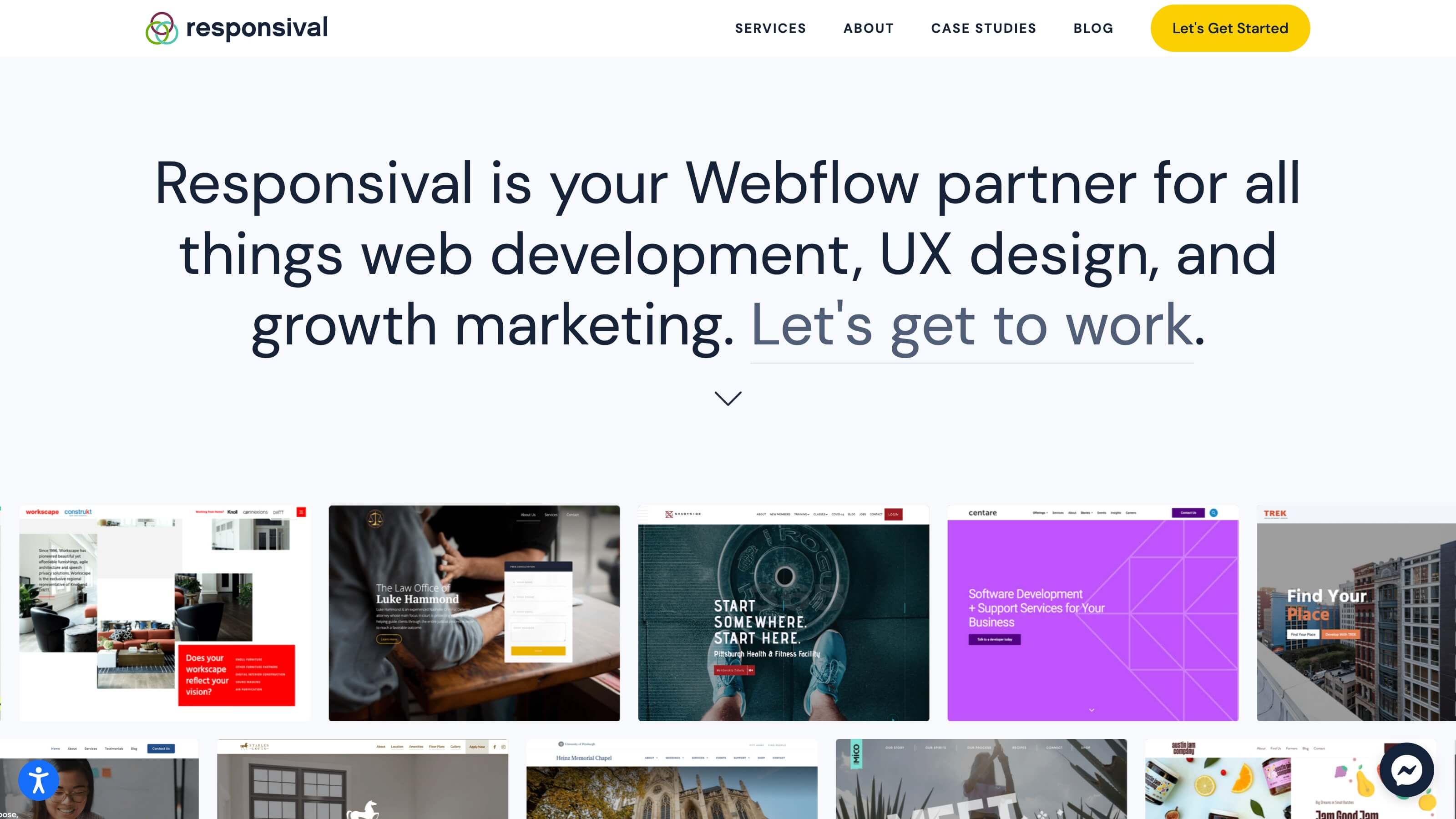
Responsival leveraged the Webflow Experts Program to transform their business with fewer dev resources, a shorter workweek, and drastically increased engagement prices.

Analyze
Localization
Optimize
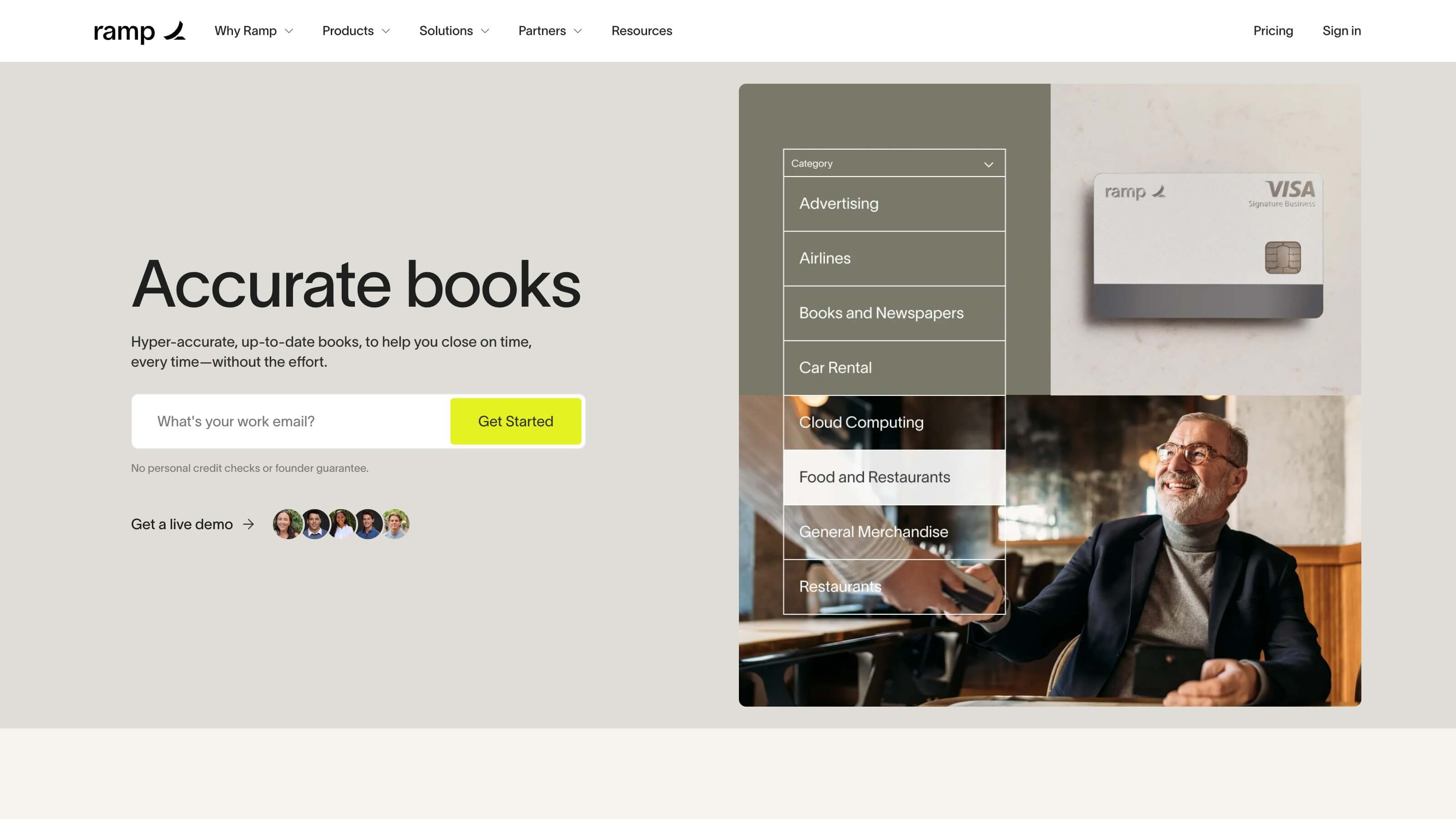
Looking to tackle a redesign on a tight timeline, Ramp turned to Webflow to give its marketing, design, and engineering teams the ability to move quickly together.

Analyze
Localization
Optimize
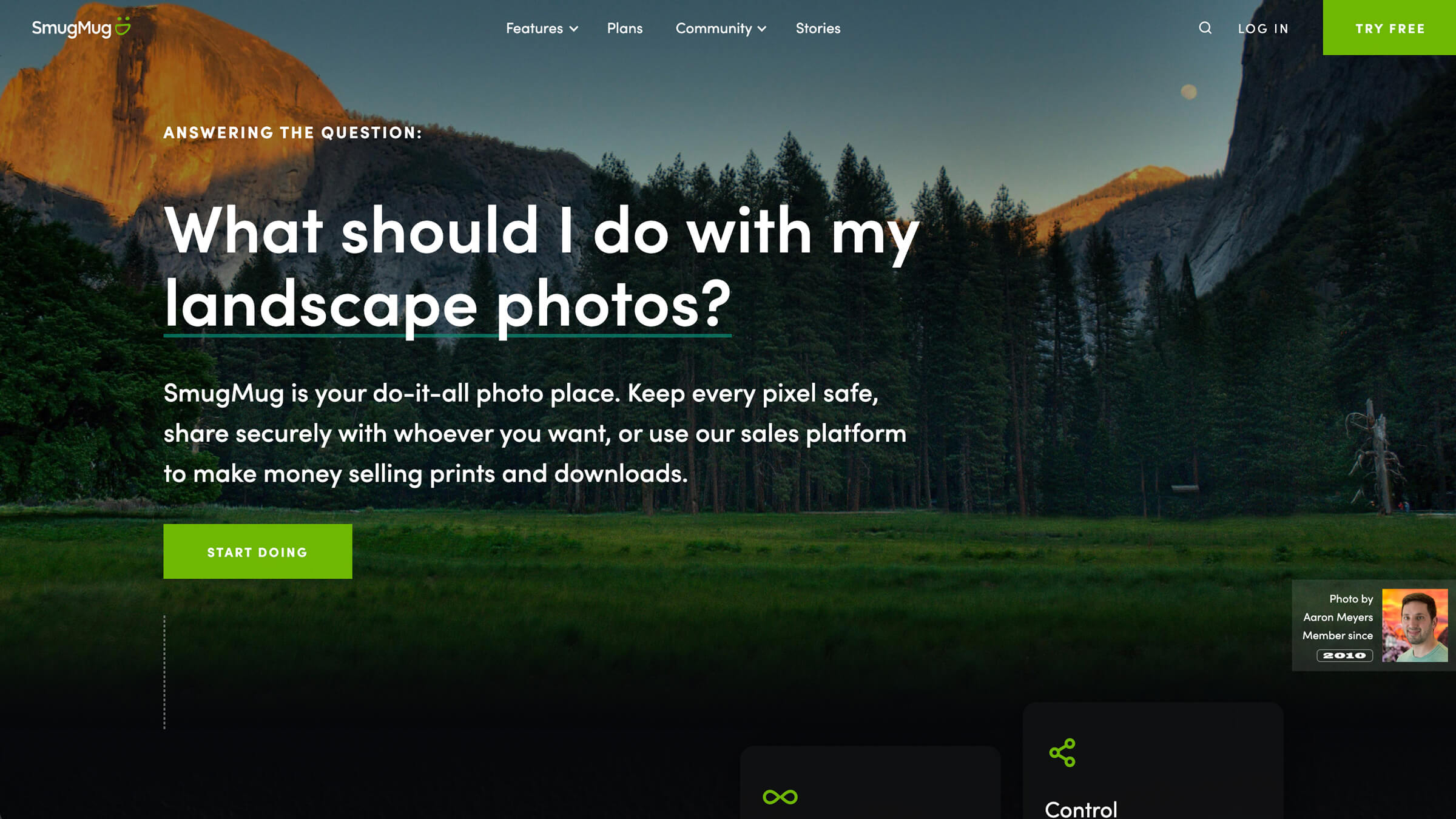
What started out with just three pages showing what can be built with Webflow was the springboard to redoing the entire website.

Analyze
Localization
Optimize
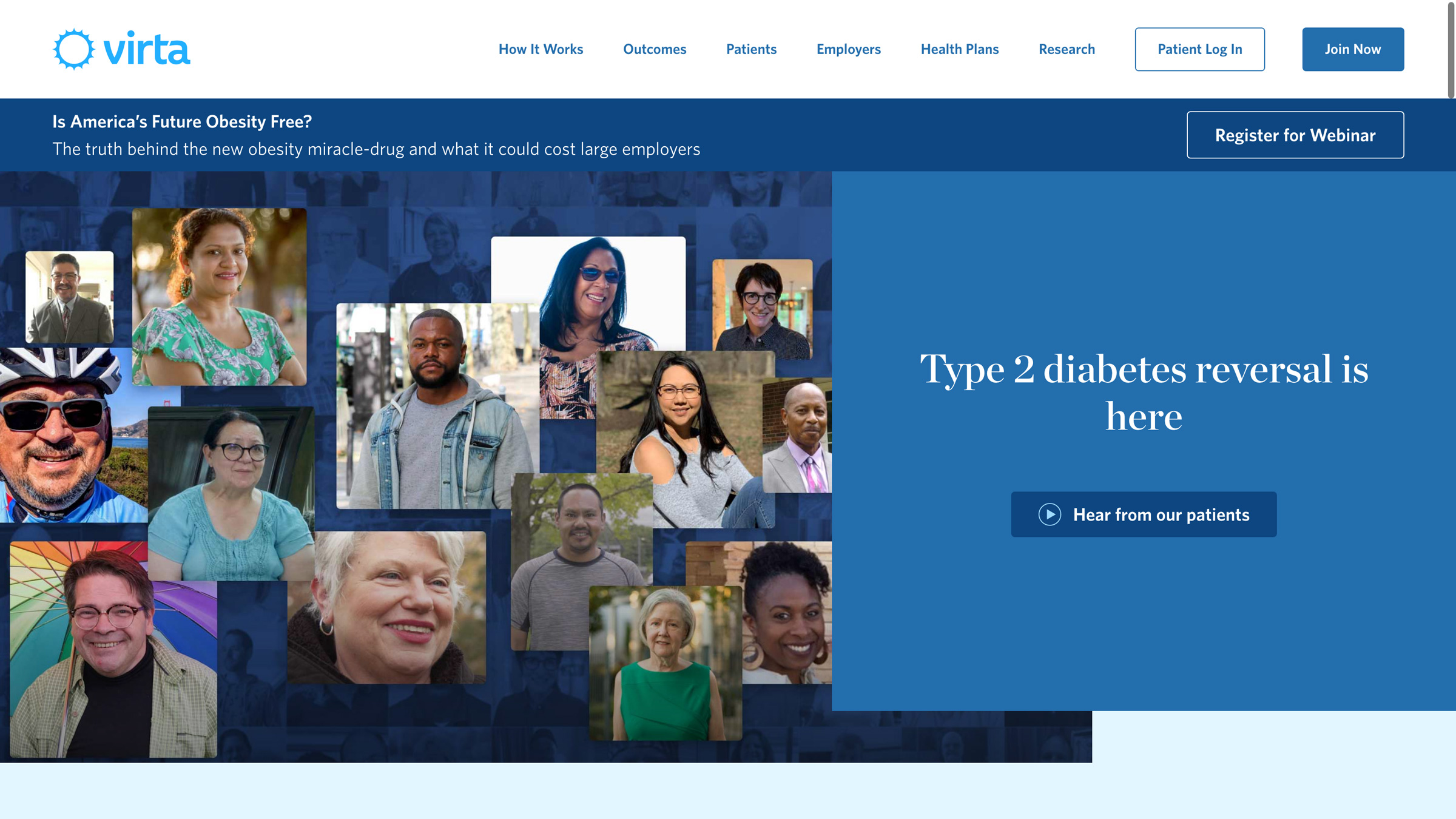
Virta gained a whole lot more than a flexible CMS with their move to Webflow — they also reached a new level of collaboration, creation, and accessibility.

Analyze
Localization
Optimize
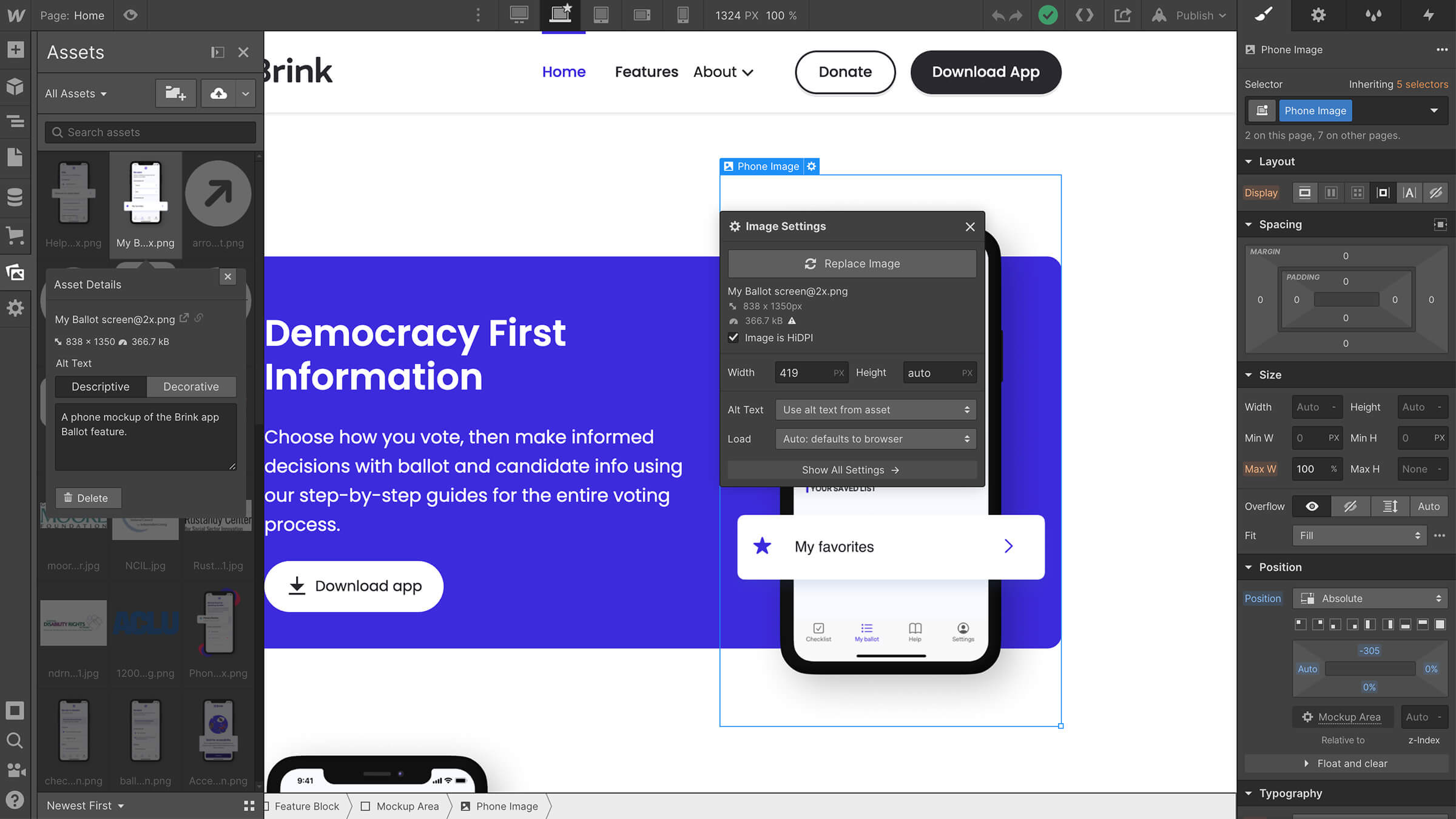
The team at Brink — a mobile Election Guide built with accessible technology to make democracy available to everyone — worked with design agency 8020 to build a website that was accessible by design.

Analyze
Localization
Optimize
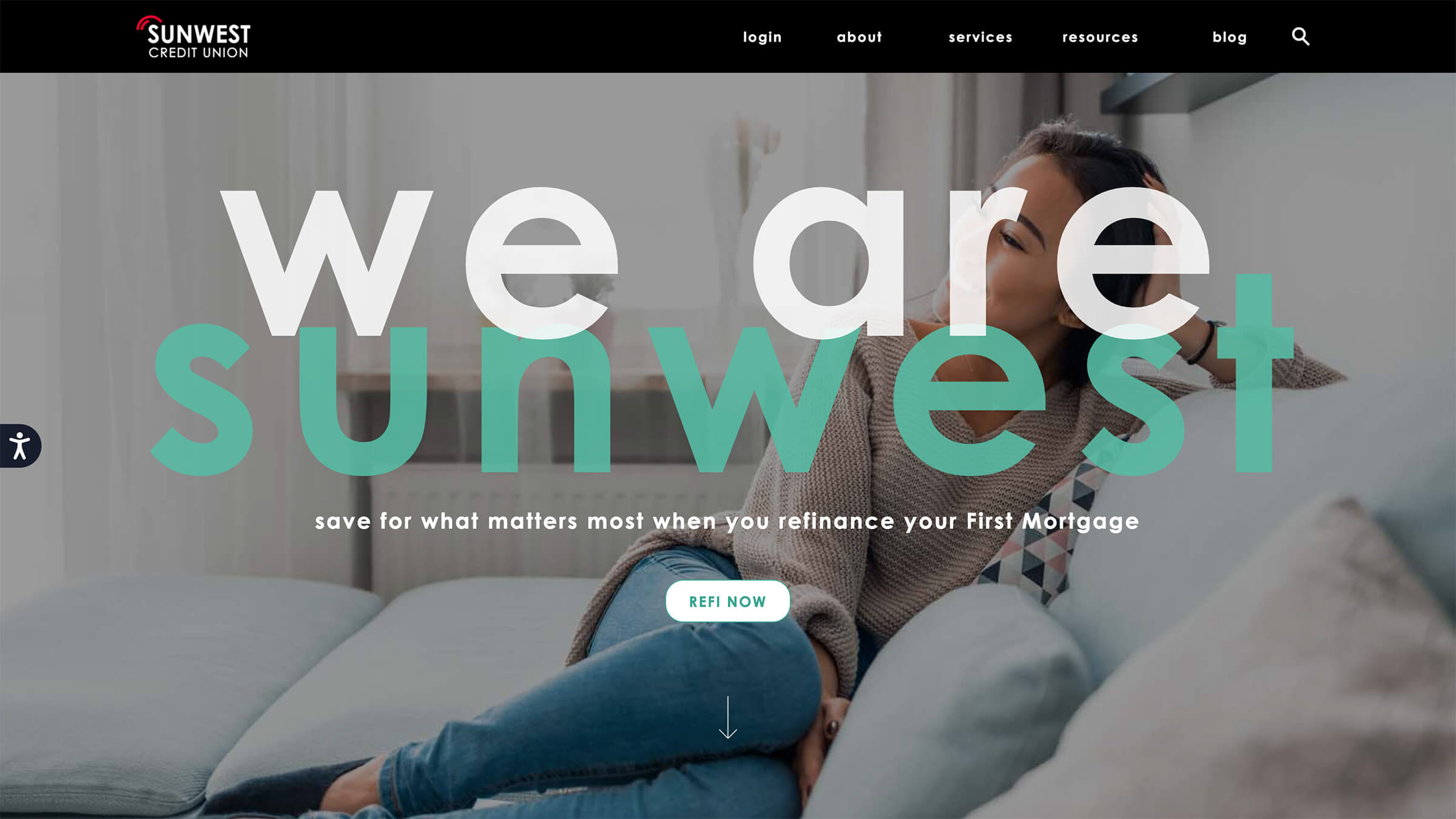
SunWest Credit Union switched from Fiserv to Webflow to give their marketing team control of their site.

Analyze
Localization
Optimize
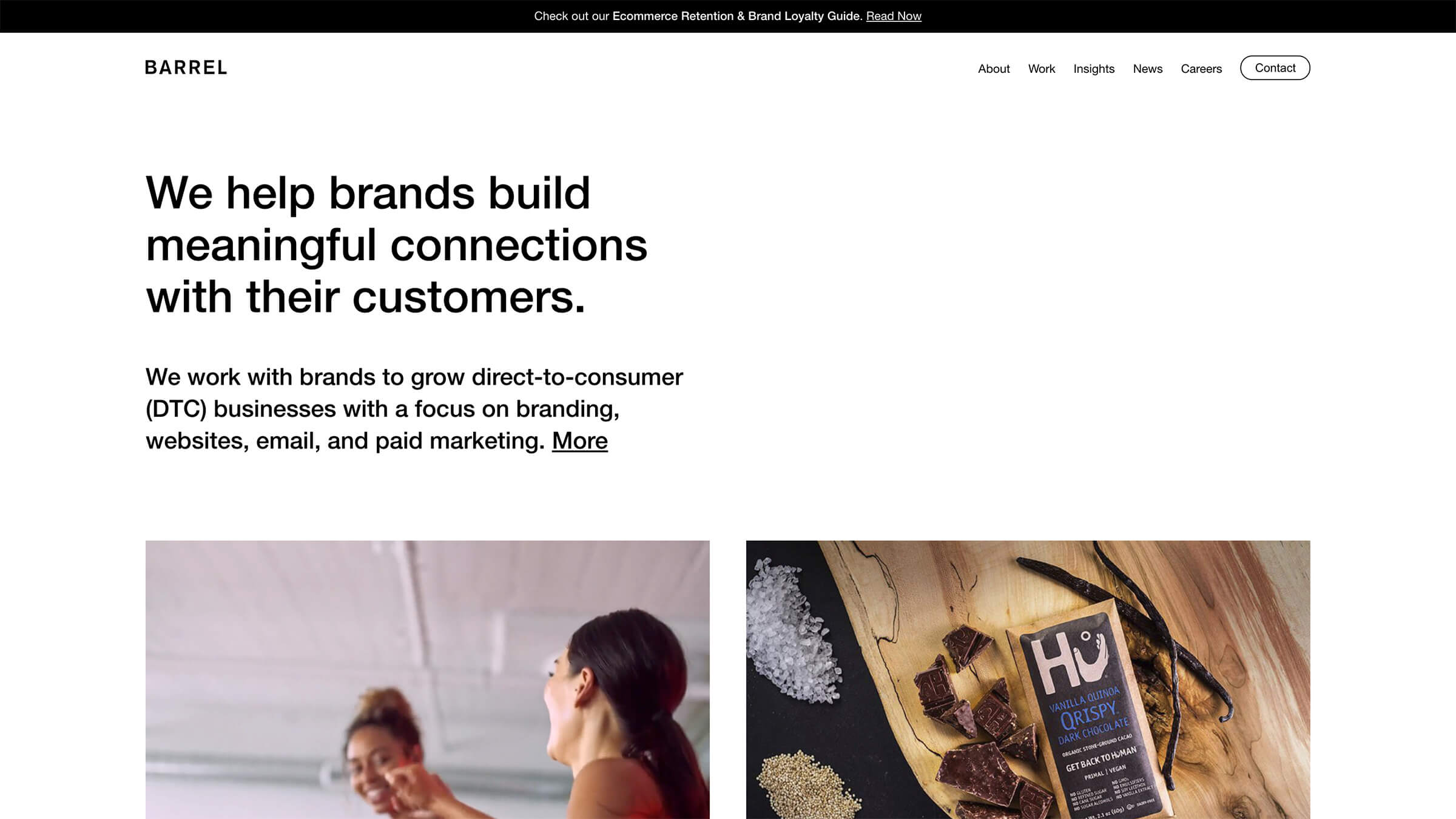
Adding Webflow to their toolkit enabled the team at Barrel to significantly streamline their development and review processes with clients — all while empowering designers to do their best work.

Analyze
Localization
Optimize
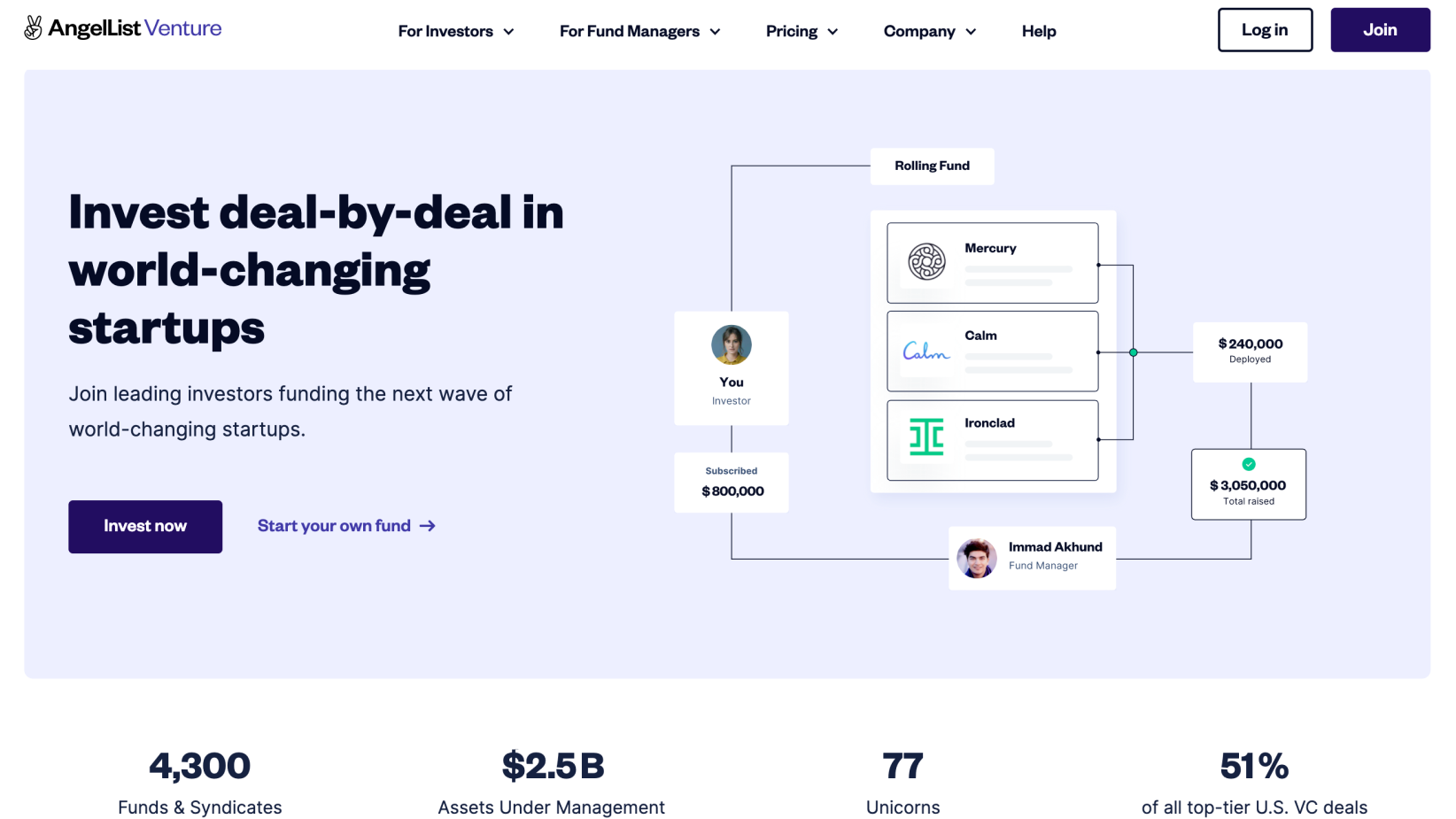
The popular company for fund managers, investors, and venture capitalists has turned to Webflow to empower their marketing team and reach their growth goals streamline their work.

Analyze
Localization
Optimize
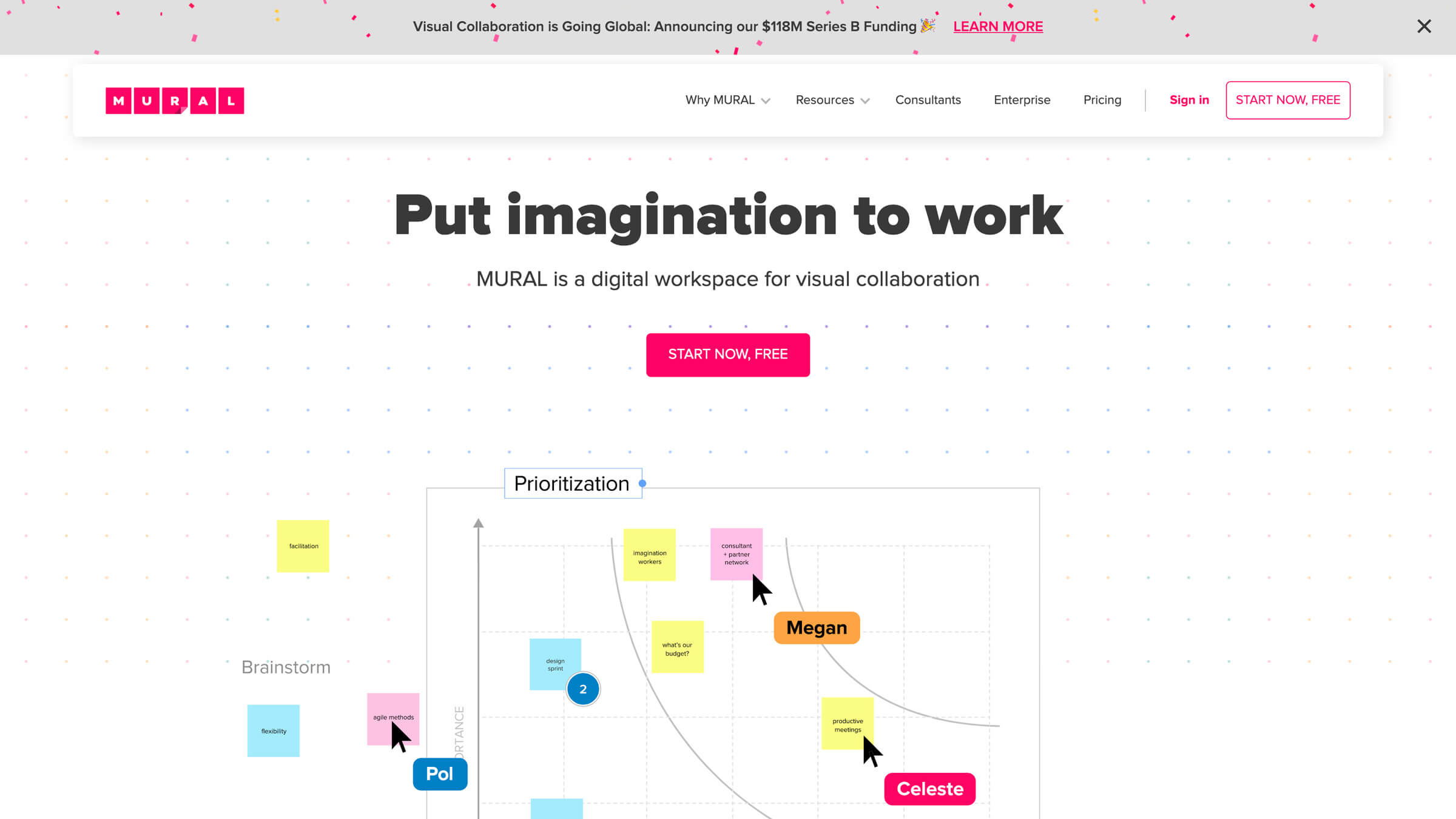
Mural moved from an engineering-owned site to Webflow to let their design team "control their own destiny".

Analyze
Localization
Optimize
Ramotion switched from React to Webflow to build their marketing sites faster and give clients more control over their site after launch.

Analyze
Localization
Optimize
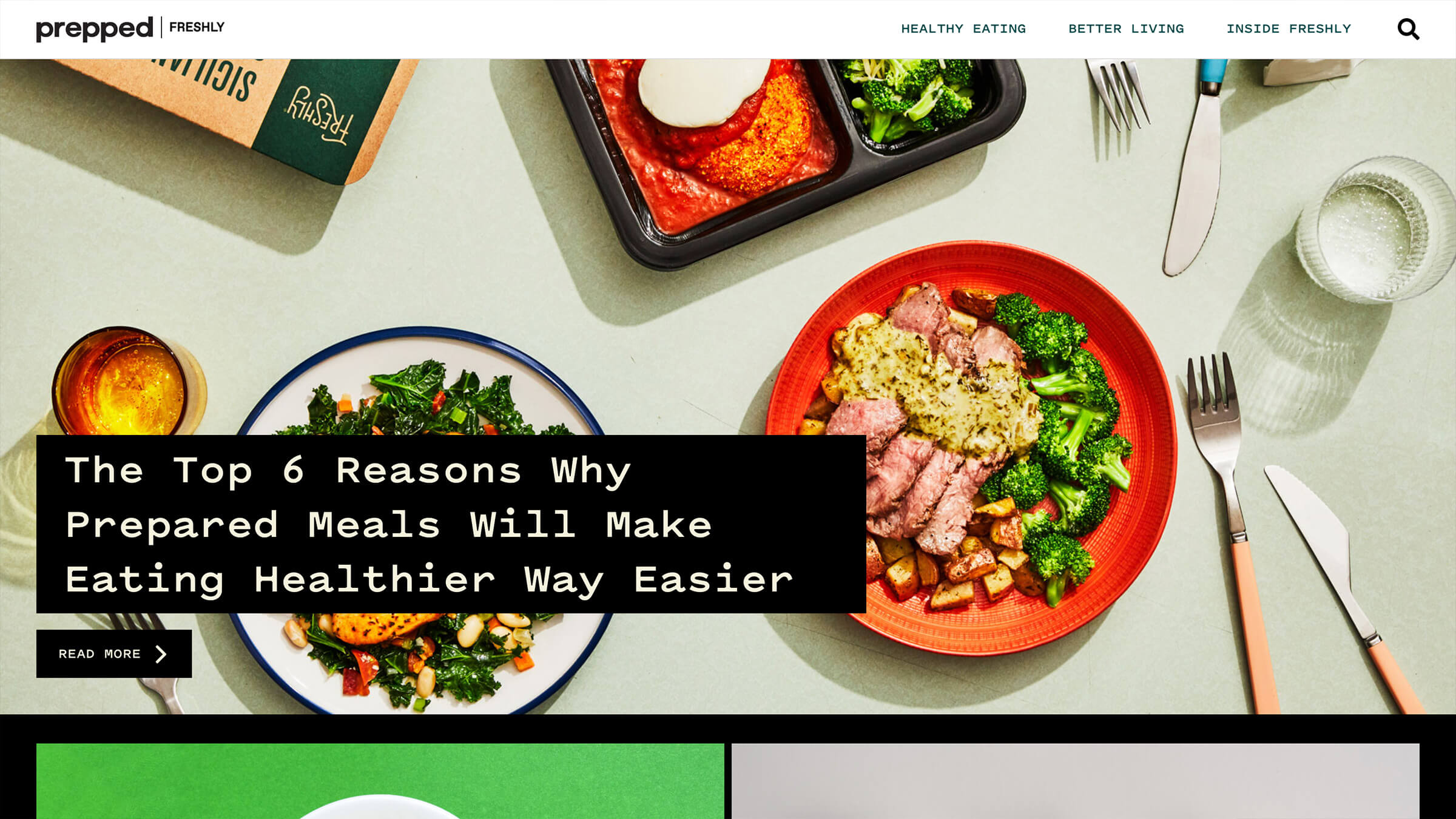
Freshly moved their blog from WordPress to Webflow to give their marketing and design team control.


Analyze
Localization
Optimize
Getaround is a quickly growing car sharing network with over $400 million in funding, and runs their marketing pages on Webflow.

Analyze
Localization
Optimize
Designers JT Helms and Matt Cowen work together to build custom sites for major clients — and do everything without relying on developers.

Analyze
Localization
Optimize
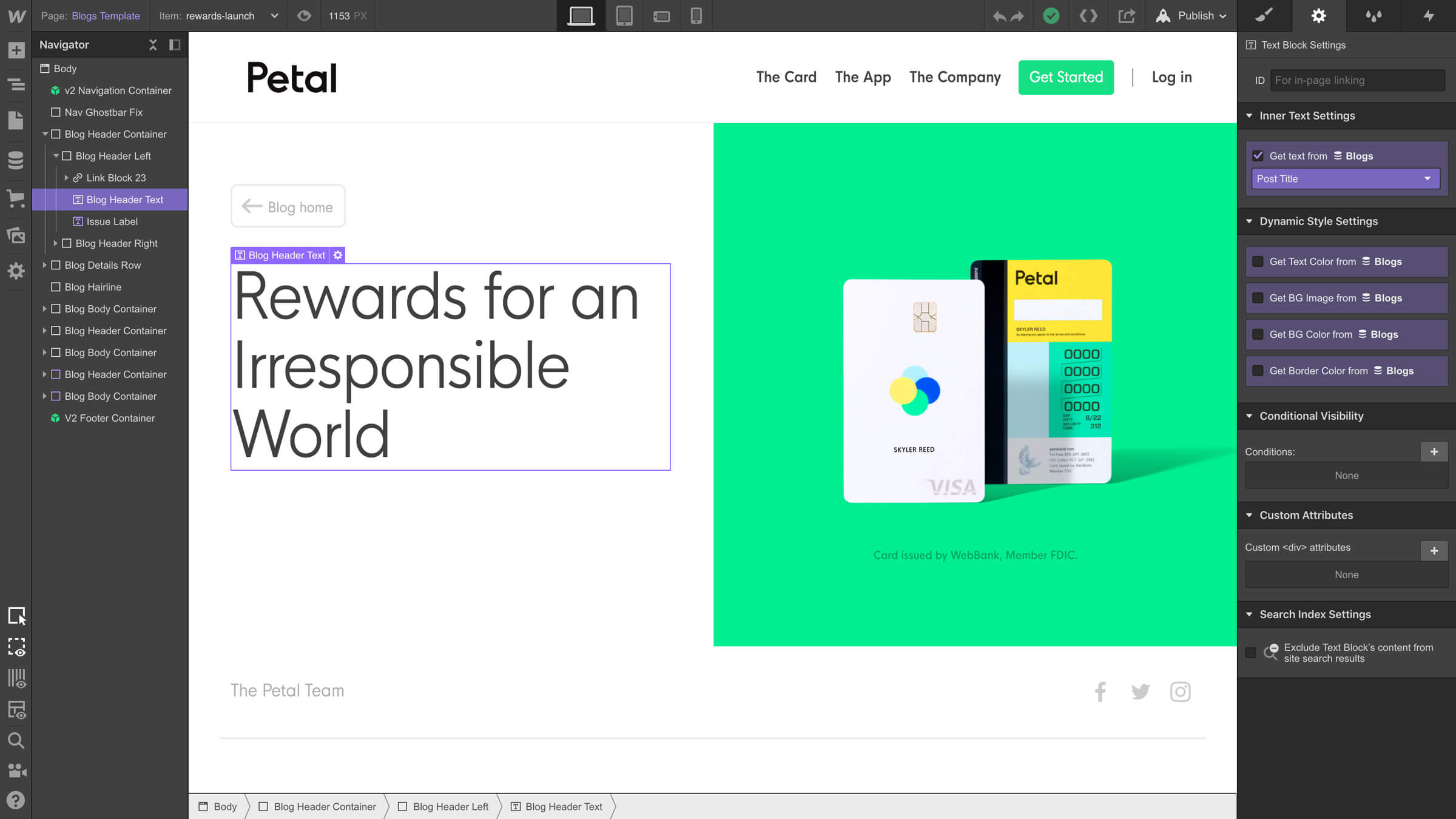
With over $380 million raised, Petal is changing the way people get access to credit, and runs their entire marketing website on Webflow.

Analyze
Localization
Optimize










Get started for free
Try Webflow for as long as you like with our free Starter plan. Purchase a paid Site plan to publish, host, and unlock additional features.
Try Webflow for as long as you like with our free Starter plan. Purchase a paid Site plan to publish, host, and unlock additional features.