A unified alternative to Storyblok
Discover why leading organizations choose Webflow's agentic web marketing platform to build, publish, and optimize on-brand pages without turning every web change into a frontend project.

Trusted by over 300,000 of the world’s leading organizations



















Build websites that drive growth
While Storyblok works well as a headless CMS with visual editing, full web delivery still depends on your frontend framework, hosting stack, deployment workflow, and connected marketing tools.
Webflow is the agentic web marketing platform for teams that want visual and headless flexibility, built-in optimization, managed hosting, governance, and AI in one platform.
Why choose Webflow over Storyblok?
Headless CMSes can give teams flexibility, but they can also keep marketing tethered to development sprints when the work moves beyond content edits. Webflow helps replace Frankenstack complexity with a marketing operating system built for predictable growth, speed with guardrails, and AI-native workflows your team can govern.
Build more than content
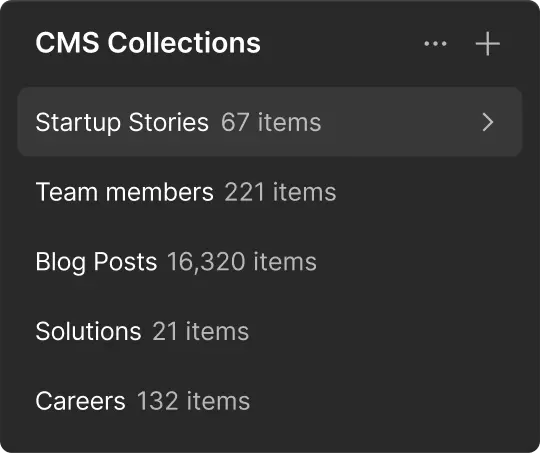
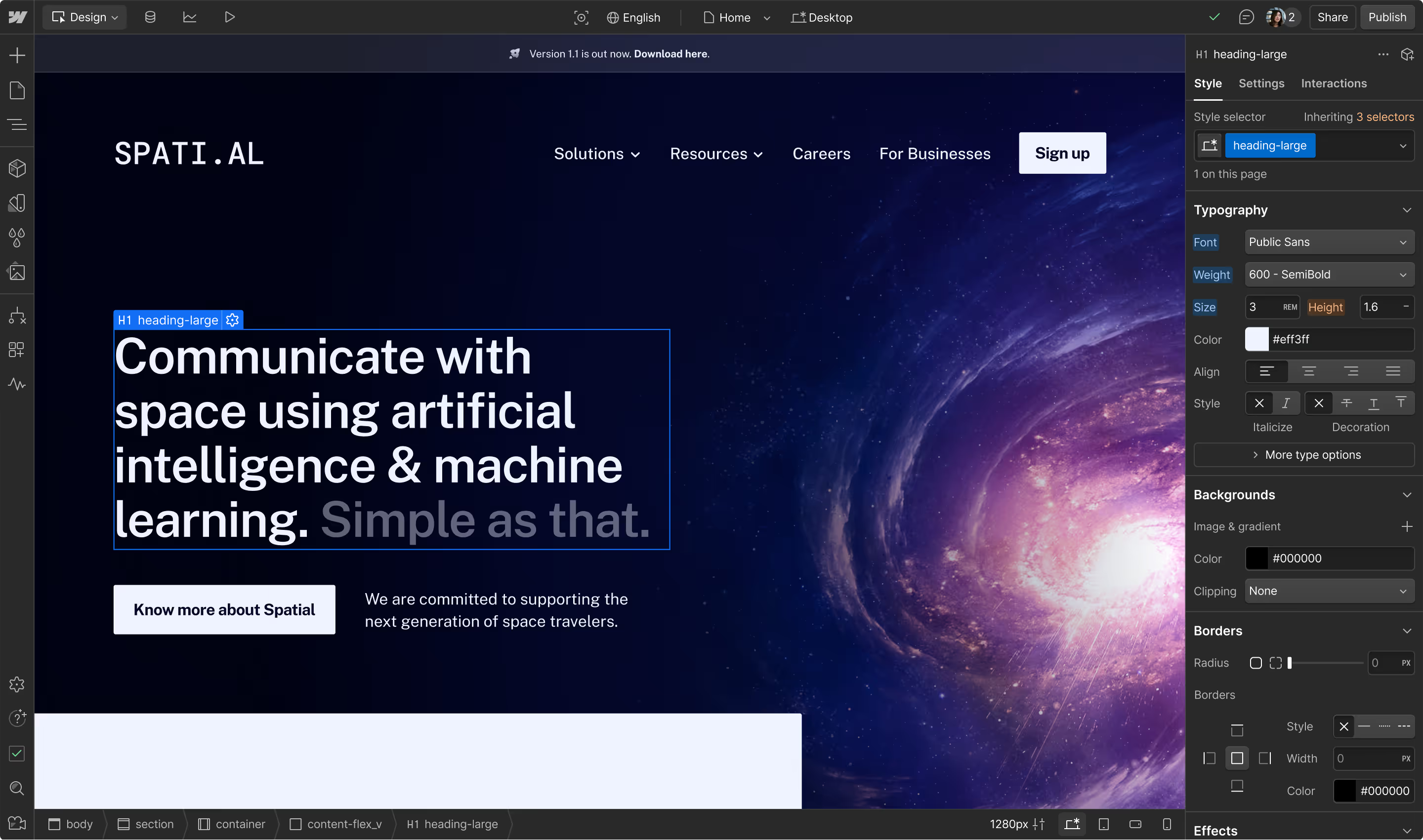
While Storyblok gives marketers visual editing, drag-and-drop components, and on-page collaboration inside a headless CMS, Webflow extends visual control across design, CMS, publishing, localization, optimization, and analytics. Your team can create web experiences that convert — not only manage structured content for a separate frontend.

Keep brand and content together
While Storyblok’s composable blocks help teams reuse developer-defined components, the final design experience depends heavily on the frontend implementation.
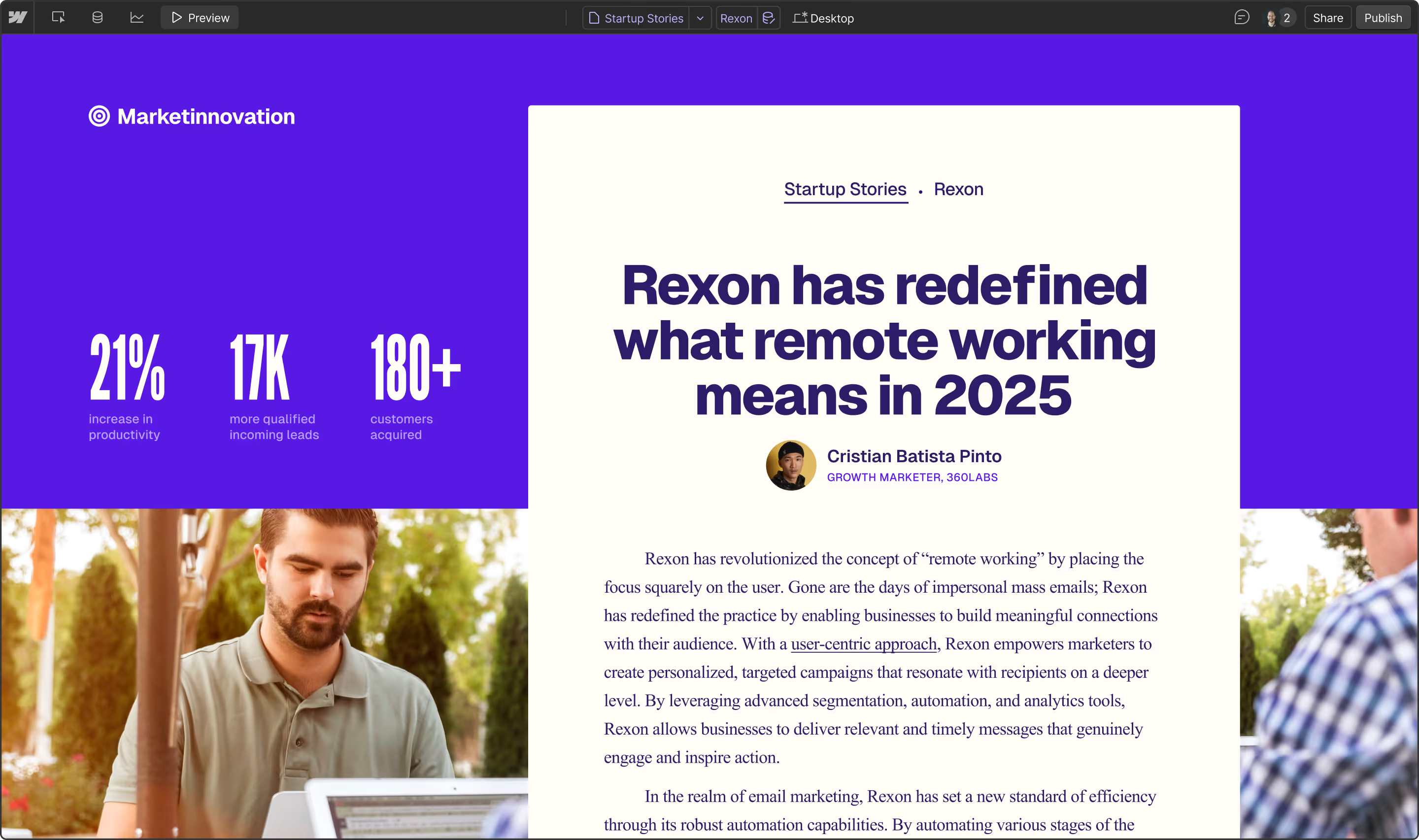
Webflow gives design and marketing teams production-grade visual control over their design system, pages, templates, content, personalizations, and experiments in one integrated visual surface.

Optimize where you publish
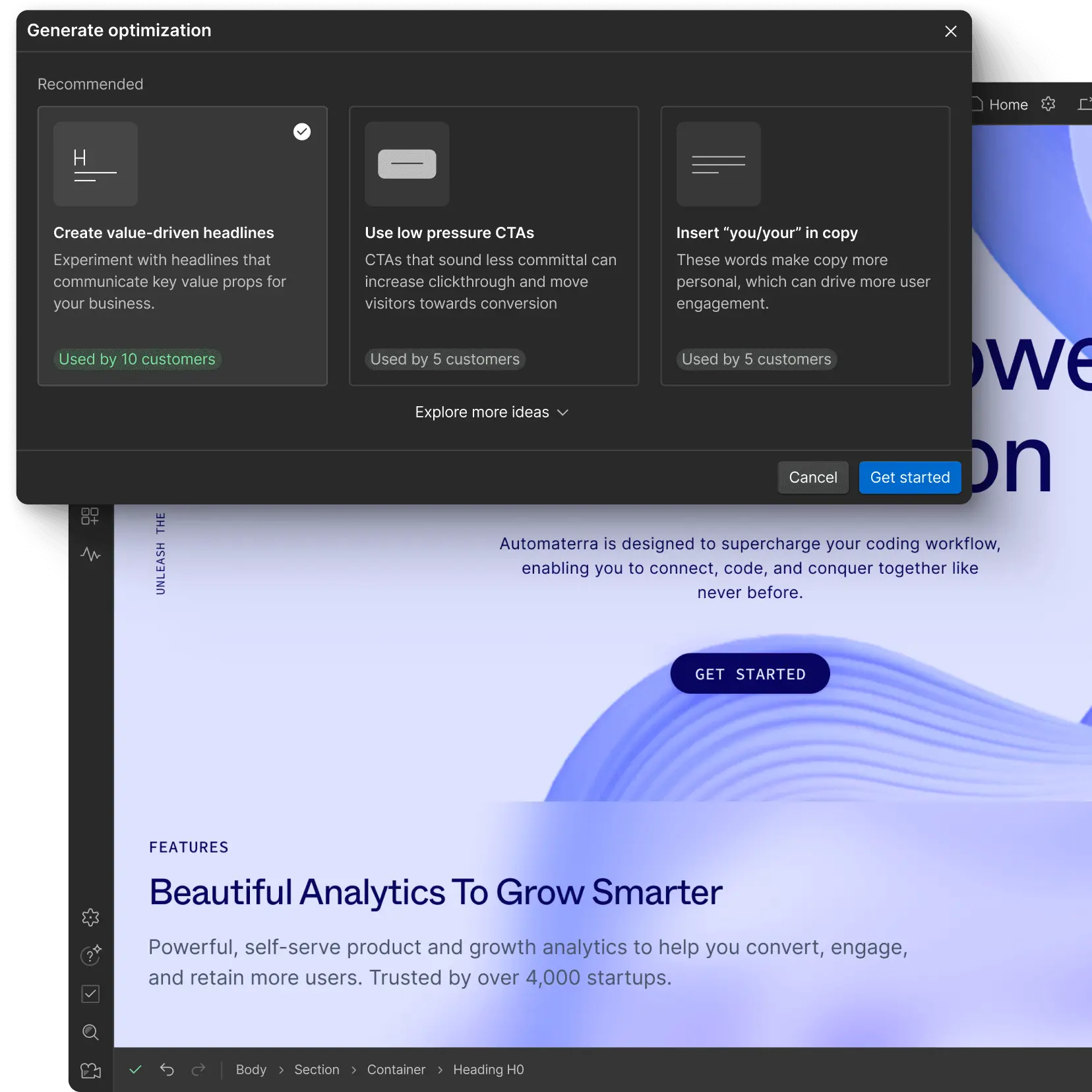
Storyblok focuses on structured content, visual editing, APIs, and AI content workflows, but doesn't offer native analytics, experimentation, or personalization as core integrated products.
Webflow offers Analyze and Optimize, so growth teams can connect traffic, engagement, click behavior, goals, A/B tests, and AI-assisted personalization to the pages they're already building.
Reduce headless infrastructure work
While Storyblok supports custom delivery stacks with frameworks like Next.js, Astro, and React, that model may still leave your team responsible for frontend implementation, deployment workflows, and ongoing maintenance.
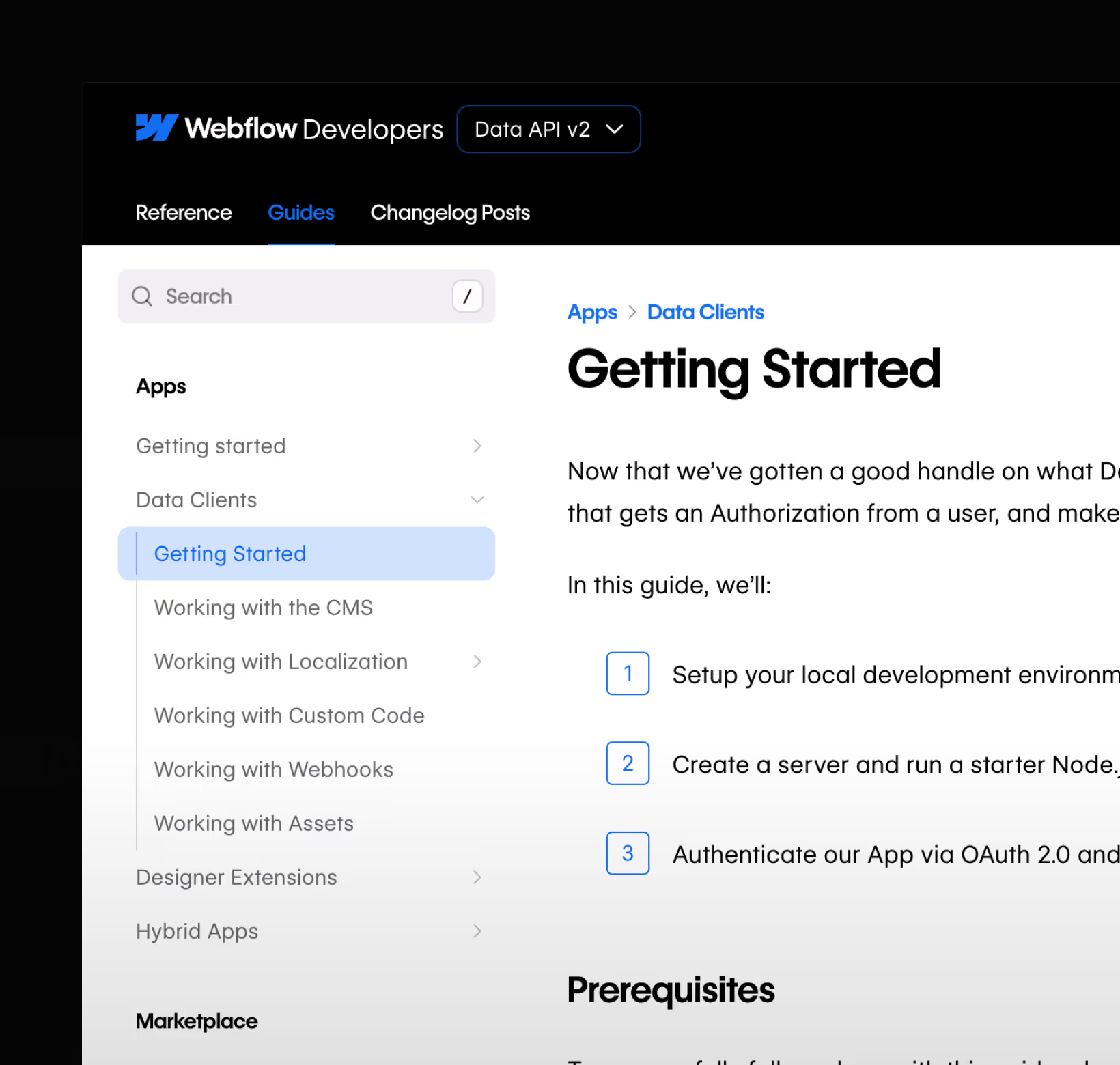
Webflow gives developers headless APIs, custom code, Code Components, Webflow Cloud, staging, branching, rollback, and managed hosting — so marketing edits safely and developers keep control.
Why Webflow wins

Speed with guardrails
Your team can build, publish, and iterate on-brand pages without filing engineering tickets for every campaign change. Governance, permissions, staging, branching, approvals, and rollback keep velocity from turning into risk.

A unified experience layer
Brand and content stay connected in one experience layer. Designers control the system, marketers work inside it, and every page can stay aligned with your site structure, styles, CMS, and reusable components.

AI-native and governed
AI helps your team generate, refine, optimize, localize, and extend web experiences inside the system your team controls. Review workflows and permissions help keep AI-assisted work accountable before anything goes live.

“Our site loaded literally twice as fast after switching to Webflow, even without rigorously optimizing every image.”

“Our new designs didn't need to go through anyone else besides brand and marketing — no engineers needed. The freedom and flexibility we gained through Webflow was invaluable.”

“Our design and development teams are much more integrated during the build process. Designers have more autonomy, and engineers can focus on the most impactful work — allowing us to deliver new web pages faster.”
Frequently asked questions
Storyblok is a headless CMS with a visual editor, structured content, APIs, and AI-agent content workflows. Webflow is an agentic web marketing platform that includes CMS, visual design, managed hosting, Localize, Analyze, Optimize, SEO/AEO, AI, and governance. While Storyblok focuses on structured content for a custom frontend, Webflow connects the full website workflow in one governed platform – making it a strong fit for modern marketing teams and enterprises.
Yes. Webflow CMS supports content-rich websites with visual-first editing, CMS Collection Lists, reusable components, localization, single-page publishing, and APIs for headless or programmatic use cases. Storyblok is also built for structured content at scale, especially across channels and languages. The difference is that Webflow pairs content scale with visual design, hosting, analytics, AEO/SEO, experimentation, and governance in the same system.
Yes, especially when your growing project needs more than content modeling and API delivery. Webflow gives your team a visual CMS, design canvas, managed Hosting, localization workflows, SEO/AEO tools, analytics, experimentation, personalization, and governance in one platform. Storyblok’s headless model supports flexible frontend stacks, but Webflow may reduce operational handoffs when marketing and design teams need to ship and optimize pages frequently.
Webflow Localize supports locale-specific URLs, translation workflows, per-locale metadata, canonical tags, hreflang, localized SEO configuration, and locale-specific access control. Storyblok supports multi-language content through structured content models and APIs. Webflow adds visual per-locale design control in the same site-building environment, which helps global teams adapt content, layout, and SEO for each market without rebuilding templates for every region.
Yes. Webflow supports reusable components, Shared Libraries, class systems, Component Canvas, and CMS-driven page structures. Storyblok uses reusable “bloks” that editors can assemble into pages, typically within a developer-defined component system. Webflow gives design and marketing teams broader visual production control, so reusable systems can cover content, layout, responsive behavior, interactions, and brand consistency across sites and campaigns.
Storyblok has credible AI-agent content workflows through MCP Server, FlowMotion, and AI-powered translations and SEO. Webflow AI takes a different approach: it embeds intelligence across the entire journey from concept to conversion. Your team can use AI to build faster, refine smarter, and optimize what's working — all inside the platform where your site lives, your content flows, and your revenue grows. Review and governance stay in place, so AI accelerates work without bypassing control.
Get started for free