A complete alternative to Sanity
Your team needs more than a structured content backend. Webflow brings visual design, CMS, optimization, hosting, and governance into one agentic web marketing platform.

Trusted by over 300,000 of the world’s leading organizations




















Build beyond content with an agentic platform
While Sanity works well for developer-led teams building structured content infrastructure, website teams may still need to build and maintain a separate frontend, hosting layer, and optimization stack.
Webflow gives your team a governed visual system for building, managing, and growing a website that drives real revenue — without turning every campaign page into an engineering project.
Why choose Webflow over Sanity?
Headless CMSes promise flexibility, but that flexibility can keep marketing tied to development sprints. While Sanity is built for structured content operations and developer-led composable stacks, Webflow is built for teams that need predictable growth from the web, more marketing autonomy, speed with guardrails, and fewer stitched-together tools between content and conversion.
Build experiences, not just content
While Sanity works as a structured-content backend for web, mobile, and agentic applications, the presentation layer for a website is typically built separately.
Webflow gives your team visual design, CMS, publishing, and managed hosting in one governed system, so campaigns, content hubs, and landing pages can move without waiting on tickets and development sprints.
Balance autonomy and control
While Sanity gives developers high flexibility, non-developers can often face a learning curve and setup friction around schemas, APIs, and query languages.
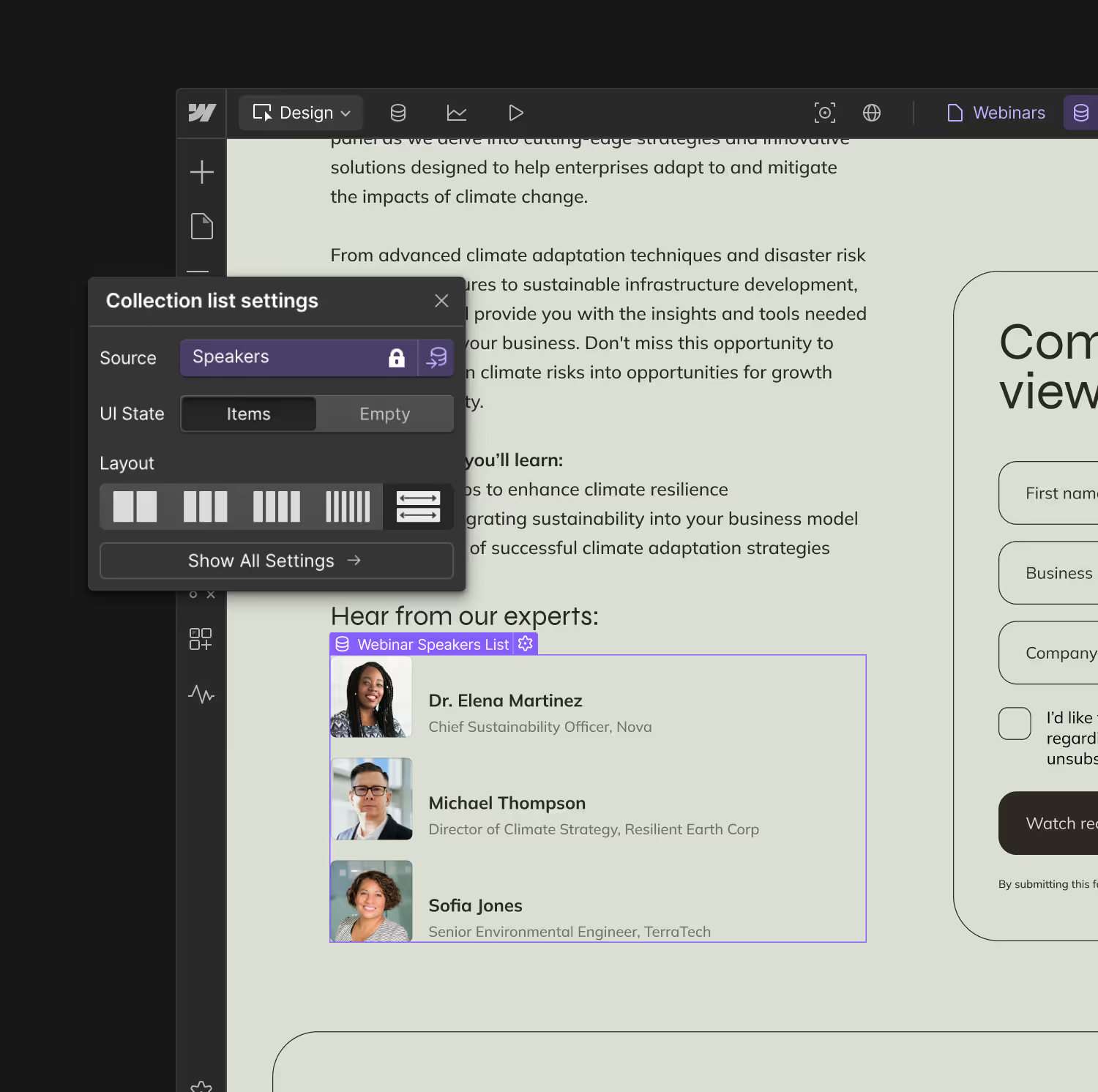
Webflow lets marketers and designers build in a governed visual system while developers define components, integrations, permissions, and extension points. Marketing edits safely. Developers keep control.

Turn the website into a revenue engine
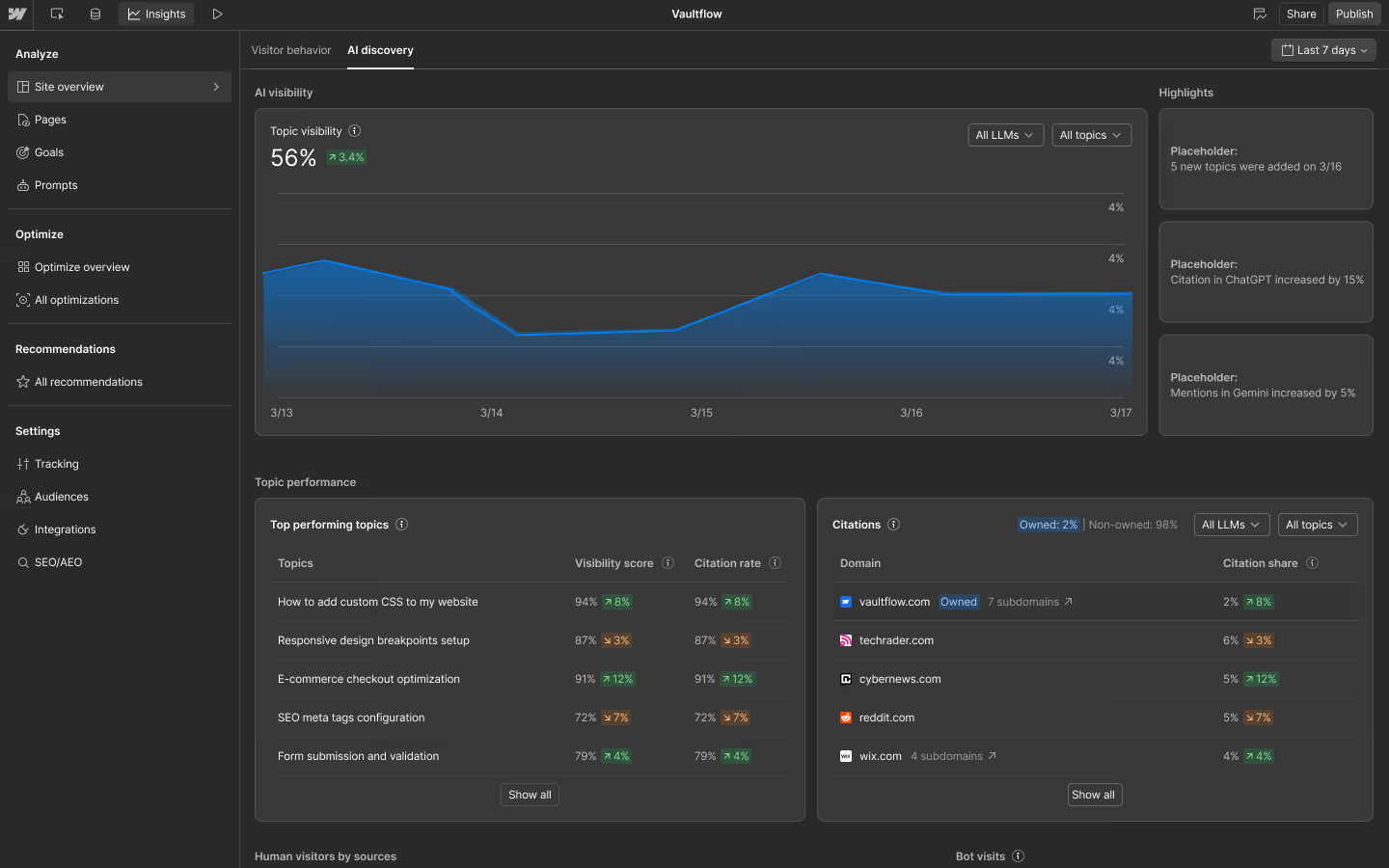
While Sanity offers structured content and APIs, growth teams also need to measure, test, personalize, and improve the website itself. Webflow includes native SEO/AEO controls, analytics, AI-powered personalization, and localization, so your team can connect web changes to pipeline impact without assembling another set of point tools.
SEO gets you found by search engines. AEO gets you cited by AI. Webflow is built for both — with schema controls, AI-powered audits, and AI-referred traffic insights inside the platform.
Headless flexibility without the burden
While Sanity fits developer-led teams building custom omnichannel web properties, that model requires teams maintain the frontend and production web experience separately.
Webflow brings those pieces into one governed platform, helping your team reduce replatforming cycles and replace the fragmented stack with an operating model that scales for your team. For developers, Webflow stays composable by design and managed by default.
Why Webflow wins

Build a growth engine
Turn your website into a revenue engine with native tools for building pages, analyzing behavior, running experiments, personalizing experiences, and improving SEO/AEO from the same platform. Your team can connect pipeline impact to the web work that created it.

Speed with guardrails
Role-based permissions, access control, branching, staging, approval workflows, and version control help marketing move quickly without risking site stability. Your team gets publishing autonomy with the governance enterprise teams expect.

Composable by design
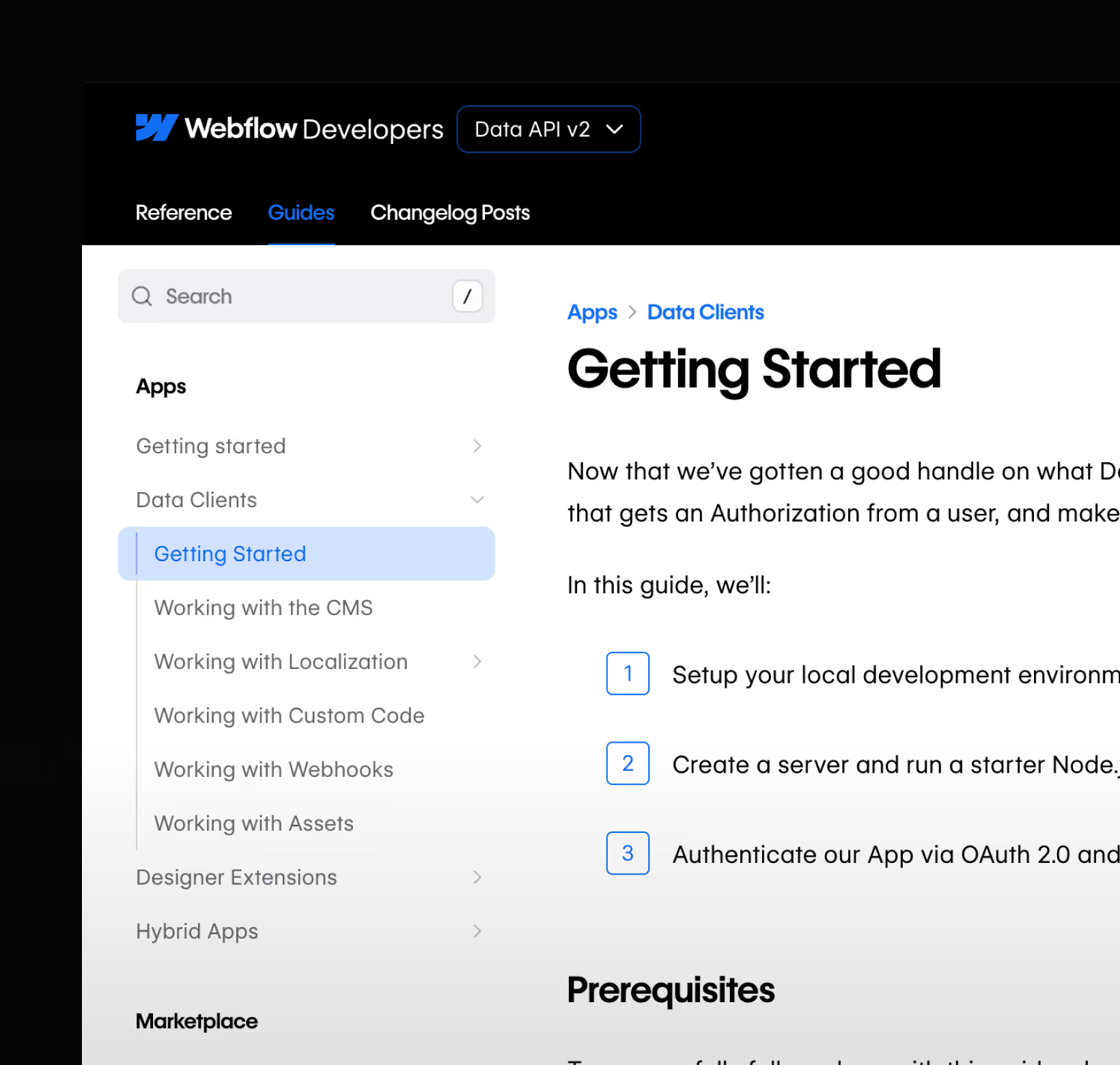
Connect Webflow into your existing stack with headless APIs, custom code, Code Components, Webflow Cloud, CLI, and MCP. Developers keep control of the system while marketing and design teams operate inside it.

“Our site loaded literally twice as fast after switching to Webflow, even without rigorously optimizing every image.”

“Our new designs didn't need to go through anyone else besides brand and marketing — no engineers needed. The freedom and flexibility we gained through Webflow was invaluable.”

“Our design and development teams are much more integrated during the build process. Designers have more autonomy, and engineers can focus on the most impactful work — allowing us to deliver new web pages faster.”
Frequently asked questions
Sanity is a developer-first content operating system for structured content. It’s well-suited for teams that want to model content as reusable data across sites, apps, and agents. Webflow’s agentic web marketing platform brings visual building, CMS, Hosting, SEO/AEO, analytics, experimentation, localization, AI, and governance into one system for teams focused on web growth.
Sanity ships updates in discrete versions. That means customers don't automatically receive new features, bug fixes, or security patches as they're released. Staying current requires your team to update the platform or seek a managed upgrade engagement, often taking weeks or months, and can break complex stacks in the process. Teams that fall behind can find themselves stuck on legacy versions with limited support.
Updates from Webflow ship to the platform continuously, with no versions to manage, no upgrade projects to fund, and no features gated behind a release cycle. What's live today is what every customer has access to.
Astro plus Sanity can be a strong code-first setup for teams that want to own the frontend and content backend separately. That also means your team owns more of the implementation model and it increases the occurrence for brand drift when managing two integrated surfaces that must be kept in sync at all times.
Webflow gives marketers and designers a visual first approach to build with agents or from their design system in a governed environment, while developers can leverage APIs, custom code, Code Components, Webflow Cloud, and MCP to build, integrate and extend on every surface in the platform. It’s headless flexibility without forcing every workflow into code.
Yes. Webflow gives marketing, content, and client teams visual tools to manage CMS content, publish pages, and work with design-approved components. Sanity can support content team autonomy after developers configure Studio, schemas, and workflows, but the provided analysis shows setup and query-language learning can create friction for non-developers. Webflow keeps content and presentation connected, so teams can update on-brand pages with fewer handoffs.
Yes. Webflow supports reusable components, Shared Libraries, CMS Collection Lists, and Page Builder workflows for creating on-brand pages from approved building blocks. Developers can also bring React-based Code Components into the Webflow canvas, so marketing builds within the system developers define. Sanity includes presentation and page-building capabilities, but its typical headless model still depends on a separately implemented frontend for the live website experience.
For SEO and AEO-focused marketing sites, Webflow combines CMS content, visual page building, metadata, schema, sitemap management, AEO crawlability, and analytics in one platform. Sanity’s structured content model can support SEO when the frontend is built to handle it well. Webflow gives marketing teams more native control over discoverability, including AI-assisted SEO/AEO recommendations and visibility into LLM-referred traffic through Analyze.
Get started for free