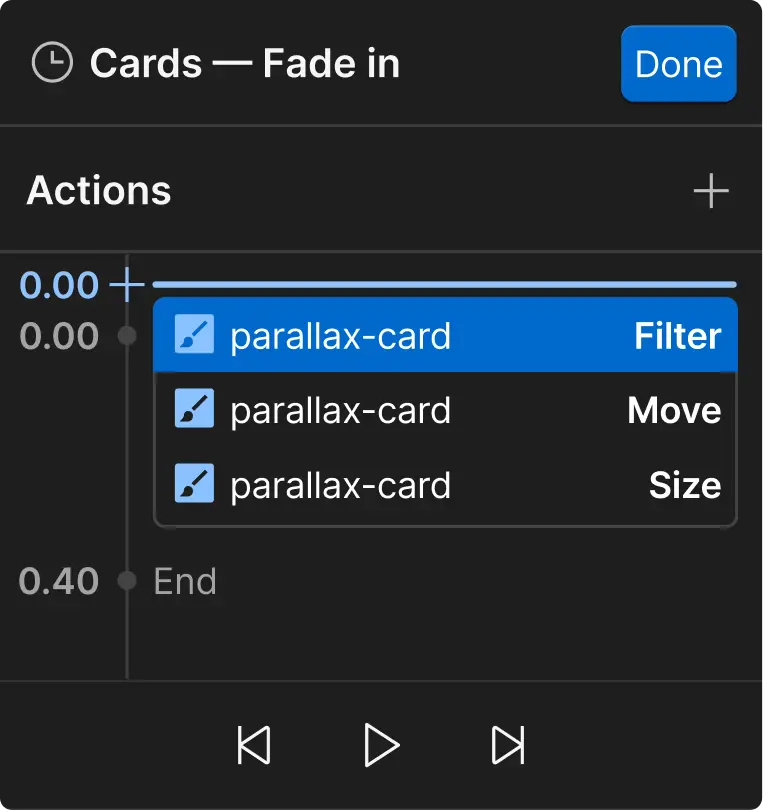
A modern alternative to headless CMS
Webflow gives you the composability of headless CMS without the custom frontend, ongoing maintenance, and developer dependency. Build, optimize, and ship from one platform.
Trusted by over 300,000 of the world’s leading organizations












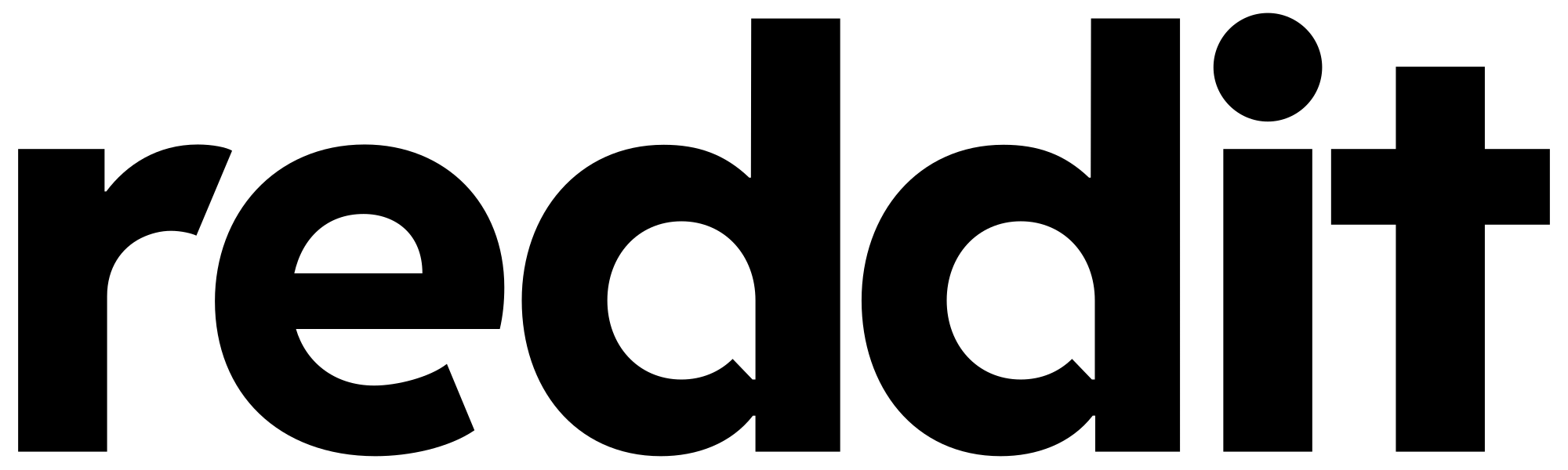







Ship faster without the integration overhead
While headless CMS platforms deliver content through APIs well, API-first content delivery alone doesn't get your marketing site across the finish line. Your team still needs a frontend framework, a deployment pipeline, analytics, and experimentation tools, each selected, integrated, and maintained separately.
Webflow’s agentic web marketing platform brings that composability together with visual design, optimization, hosting, and governance in a single platform. Your team spends time on the work that drives growth, not on maintaining the infrastructure behind it.
Why choose Webflow over a headless CMS?
Headless CMS gives developers control over frontend technology, but that stack creates operational overhead that compounds over time. Webflow delivers composability and extensibility within a single platform where every team moves independently.
Ship campaigns, not tickets
While headless CMS platforms give developers structured content APIs and frontend freedom, they keep marketing teams dependent on development cycles for every page change.
Webflow lets your marketing team build, publish, and iterate on-brand pages independently, using design-approved components and drag-and-drop controls, so campaigns launch on your timeline, not your engineering queue.
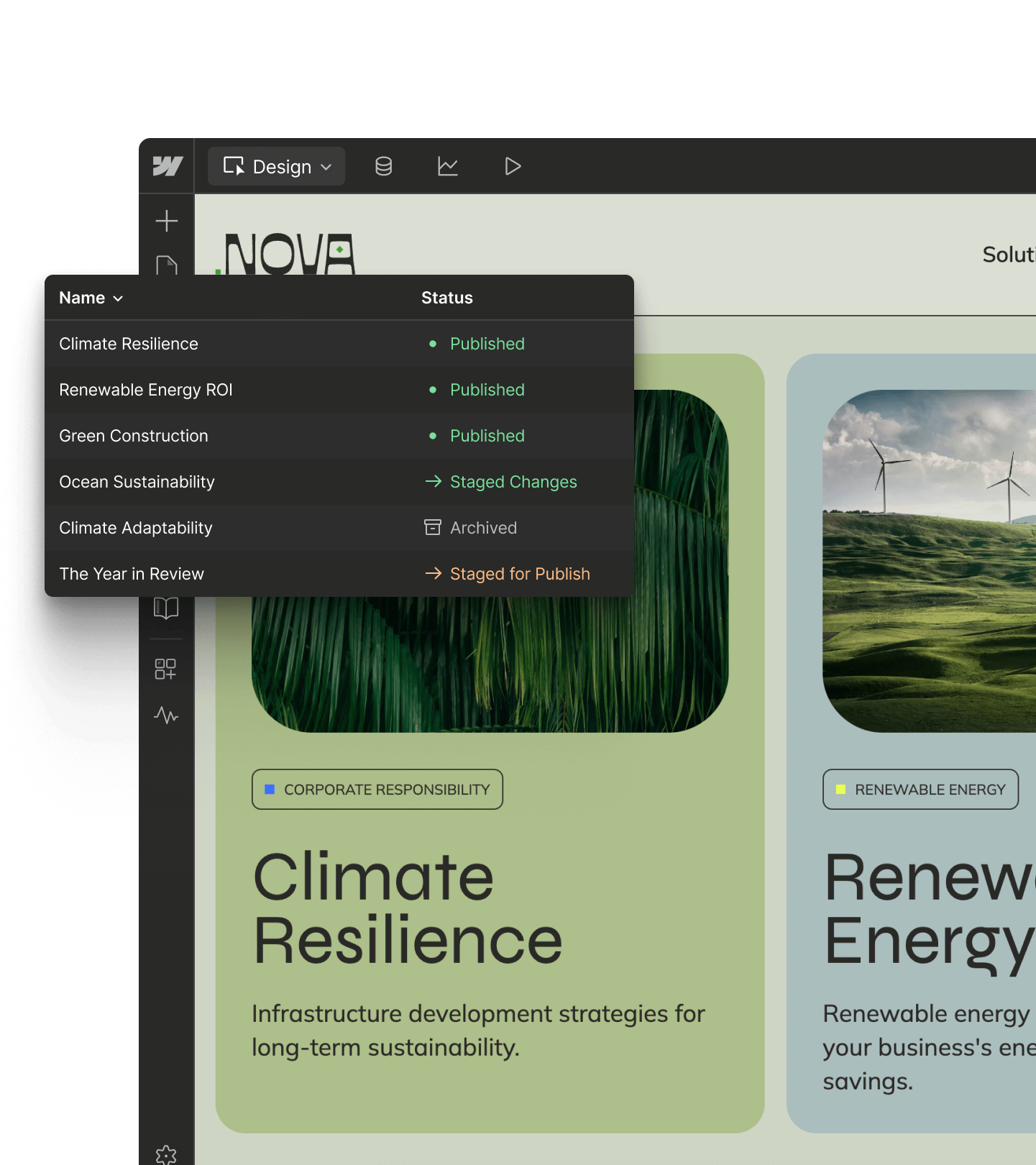
A consistent brand by default
When content and presentation live in separate systems, design tokens drift, components fall out of sync, and brand coherence becomes a manual coordination effort that compounds over time.
Webflow keeps brand and content connected in one experience layer. Your design system, content structure, and visual editor live in one place, so every page reflects your brand as intended.

AEO and SEO built in
Headless CMS platforms focus on content storage and delivery, but search visibility isn't part of the package. Your team needs separate tooling for schema markup, metadata management, and AI discoverability.
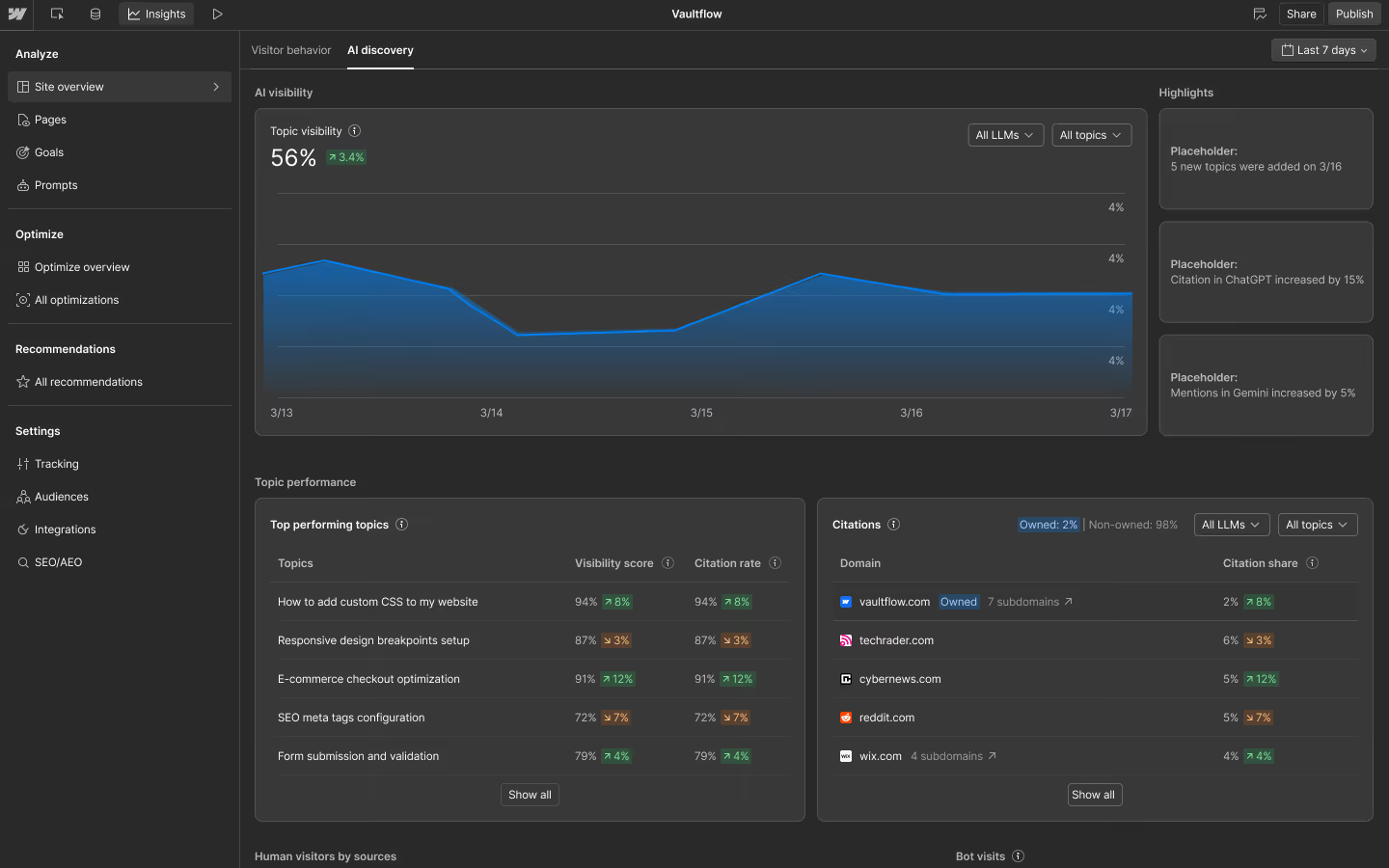
Webflow includes an AI-Powered Audit Panel, schema markup, and SEO and AEO tools natively, so your team optimizes for traditional search and AI search engines from the same platform where content is built.
Know your costs before you commit
With a headless stack, every marketing change becomes an engineering ticket. Every new feature requires integration work. The license is just the beginning — the real cost lives in development hours, pipeline complexity, and the never ending support you require to keep the whole stack running.
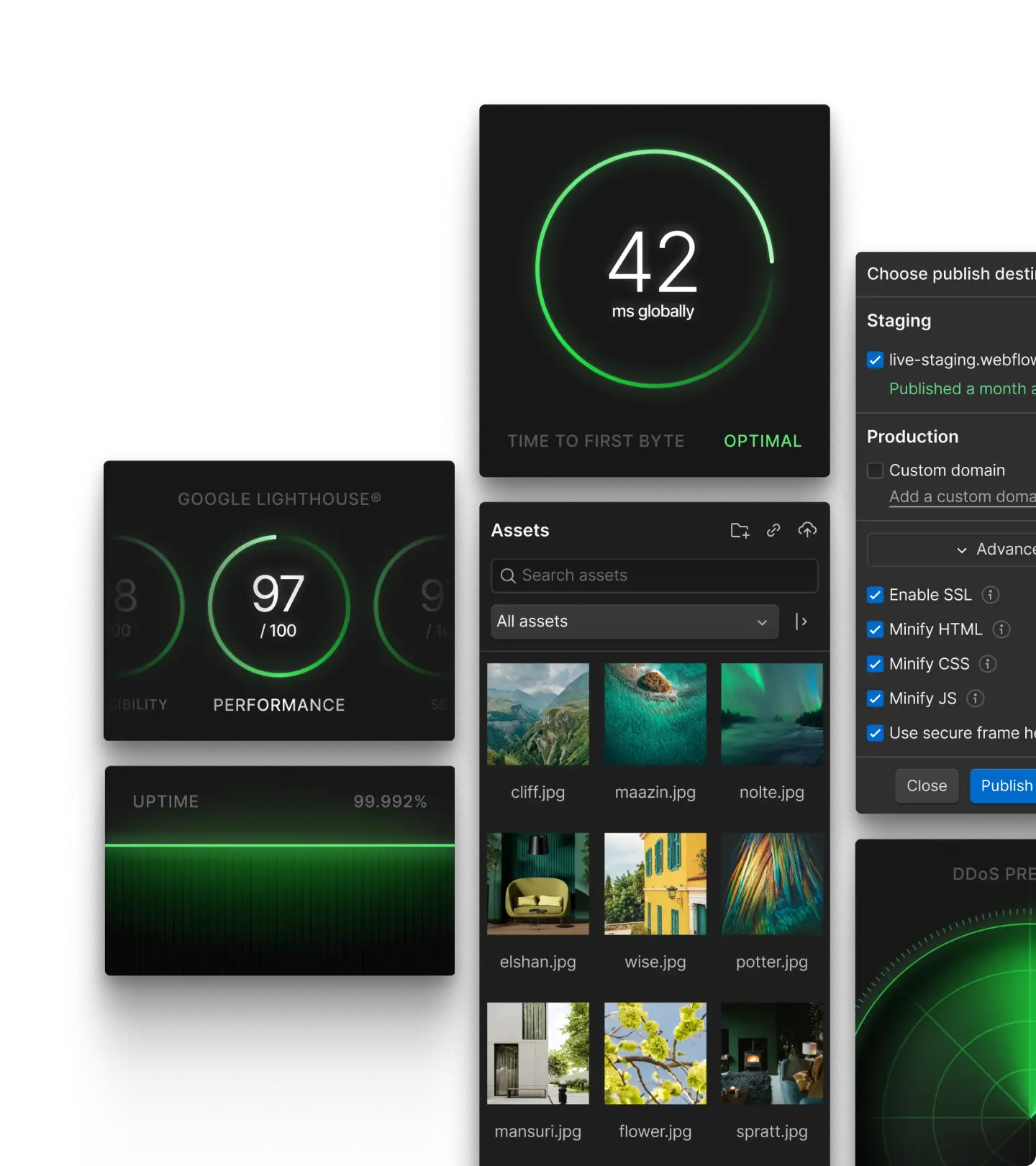
With Webflow, the total cost of ownership is predictable from day one. Hosting, infrastructure, security, and publishing are managed as part of the platform. Marketing teams can operate without waiting on dev for every update or refresh. Developers stay focused on the high-value work. And your web budgets remain consistent.
Why Webflow wins

Speed with guardrails
Your marketing team publishes landing pages, content updates, and campaign assets without filing a dev ticket or waiting for the next sprint. Webflow gives you a platform that keeps your site on brand, where humans and agents are governed, and keeps your teams moving without compounding technical support.

Continuous optimization in one place
Set up A/B tests and personalization with Webflow Optimize directly on live pages. Webflow Analyze connects experiment results to traffic, AI-referred traffic, and conversion data, so your team moves from insight to action in the same place.

AI that works with your system
As AI generates more of your code base or content in a headless stack, there's no system enforcing brand consistency. Webflow's MCP gives AI models your actual brand system, not just the raw content — so your teams and agents build within the same brand context.

“Webflow's extensibility lets us build exactly what we need without being boxed in. As we scale across markets with complex localization needs, it keeps up seamlessly and integrates easily with our systems”

“Our design and development teams are much more integrated during the build process. Designers have more autonomy, and engineers can focus on the most impactful work — allowing us to deliver new web pages faster.”

“Our new designs didn't need to go through anyone else besides brand and marketing — no engineers needed. The freedom and flexibility we gained through Webflow was invaluable.”
Frequently asked questions
A headless CMS separates raw content storage from the presentation layer of your website. Content lives in a backend and reaches your website through APIs, but your team builds everything else: the frontend, the hosting, the deployment pipeline, the analytics, and the integrations for all your marketing tech like your experimentation tools.
Webflow is an agentic web marketing platform that brings content, design, optimization, analytics, and managed hosting together. You get API-first content delivery when you need it through Webflow's headless CMS APIs, plus a visual environment where marketing and design teams publish independently.
In most headless implementations, marketing and content teams update structured content fields without seeing how changes render on the final page. Publishing a new page, adjusting a layout, or launching a campaign typically requires developer involvement.
Webflow's visual editor and Page Builder give your marketing team direct control over content and layout within a governed design system, so they publish independently without risking brand consistency.
Webflow includes MACH-certified headless APIs, CMS and Data APIs for programmatic content management, Code Components built in React, a CLI for deploy and environment management, and Webflow Cloud for hosting Next.js and Astro applications. Developers add custom code at the page, section, or site level and connect the platform to existing stacks through the Apps Marketplace. While a pure headless CMS offers full framework control over the frontend, Webflow gives developers clear extension points while shifting routine marketing-site work — page updates, content changes, localization — to the teams closest to the content.
Headless CMSs typically present editors with forms-based, structured authoring interfaces — fields and dropdowns rather than a visual representation of the live page. Some vendors offer visual editing layers, but these usually require developers to define and maintain component systems before editors gain autonomy.
Webflow's visual CMS lets editors create and update content directly on the canvas, see exactly how it'll appear, and publish with a single click. For marketing teams focused on speed and brand consistency, the in-context editing experience reduces the gap between idea and live page.
Webflow connects into your existing martech ecosystem through headless APIs, on-page custom code, Code Components, and the Apps Marketplace (HubSpot, Zapier, and more). Teams bring their attribution, analytics, automation, and CRM tools along. The difference is that Webflow handles design, content, optimization, and hosting natively, so your integration surface area shrinks, reducing both cost and the coordination overhead of managing multiple vendors.
Get started for free