An AI-powered alternative to Builder.io
Webflow gives your team the tools to build, manage, and grow a website that drives real revenue — in one governed platform. Bring marketing autonomy, design control, and optimization together without reassembling your stack around every campaign.

Trusted by over 300,000 of the world’s leading organizations



















Build for revenue
While Builder.io works well for engineering-led teams that want to add visual editing and AI-assisted code workflows to an existing stack, teams may still own the surrounding hosting, frontend frameworks, repositories, and deployment process.
Webflow takes a different approach: your marketing, design, and development teams work in one governed platform built for brand control, speed with guardrails, and predictable growth from the web.
Why choose Webflow over Builder.io?
The way you build for the web determines how fast you grow. Webflow puts control back in marketing’s hands while giving developers clear ways to extend the platform — helping your team replace a Frankenstack with a governed revenue engine.
Your website as a growth platform
While Builder.io centers on a collaborative code workspace where teams build, review, and approve changes against an existing codebase, Webflow is built around the website as a revenue engine. Your team can build pages, manage content, run experiments, personalize experiences, and measure impact without turning every web update into a code workflow.
Built-in tools for SEO, AEO, personalization, experimentation, and analytics help your team move from insight to action without routing every campaign through a deployment queue.

Launch without reassembling the stack
While Builder.io’s publish layer can support visual editing, page building, and optimization through AI workflows, its value may depend on developer integration, component registration, and existing infrastructure.
Webflow gives your team native CMS, design, hosting, SEO/AEO, analytics, experimentation, and personalization in one governed system. That means fewer fragmented tools, fewer handoffs, and a shorter path from campaign brief to live page. Marketing can move faster because the platform is built for the work marketing needs to do.
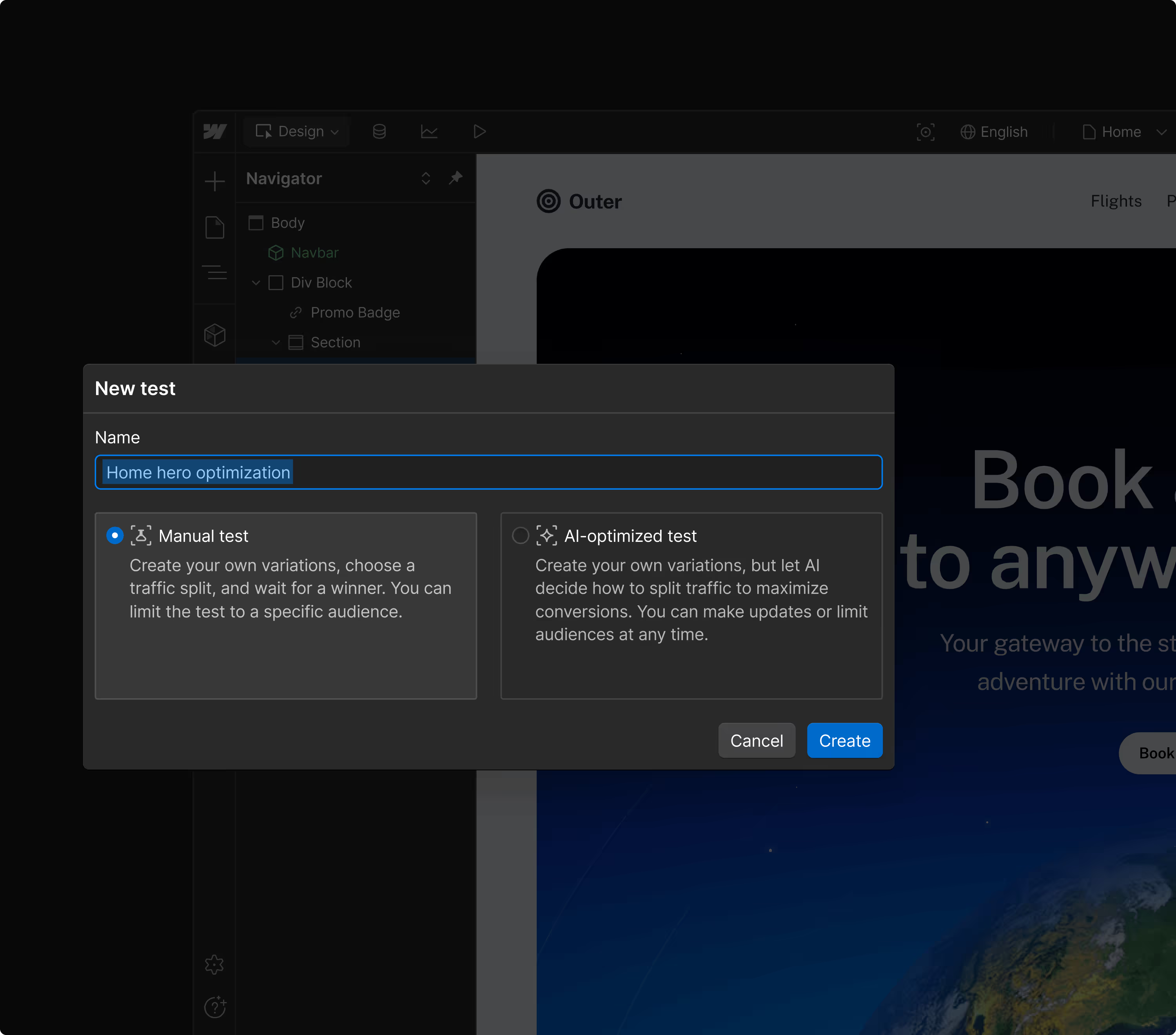
Reduce infrastructure burden
While Builder.io fits teams that want to keep their own hosting, frontend frameworks, repositories, and deployment infrastructure, marketing-led teams may not want to own that operational layer for every web change. Webflow Hosting includes managed infrastructure, SSL/TLS, DDoS protection, backups, staging, and enterprise-grade security controls.
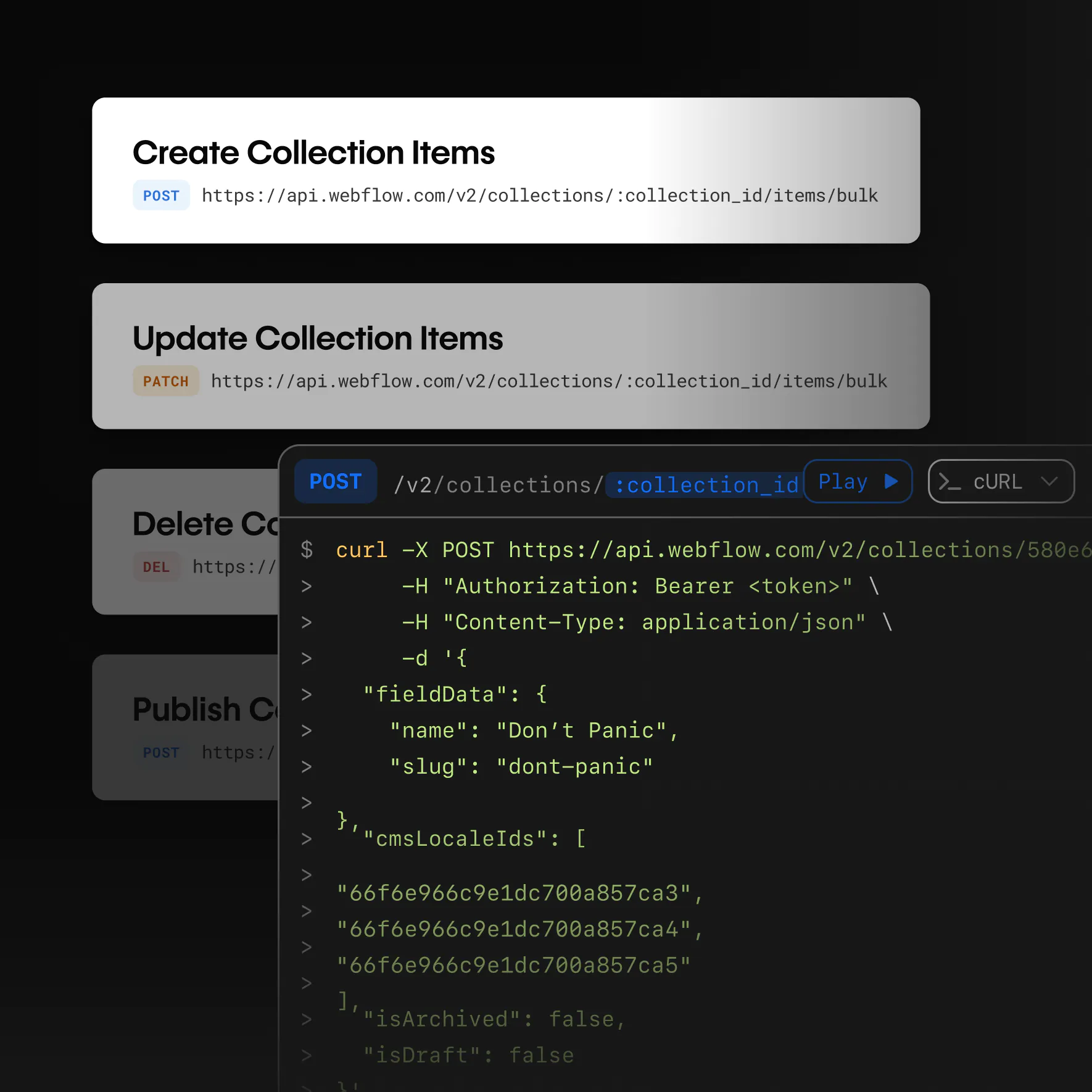
Developers keep clear extension points through APIs, Code Components, and Webflow Cloud, while marketing edits safely inside a governed visual system. Marketing owns the site. Developers own the roadmap.
Design freely without constraints
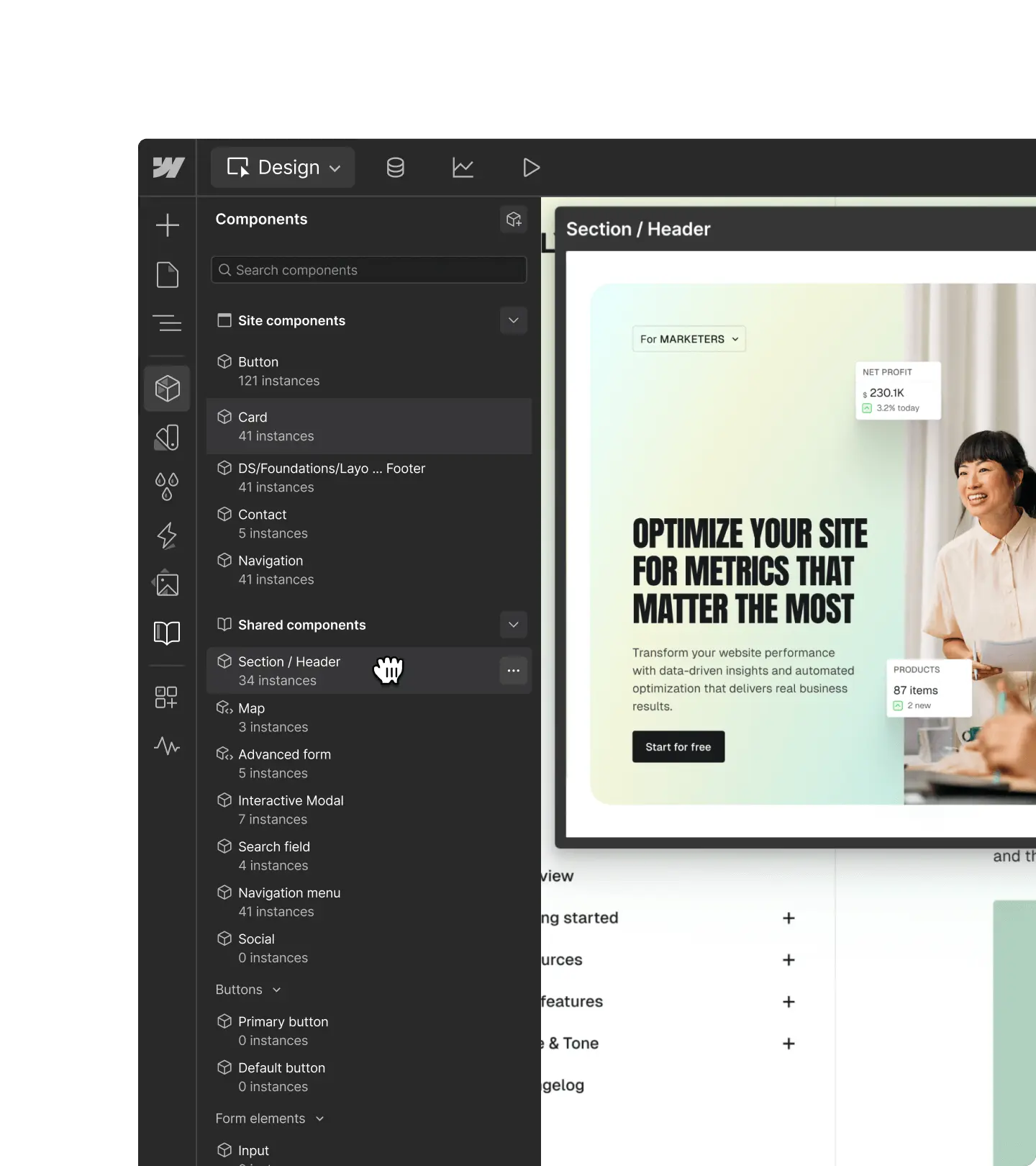
While Builder.io works for teams bringing existing code components into a visual editor, that approach may require developer implementation. Webflow gives teams full control, with reusable classes, components, variables, and Shared Libraries to keep brand systems consistent. Webflow supports your capacity to design consistent brand experiences with AI through Code Components, AI Assistant, and connectors with Claude and other agents so that you can always design in one canvas, visually.
Your team can create web experiences that convert without separating content from presentation across disconnected systems. Brand coherence becomes part of the workflow, not a manual QA pass at the end.
Why Webflow wins

Speed with guardrails
Marketing can build, publish, and iterate on-brand pages independently while governance keeps work controlled. Roles, permissions, approvals, staging, and branching help teams move fast without exposing production to unnecessary risk.

Brand plus content
Webflow keeps brand and content connected in one experience layer. Designers define the system, marketers work inside it, and every page can stay on-brand by default.

Composable by design
Developers can extend Webflow through APIs, Code Components, custom code, and Webflow Cloud where deeper control matters. That gives your team headless flexibility without the burden of headless infrastructure for the core marketing site.

“Webflow's visual-first approach freed up our engineering team to focus on the most impactful work, while giving our marketing team the right tools to collaborate on the site safely.”

“Our new designs didn't need to go through anyone else besides brand and marketing — no engineers needed. The freedom and flexibility we gained through Webflow was invaluable.”

“Our design and development teams are much more integrated during the build process. Designers have more autonomy, and engineers can focus on the most impactful work — allowing us to deliver new web pages faster.”
Frequently asked questions
Builder.io is an AI-powered development platform built for teams working against an existing codebase, design system, and review workflow. Webflow’s agentic web marketing platform gives every team the tools to build, manage, optimize, and measure revenue-driving websites in one governed system. Builder.io fits codebase-centered workflows. Webflow fits marketing-led web growth — with design, CMS, hosting, SEO/AEO, and optimization connected.
Builder.io can support marketing teams with AI visual editing, landing page creation, content updates, A/B testing, and targeting. Its model is strongest when those workflows sit on top of an existing frontend stack. Webflow gives marketing teams more of the website operating model in one place: visual building, CMS, managed hosting, SEO/AEO, analytics, experimentation, personalization, localization, and governance.
Builder.io’s model lets teams keep their own hosting and infrastructure across providers such as Vercel, Netlify, AWS, and Google Cloud. That can be valuable for engineering-led teams that want infrastructure control. Webflow takes a managed approach: Hosting, security controls, backups, staging, and publishing workflows are built into the platform, reducing the operational work marketing and web teams need to coordinate.
Builder.io has SEO documentation and performance practices. Webflow goes deeper for marketing teams managing organic growth, with native controls for metadata, schema, redirects, indexing, sitemaps, and alt text. Webflow also supports AEO workflows, including AI-assisted SEO/AEO recommendations and Markdown for AI Agents on Enterprise, helping teams prepare content for both search engines and AI-driven discovery.
Get started for free