


Learn how great brand websites use storytelling frameworks to put customers at the center of their narratives.
Donald Miller’s StoryBrand framework is popular with web designers and businesses because it’s a reliable way to get a clear, compelling message across. This technique is based on a classic storytelling method that resonates well with audiences. Anyone who enjoys a good book or movie will recognize at least some of Storybrand’s key elements, and that familiarity engages website visitors.
In this article, you’ll learn more about Miller’s framework, and explore eight StoryBrand website examples that show how it works. We’ll also talk about common mistakes to look out for, and best practices for fine-tuning your website copy and layout to make the most of this approach.
What’s the StoryBrand framework?
The StoryBrand website framework is an adaptation of the classic hero’s journey, as first described by Joseph Campbell in “The Hero With a Thousand Faces.” Campbell outlined persistent plot elements found in stories across cultures and time periods, from ancient creation myths to modern blockbusters.
Miller transformed that classic literary structure into a framework for reaching audiences, which he called the BrandScript. This method consists of seven brand storytelling elements:
- Hero. You define a clearly personified hero who represents your audience.
- Problem. The hero encounters a seemingly insurmountable roadblock.
- Mentor. The hero meets an experienced, trustworthy guide (that’s your brand).
- Plan. You provide a clear plan to help the hero address the problem.
- Call to action (CTA). You invite the hero to put the plan into action.
- Results. The plan plays out, and the hero responds accordingly.
- Achieve success/avoid failure. The hero experiences a victory or prevents a disaster.
These familiar building blocks, when tweaked to focus on your audience and what you have to offer them, help clarify your messaging and make it resonate emotionally.
8 StoryBrand website examples you can learn from
The best way to understand Donald Miller’s StoryBrand framework is to see it in action, so here are eight brand messaging examples that use a BrandScript approach.
- Claimable: Frame your brand message with heroism
- DeepOcean: Speak directly to your audience’s mission
- Laurel: Structure your site using StoryBrand elements
- Greenhouse: Establish rapport with empathy
- KLMC: Establish your story with consistent language
- Jasper: Preview the journey for potential customers
- DONE: Clarify and highlight your value proposition
- Mammoth Murals: Showcase your portfolio
1. Claimable: Frame your brand message with heroism
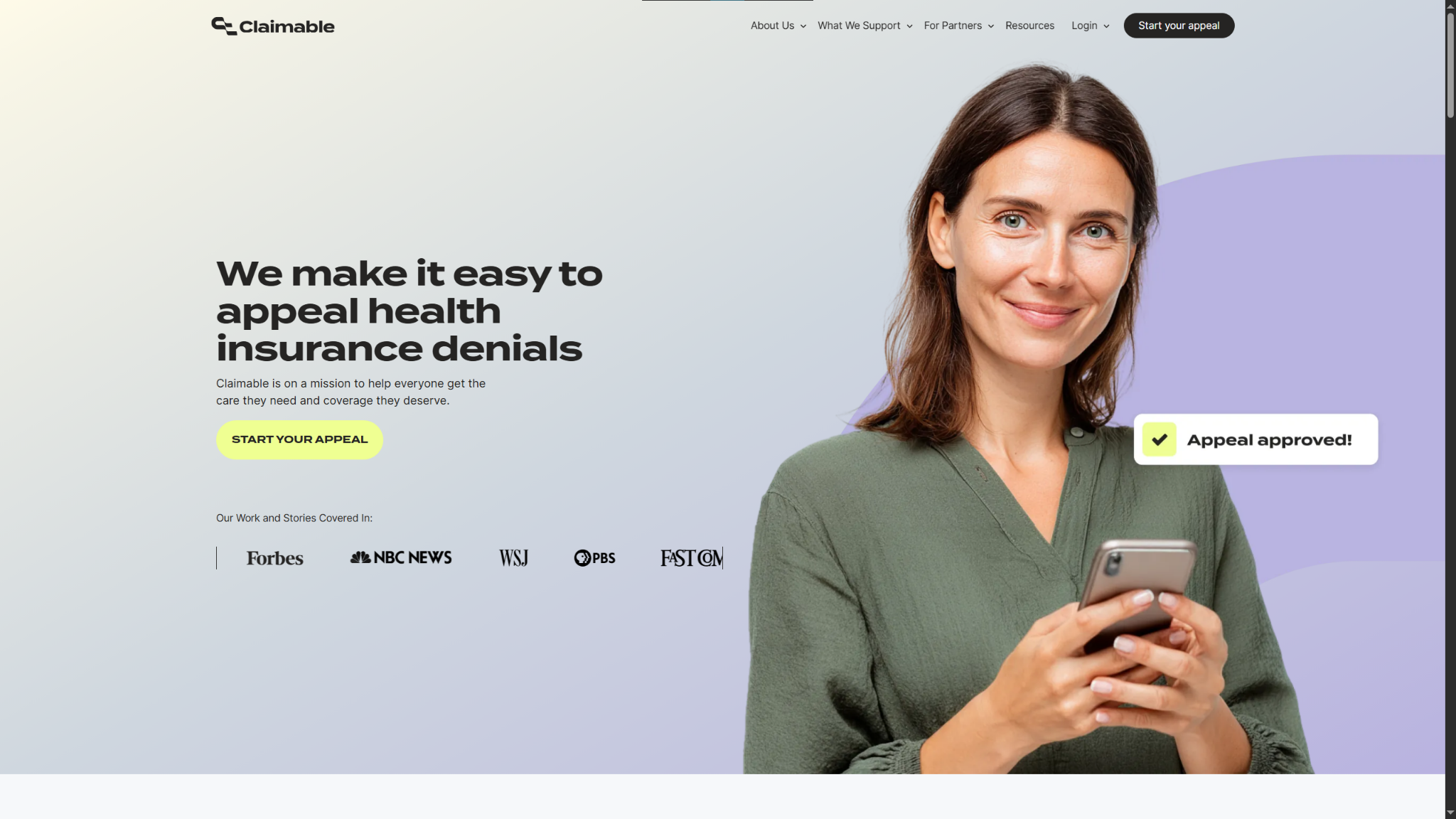
Claimable helps customers appeal healthcare coverage denials, which is an urgent, high-impact problem that benefits from a knowledgeable guide. This focus also gives Claimable a highly specific target audience, so their website copy can speak directly to customers’ needs and concerns.
Copy like “Claimable is on a mission to help everyone get the care they need and coverage they deserve,” frames this brand’s message in a heroic light. The brightly colored “Start Your Appeal” CTA button is hard to miss, and it offers an immediate step into a journey toward a solution.
2. DeepOcean: Speak directly to your audience’s mission
DeepOcean provides ocean services across renewables, oil and gas, and ocean minerals, and its homepage frames the customer’s challenge as something bigger than a transaction: transforming the energy industry. The hero section leads with “Accelerating sustainable ocean solutions” and an invitation to “Join us on a mission to change the energy industry,” positioning visitors as active participants in a shared goal rather than passive buyers.
Before scrolling, visitors already understand who DeepOcean serves and the problem it solves. As they move down the page, a “Why DeepOcean?” section lays out the brand’s credentials (world-leading expertise, a proven track record, a technology-driven approach), establishing the company as a trustworthy guide. Clear CTAs like “Find out more” and “Our approach” appear at each decision point to give visitors clear next steps.
3. Laurel: Structure your site using StoryBrand elements
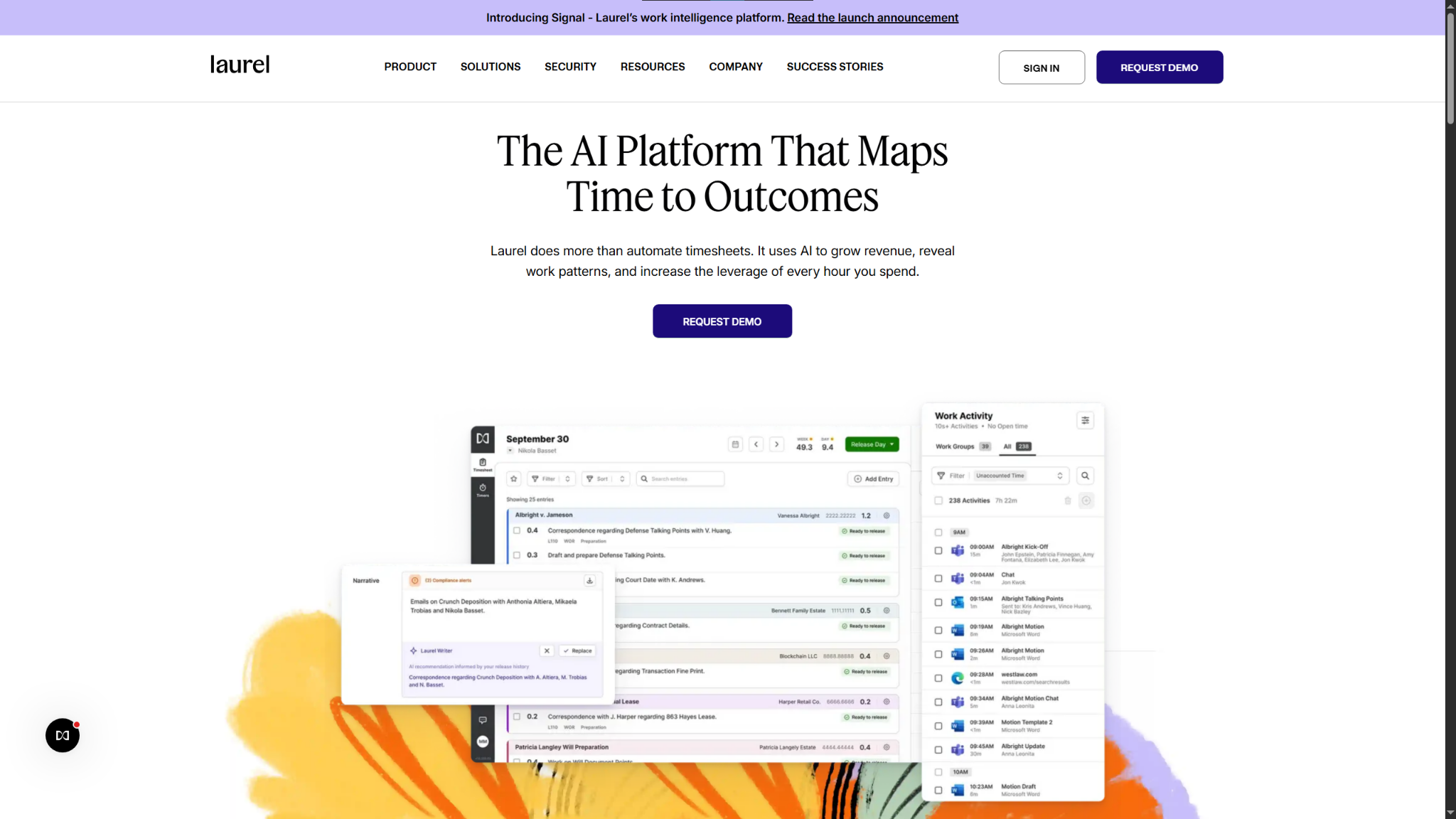
Laurel promises to “map time to outcomes,” which is a major hurdle for businesses looking to maximize their productivity. When you scroll past the hero section, you may notice that the homepage rows are titled to fit the BrandScript narrative flow almost exactly: “Who We Serve,” “The Problem,” and “The Solution.”
By clearly laying out these familiar stages, Laurel gives potential customers a path to follow that focuses on their needs. Plus, this website structure streamlines navigation; visitors immediately know where to go based on whether they’re still deciding or ready to commit.
4. Greenhouse: Establish rapport with empathy
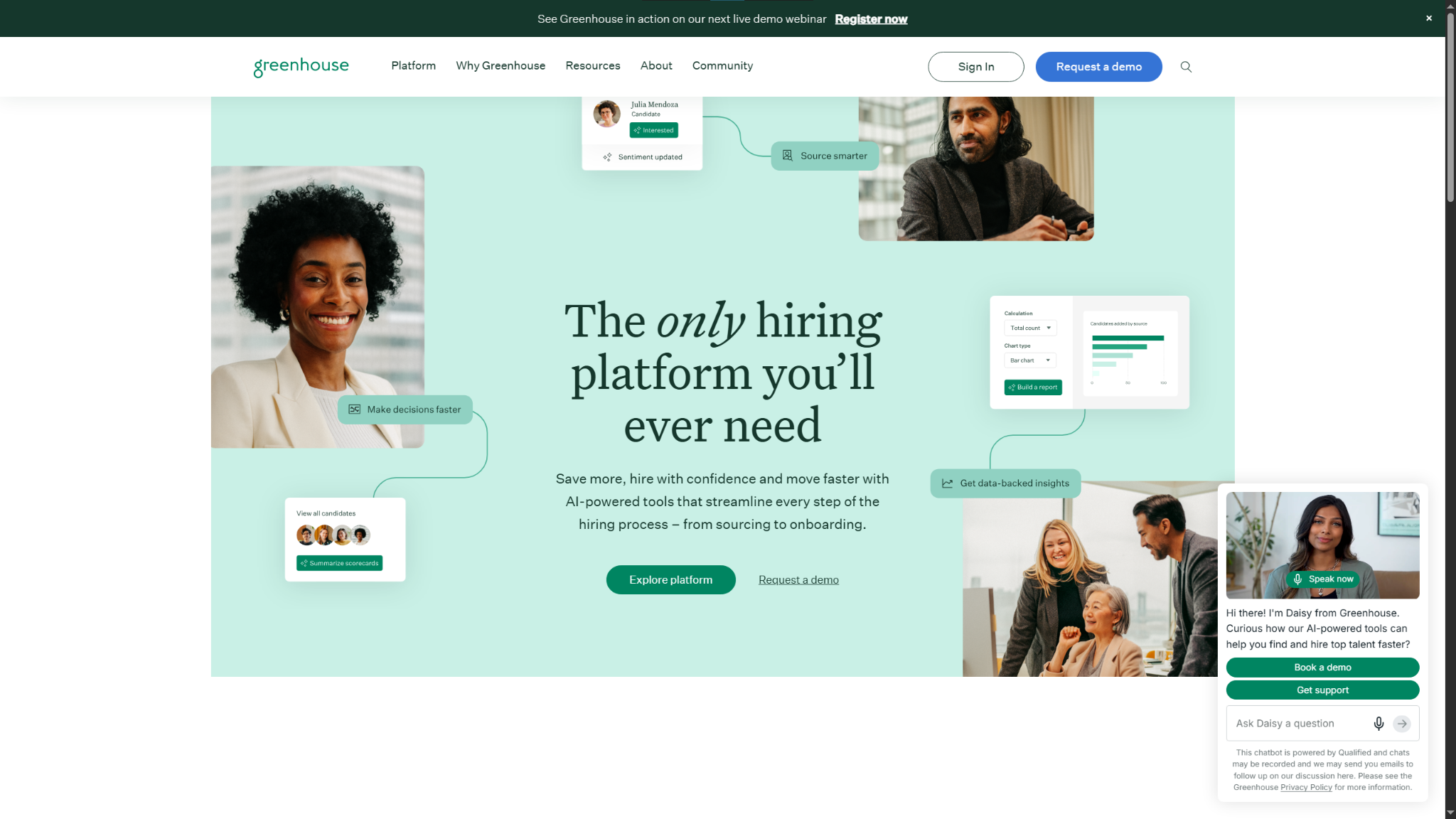
Sourcing and onboarding the best talent is a serious challenge, but Greenhouse promises to streamline that process. Their promised solution is results-oriented: keeping employers from wasting money and time on fraudulent resumes or poorly-matched candidates.
The Greenhouse homepage speaks to busy hiring managers with empathy, using empowering phrases such as “hire with confidence” and “future-proof your hiring.” This language tells visitors that Greenhouse knows what they need, establishing rapport and positioning the company as a reliable guide.

Business website
Learn how to design, build, and publish a unique and professional website for your business in no time.
5. KLMC: Establish your story with consistent language
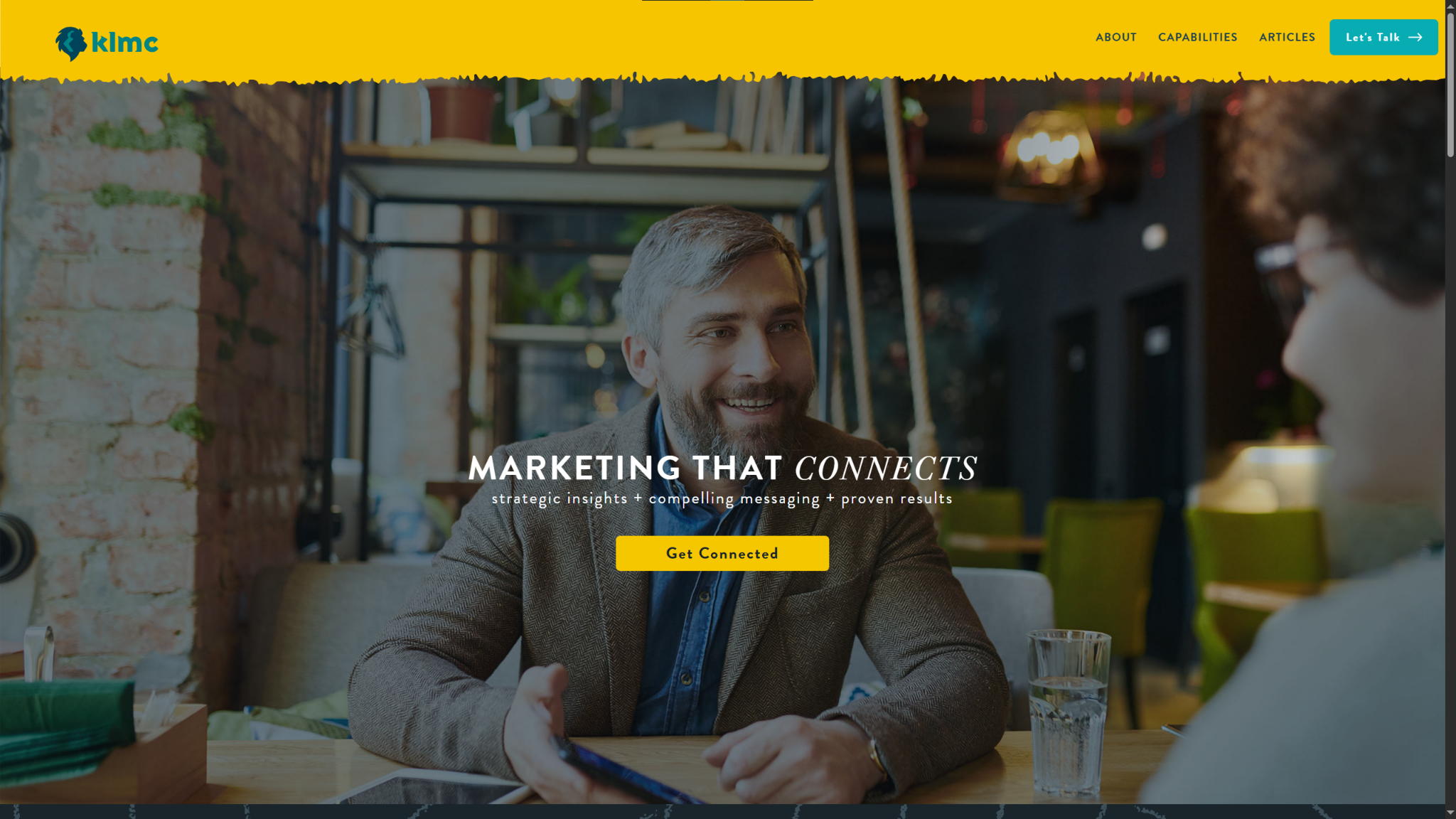
KLMC is a B2B content marketing company that helps clients reach customers authentically. Their homepage starts with a full-screen visual and a simple but compelling call to action: “Get Connected.”
The word “connect” appears many times throughout the site, and it's a central theme that drives the brand’s storytelling. Consistent word choices like this help establish the ‘plot’ of the story you’re telling, and distinguish your brand from competitors that use more straightforward sales techniques.
6. Jasper: Preview the journey for potential customers
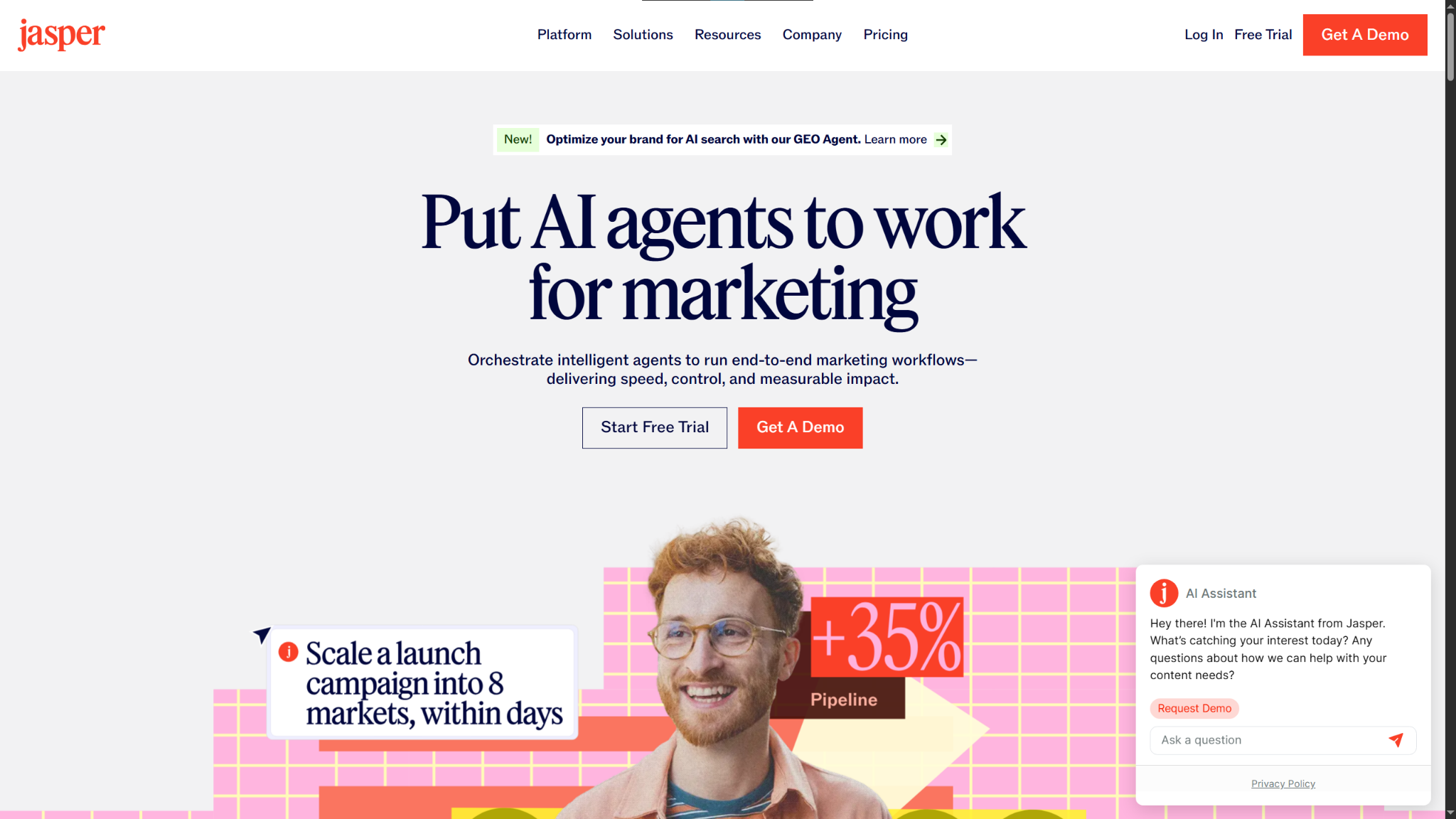
Jasper’s hero section manages to contain all the major storytelling elements without overwhelming visitors. The tagline starts with “Optimize your brand for AI search,” indicating both the hero of the story and the problem at hand. It goes on to add “with our GEO agent” which clarifies who the guide is and hints at their expertise.
After that, the headline and subtitle outline a clear plan using action-focused language, previewing the journey to come. In just a few lines, Jasper tells a clear story about who the product is for, what it does, and how it solves a key problem, all before website visitors even scroll past the first section.
7. DONE: Clarify and highlight your value proposition
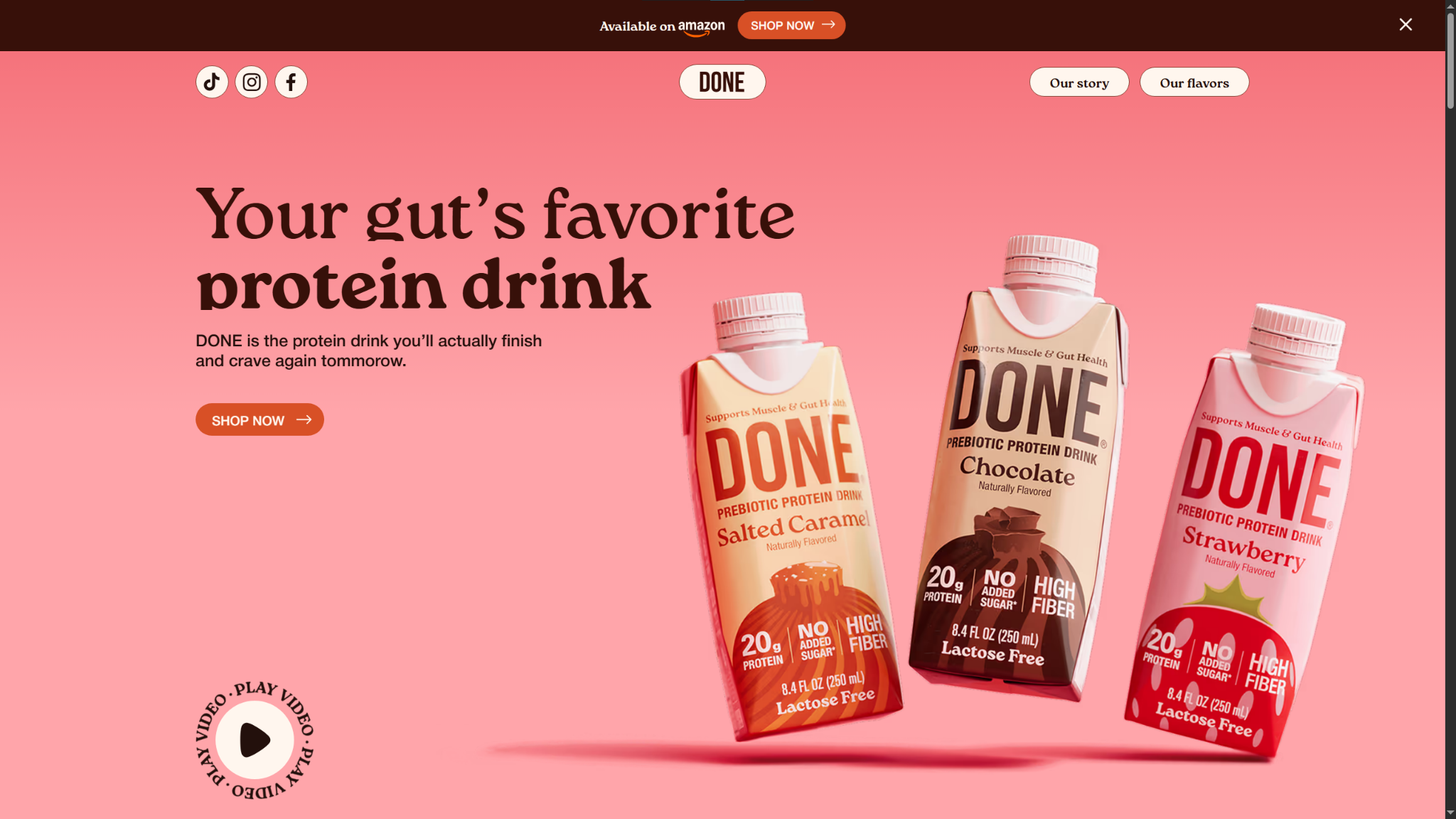
DONE creates natural protein shakes designed to support muscle growth and gut health. Its target audience is consumers who want a ‘one-and-DONE’ drink that will cross multiple items off their daily to-do lists.
This brand knows that many similar drinks taste like chalk-flavored toothpaste, so they start with a promise that gets right to the heart of visitors’ concerns: “DONE is the protein drink you’ll actually finish and crave again tomorrow.” While this is a simple value proposition, it speaks to customer needs by offering a clear end goal and a swift solution.
8. Mammoth Murals: Showcase your portfolio
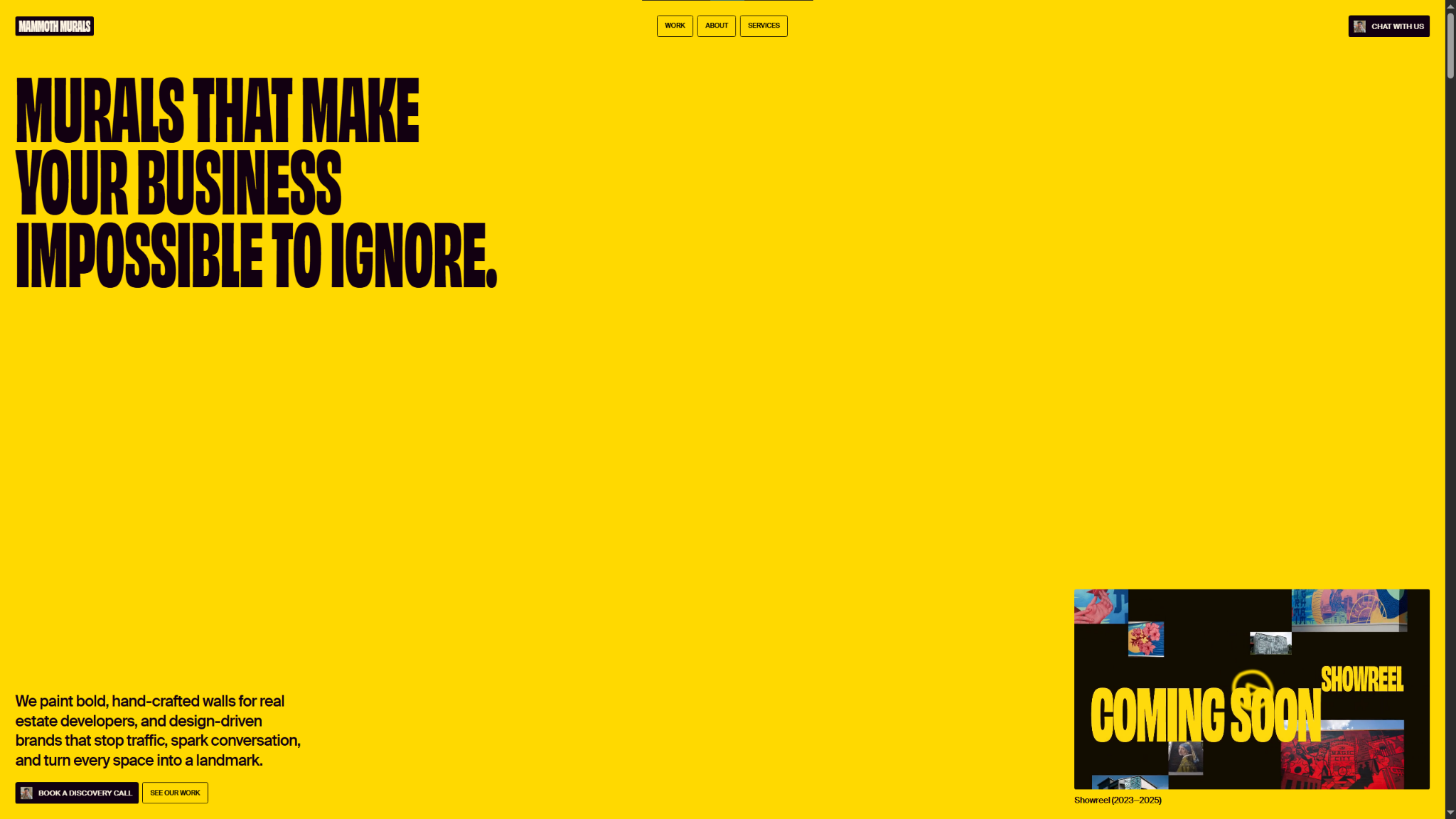
Mammoth Murals turns businesses into landmarks with beautiful, eye-catching murals. The site’s headline keeps the focus where it belongs: on business owners looking to attract more attention to their buildings.
“Murals that make your business impossible to ignore” is exactly the kind of promise those clients are looking for. The design portfolio that follows shows just how qualified this brand is, positioning them as a guide who will make good on that promise. Even the primary CTA, “Book a discovery call,” makes the act of reaching out sound adventurous.
Key elements of a StoryBrand homepage
The homepage is the most important building block in successful StoryBrand web design. This page establishes the story's beginning, introduces the hero and the guide, lays out the problem, and hints at the solution.
Here are the key elements your StoryBrand homepage should include:
- Clear hero statement: A concise, customer-centric mission statement that shows your audience you know who they are and what they want.
- Visual storytelling: A hero image or video that quickly establishes your distinct visual identity.
- Problem/solution narrative: A statement about the problem your service solves and an action-oriented description of how it does so, both written from the audience’s perspective.
- Social proof: Testimonials, awards, and client badges that establish your brand as a trustworthy authority.
- Strong CTAs: Empowering CTAs, placed at key decision points to invite visitors to take the next step.
Common mistakes to avoid in your StoryBrand website
Finally, here are four mistakes to avoid as you plan your own version of the BrandScript structure:
- Vague headlines. Speak to your audience’s needs or points of view, but don’t try to reference too many problems at once. Each headline should focus on one key pain point or solution, so your message stays clear.
- Confusing visuals. Pick high-quality images that clearly illustrate the point you're making in nearby website copy. Every visual should serve the narrative in some way.
- Weak or hidden CTAs. Your CTAs are the page-turning plot points that keep your audience engaged. Choose active verbs that make visitors feel like they’re advancing toward a goal with every click.
- Writing from the wrong perspective. A StoryBrand website is more like a choose-your-own-adventure novel than a business biography. Use ‘you’ often to speak from the customer’s perspective and show that you empathize with their needs.
Build and maintain your StoryBrand website with Webflow
While details matter, the most important step in following the BrandScript method is to create a compelling, audience-focused narrative. So spend time on the big picture first, deciding exactly what your message will be and what visitors’ ideal journeys should look like. Then use that high-level story to guide each individual design choice.
This might sound like a lot of work, but Webflow helps you create fully customized, user-focused websites quickly. The drag-and-drop visual toolset gives you everything you need to build on-brand and story-driven pages, even if you’re not a web designer. Native interactions and animations let you bring the adventure to life, while on-site analytics tell you if visitors are following the narrative smoothly or getting lost along the way.
Tell your brand story and drive engagement with Webflow.

The marketer's guide to personalization
Discover how to create personalized website experiences that meet buyers’ expectations in this ebook.