









Reducing time to market is the first step to getting in front of trends, and you don’t have to sacrifice quality to do it.
New products and market trends emerge almost daily. Old development processes and marketing teams need to shorten delays and reduce time to market (TTM) to keep up.
There’s no shortage of tools and methodologies that fill that need. With the right setup, today’s marketers have the agency and autonomy to launch a campaign in record time. They just need smart tools, agile workflows, and trust, and that’s all about good management. In this guide, we’ll explore what those workflows look like and weak points to reinforce with a stronger TTM strategy.
Key strategies to reduce time to market
The key to reducing TTM is to eliminate as many bottlenecks as possible in your development process. That’s easier said than done, but here are a few strategies to get started.
Balance speed and quality
When you plan your next campaign, focus first on developing a minimum viable product (MVP). An MVP is the simplest version of your product that your team can reasonably launch and still meet basic customer expectations. Starting with an MVP means you’ll spend less time developing the fine details that customers may not notice, and will have something ready to release right away.
You can use your remaining time and resources to refine your offering until it meets your standards and you see the right window to launch. Or, you can launch an MVP to put your name on the board while interest is still high and push updates that add nice-to-haves and improvements later.
You don't have to lower your quality expectations to prioritize speed, but you might need to narrow the scope. Smaller, more agile campaigns can create a better competitive advantage sooner than large, monolithic projects that are outdated by the time they launch, especially when they’re tailored to a niche audience.
Use Agile methodology to accelerate product development
Agile methodology is an approach to project management where teams develop an MVP, then iterate in incremental sprints. Taking the time to properly implement the Agile approach can reduce TTM.
Agile encourages collaboration and flexibility over following rigid processes. The most important part is shared team ownership: By breaking tasks into small pieces that everyone shares, knowledge transfers efficiently and the initial MVP can come together faster. Some Agile approaches also include customer feedback in the collaboration, which helps teams improve their MVP.
For example, content creation, legal, and dev teams may work together to build a new set of landing pages by reviewing content at the same time and surfacing any concerns. That way, teammates can give consistent, frequent feedback on the project, and any problems that could delay an MVP launch are addressed in the moment. After the web pages are launched, written customer feedback or analytics like clickthrough and bounce rates point those teams toward what to improve next.
Pair the right tools and technologies
A martech stack audit can help you verify that you’re using the best marketing tools and technologies for your projects. Look for opportunities to consolidate your tool suite and automate parts of the product development process. For example, Webflow AI can reduce entire workflows, like generating metadata or schema markup, so no one has to sink time into tedious tasks instead of making practical improvements on the campaign.
You should also check that all the tools and technologies you are using are compatible with one another. In a truly streamlined enterprise tech stack, every tool, service, and platform integrates with one another to shorten the time it takes to move between steps in a workflow. It’s doubly important for cross-functional teams, where work needs to translate seamlessly between tools.
Create decision-making frameworks
Members of your marketing team need to be able to make decisions independently. Some choices should be run by management, but micromanagement will slow your TTM. Build processes that require minimal oversight but still offer the accountability necessary to foster trust between designers, developers, and management.
The secret to creating faster decision-making frameworks is transparency. When a designer has a question about launch requirements, they should have access to support documents. Likewise, when a product manager wants to know whether a campaign is on track, they should be able to learn that from a quick glance at last week’s meeting notes. Transparency builds trust between team members, and trust builds autonomy (and the confidence to use it).
Eliminate knowledge gaps
Product development speeds often come to a halt when someone is handed a task they know nothing about, or when they’re asked to do something they’ve never done before. When they aren’t given the time to learn, they’ll need to pick it up while working, and that will produce a subpar product every time.
Encourage team members to teach each other new tools and skills before they’re needed. Regular team-building exercises and educational presentations are great ways to share knowledge and build competence. Over time, you'll reduce TTM simply by having more competent, confident team members.

Webflow Enterprise
Loved by designers. Trusted by enterprises. Bring Webflow in-house at your company with advanced security, custom traffic scaling, guaranteed uptime, and much more.
Process improvements that accelerate time to market
A streamlined product development process prioritizes speed and autonomy. Everyone can make full use of their time when they don’t have to wait around for approvals or dependencies.
Here are some of the process improvements that can help you reach that point:
- Set attainable goals. Scope projects at the smallest possible scale first to make an MVP that’s ready for launch as soon as possible. Then improve it with short-range, incremental changes that build on that working foundation.
- Validate often. Build feedback cycles into your processes that require marketers to gather input from peers and user testing on a regular basis. That way, they’ll discover and solve budding issues that could slow down development later.
- Replace managerial approval with peer review. Trust that each team member is expert enough to critique one another’s work. They’ll share knowledge, align on project goals, and build a stronger culture of collaboration.
- Increase accountability. Clearly define everyone’s roles and responsibilities from the outset, and hold people accountable when they fail to meet expectations. Everyone should have clear goals and deadlines, and they must be made aware of how failing to meet them impacts everyone else.
- Document cross-functional workflows. Create detailed standard operating procedures for processes that require cross-functional work. Simplifying those processes into repeatable, documented plans will reduce the delays that tend to occur when two people with very different areas of expertise collaborate.
Common mistakes that slow down time to market
It’s relatively easy to notice when your TTM is too slow. Productivity, customer satisfaction, and even revenue wane as new product launches crawl to the finish line. It’s harder to diagnose the cause.
Here are several common mistakes that could be contributing to a slow TTM:
- Perfectionism: The “last 10% problem” is a very real phenomenon that slows down projects because somewhere along the line, someone is prioritizing perfection over completeness. Keep your standards high, but learn how to recognize when little tweaks stop making a difference.
- Cutting corners: Taking shortcuts and skipping steps results in gaps and mistakes that need to be fixed later. It’s easier to achieve peak efficiency if everyone does their work by the book.
- Lack of automation: Agentic marketing platforms can take over busy work that slows teams down, like generating content or resolving errors, so automate tasks that don’t require human expertise.
- Poor alignment: A team that isn’t striving toward the same goal will step into more pitfalls than one that is, especially if the team relies on cross-functional work. Keep goals aligned across all your project documents, and encourage regular meetings and peer reviews so everyone stays on the same page.
- Long cycles: Break larger projects down into smaller, attainable sprints with shorter timelines one to two weeks long. That way, every contribution is validated and folded into the overall project at a steady pace.
Building faster campaigns with Webflow
Even the most robust plans can go off-course from a single point of failure, so reducing TTM is largely about finding and resolving weak links in the chain. The tools and technologies you use are an obvious place to start, and it’s well worth it to ensure your team is using best-in-class software.
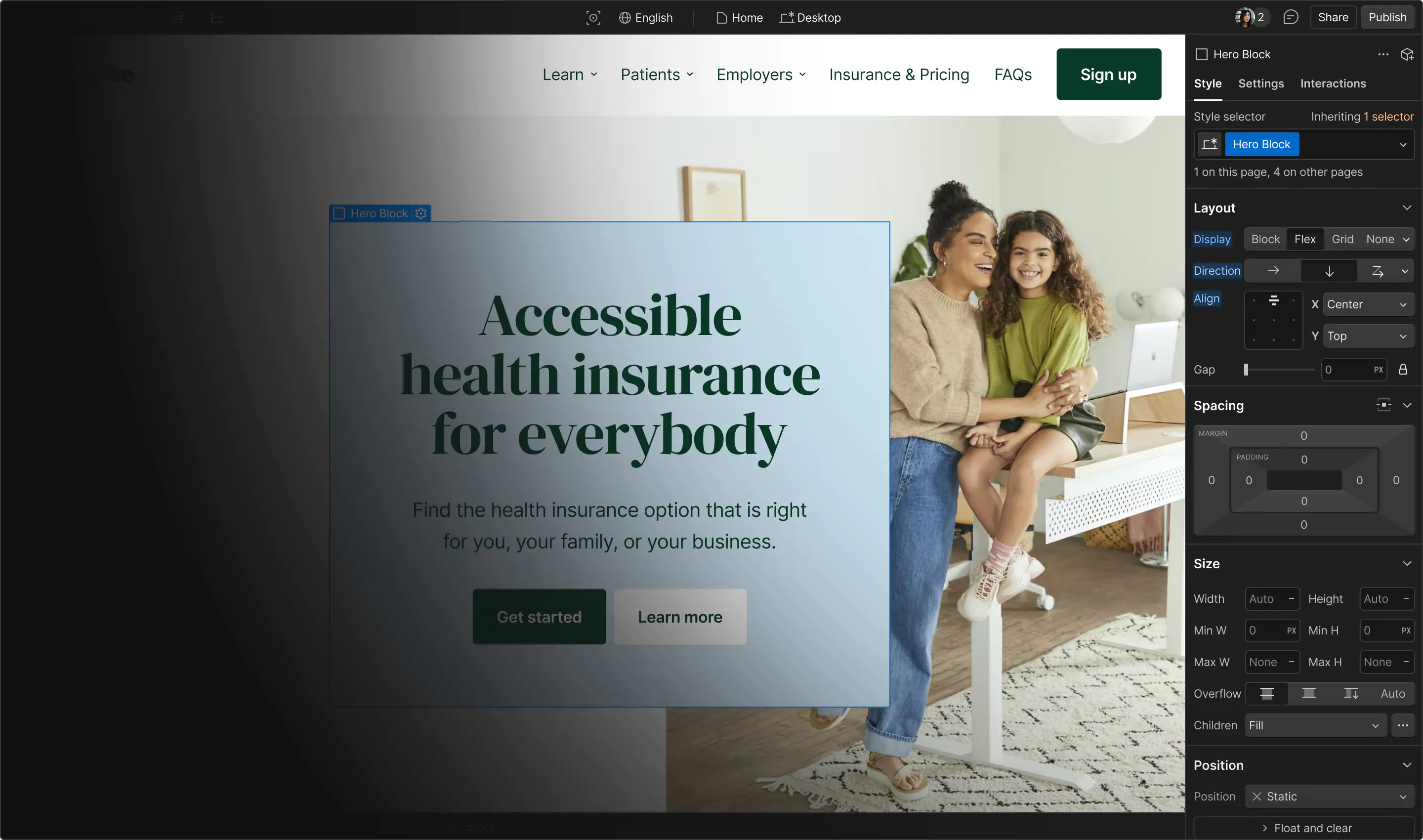
Webflow is the go-to agentic marketing platform for any team looking to streamline their digital marketing process. Its visual canvas enables faster web designs, the composable CMS simplifies new content updates, and Webflow AI automates tedious tasks like writing metadata and alt text.
Contact the sales team to discuss migrating your website to Webflow and reduce the bottlenecks and delays that have been slowing your team down.

Driving marketing team efficiency with AI
Your roadmap to smarter marketing workflows