






Your AEO Assessment: openspace.ai
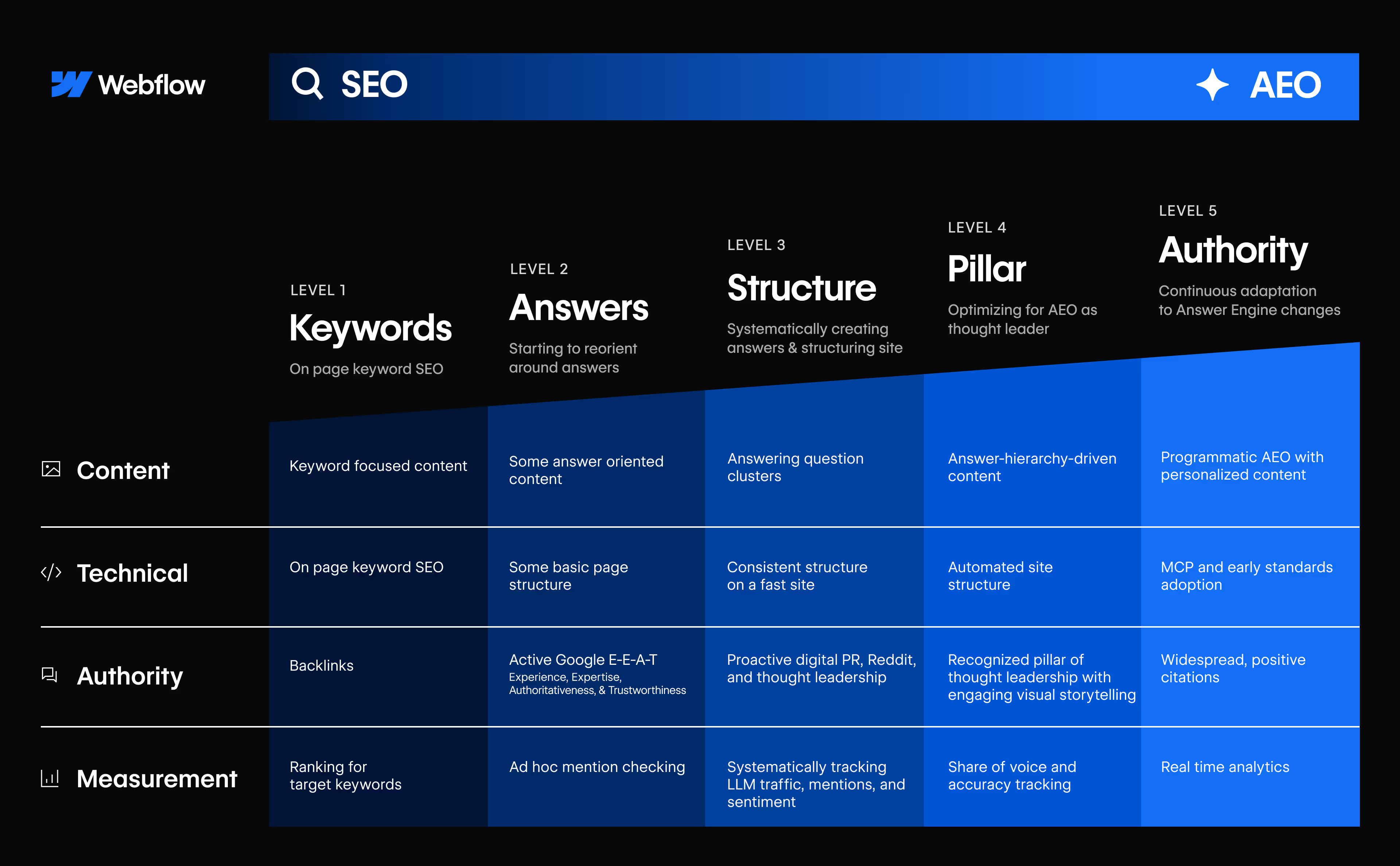
Overall AEO Maturity score: 3 out of 5






Your top 3 priorities
Here's where openspace.ai can make the fastest gains in AEO visibility, accuracy, and traffic. If you only did three things, do these:
Add a valid XML sitemap and expand canonical tag coverage to 95%+. These two technical fixes unlock level 3 and ensure AI engines can reliably discover and prioritize your most important pages.
Deepen long-form content pages to 800+ words with comprehensive topic coverage. Giving AI models more substantive material increases the likelihood they cite openspace as an authoritative source.
Adopt a dedicated AEO monitoring tool to systematically track AI citation rates, LLM brand mentions, and AI-referred traffic. This shifts measurement from guesswork to a scalable, data-driven pract...
AI visibility snapshot
Top competitors mentioned alongside you
What your AEO Assessment covers
Your personalized AEO assessment measures how well openspace.ai is positioned for AI-driven discovery. It evaluates your site’s performance across four key categories—Content, Technical, Authority, and Measurement—to show how effectively AI systems can understand, cite, and recommend your brand.

Content
Content: Build the source AI trusts
We evaluated how your content performs across freshness, structure, depth, and clarity to see how well it helps AI understand what you do and why you matter.
Content Category Score
OpenSpace has strong content foundations with excellent FAQ coverage (86% of pages), fresh content, and 12 diverse content types. You're close to Level 4—deepening article length, improving readability, and expanding question coverage will help AI engines cite your content more.
Deepen long-form content pages
Your articles and guides currently average around 551 words on long-form pages. Expanding these to 800+ words with more comprehensive topic coverage will give AI models the depth they need to treat...
Simplify language for clearer extraction
Your content's readability score (34 Flesch) reflects highly technical writing. Keep your technical precision but use shorter sentences, active voice, and plainer language in supporting passages to...
Expand mid- and bottom-funnel answers
You currently cover about 52% of key prospect questions. Closing the gap to 60% by addressing topics like implementation details, ROI frameworks, pricing context, and competitive differentiators wi...
Question Coverage Percentage
Coverage of the 100 most likely questions your target audience will ask related to the topics visible on your site.

Technical
Technical: Structure wins
We evaluated how well your site uses schema, other metadata, accessibility, and speed, and more to help LLMs understand the structure and meaning of your content and establish one part of your authority in AI-driven search.
Technical Category Score
OpenSpace has solid technical foundations in place — HTTPS, robots.txt, strong schema markup (87%), and good accessibility (93%). You're close to Level 3: adding a sitemap and expanding canonical tag coverage are the two fixes needed to unlock the next tier.
Add a valid XML sitemap
Create and maintain a sitemap.xml at your domain root listing all important pages, then submit it to Google Search Console and Bing Webmaster Tools. This helps AI and search engines discover and in...
Expand canonical tag coverage
Your canonical tag coverage is at 85% — bringing it to 95%+ will signal to search engines and AI systems which version of each page to prioritize. Add self-referential canonical tags to remaining p...
Improve mobile page speed
Optimizing your mobile Largest Contentful Paint (LCP) to under 2.5 seconds will improve both user experience and AI engine favorability. Focus on image optimization, reducing render-blocking resour...
Schema Coverage Percentage
Share of pages with schema.org metadata for improved LLM and search engine understanding.

Authority
Authority: Earn trust, everywhere
We evaluated how your site establishes authority by looking at how and how frequently others talk about you, the associated sentiment, and more.
Authority Category Score
OpenSpace has built solid authority as a recognized brand in construction tech, with AI platforms identifying core offerings accurately. Tightening on-site messaging consistency and expanding authoritative mentions will unlock the next level of AI visibility.
Tighten on-site brand messaging
Audit product pages, case studies, and marketing content to ensure consistent descriptions of what OpenSpace does and who it serves. A unified narrative helps LLMs build a more accurate model of yo...
Expand authoritative industry mentions
Target the next tier of industry coverage—niche construction publications, partner ecosystems, analyst reports, and standards bodies. Broadening your footprint across authoritative sources strength...
Work toward wikipedia presence
A Wikipedia page significantly boosts LLM awareness and accuracy. Focus on earning significant coverage in reliable, independent sources to meet Wikipedia's notability guidelines.
Authority Coverage Percentage
Percent of top 50 industry sites that mention you.

Measurement
Measurement: From rankings to representation
This score reflects how well you monitor your visibility across AI systems; from tracking brand mentions and citations to understanding sentiment and share of voice.
Measurement Category Score
OpenSpace has a solid analytics foundation with GA4 and 8 other tools covering 88.5% of pages. The next step is layering in AEO-specific tracking to measure how AI platforms reference and drive traffic to your brand.
Adopt a dedicated AEO tool
Invest in a purpose-built AEO monitoring tool that systematically tracks AI citation rates, LLM brand mentions, and AI-referred traffic. Manual spot-checking doesn't scale—automated tools deliver c...
Start tracking AEO metrics
If not already in place (we cannot tell from the outside), begin monitoring AI bot traffic via server logs, LLM-referred human traffic from platforms like ChatGPT and Perplexity in your analytics, ...
Close analytics coverage gaps
Your analytics currently covers 88.5% of pages—just shy of the 90% target. Closing that small gap ensures you can accurately measure AI-referred traffic patterns across your full site without blind...


Measurement Coverage
Presence of externally visible signs on your website that you are using measurement tools.