






Your AEO Assessment: kqed.org
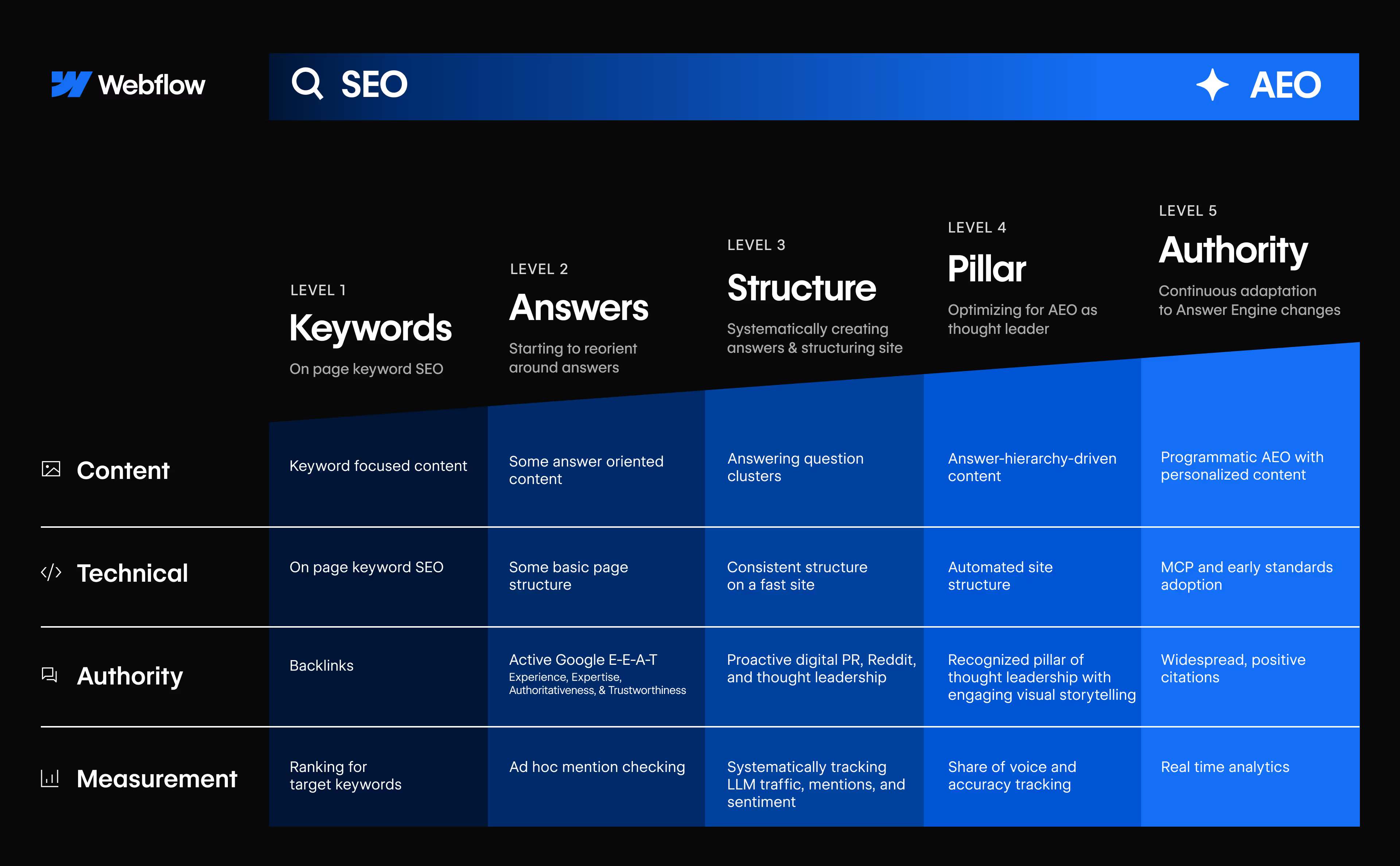
Overall AEO Maturity score: 3 out of 5






Your top 3 priorities
Here's where kqed.org can make the fastest gains in AEO visibility, accuracy, and traffic. If you only did three things, do these:
Develop comprehensive content that addresses clusters of related questions to enhance semantic richness.
Implement comprehensive schema markup across all pages to enhance search engine understanding and eligibility for rich results.
Optimize website performance by improving Core Web Vitals metrics, focusing on reducing Largest Contentful Paint (LCP) to under 2.5 seconds.
What your AEO Assessment covers
Your personalized AEO assessment measures how well kqed.org is positioned for AI-driven discovery. It evaluates your site’s performance across four key categories—Content, Technical, Authority, and Measurement—to show how effectively AI systems can understand, cite, and recommend your brand.

Content
Content: Build the source AI trusts
We evaluated how your content performs across freshness, structure, depth, and clarity to see how well it helps AI understand what you do and why you matter.
Content Category Score
KQED's content effectively addresses audience questions with clear, accessible language. To advance, focus on developing comprehensive content clusters, ensuring regular updates with visible freshness indicators, and adding competitor comparison pages to highlight unique value propositions.
Create content clusters
Develop comprehensive content that addresses clusters of related questions to enhance semantic richness.
Regular content updates
Ensure all content is updated regularly, with visible indicators of freshness such as 'last updated' dates.
Add competitor comparisons
Implement competitor comparison pages to highlight KQED's unique value propositions.
Question Coverage Percentage
Coverage of the 100 most likely questions your target audience will ask related to the topics visible on your site.

Technical
Technical: Structure wins
We evaluated how well your site uses schema, other metadata, accessibility, and speed, and more to help LLMs understand the structure and meaning of your content and establish one part of your authority in AI-driven search.
Technical Category Score
KQED.org demonstrates a solid technical foundation with secure, accessible, and mobile-friendly design. To advance in AEO maturity, enhancing schema markup, addressing duplicate content, and optimizing Core Web Vitals are recommended.
Enhance schema markup implementation
Implement comprehensive schema markup across all pages to enhance search engine understanding and eligibility for rich results.
Resolve duplicate content issues
Conduct a thorough audit to identify and resolve any duplicate content issues, ensuring proper canonicalization to consolidate link equity.
Optimize core web vitals performance
Optimize website performance by improving Core Web Vitals metrics, focusing on reducing Largest Contentful Paint (LCP) to under 2.5 seconds.
Schema Coverage Percentage
Share of pages with schema.org metadata for improved LLM and search engine understanding.

Authority
Authority: Earn trust, everywhere
We evaluated how your site establishes authority by looking at how and how frequently others talk about you, the associated sentiment, and more.
Authority Category Score
KQED demonstrates strong authority in public media, with consistent citations and a recognized Knowledge Panel. Enhancing thought leadership and visual storytelling can further solidify its position.
Publish annual thought leadership reports
Develop and publish annual thought leadership reports to establish KQED as a leading authority in public media.
Enhance visual storytelling
Enhance visual storytelling by incorporating more interactive infographics and videos across digital platforms.
Update wikipedia page
Proactively manage and update KQED's Wikipedia page to ensure accurate and comprehensive representation.
Authority Coverage Percentage
Percent of top 50 industry sites that mention you.

Measurement
Measurement: From rankings to representation
This score reflects how well you monitor your visibility across AI systems; from tracking brand mentions and citations to understanding sentiment and share of voice.
Measurement Category Score
KQED employs various analytics tools for website measurement, indicating a structured approach to data collection. Advancing to the next maturity level would involve implementing systematic tracking of LLM traffic, mentions, and sentiment, as well as monitoring conversion rates from LLM-sourced traffic.
Implement LLM traffic and sentiment tracking
If not already in place (we cannot tell from the outside), begin systematic tracking of LLM traffic, mentions, and sentiment in relevant answers in answer engines, with regular metric reviews.
Adopt AI mention tracking tools
If not already in place (we cannot tell from the outside), utilize tools like Scrunch, Profound, SEMrush, or Ahrefs for daily or weekly mention tracking, including inclusion, citation, and prominence in AI outputs.
Monitor conversion rates from LLM traffic
If not already in place (we cannot tell from the outside), systematically track conversion rates for LLM-sourced and non-LLM-sourced traffic, tying this data to revenue where possible.


Measurement Coverage
Presence of externally visible signs on your website that you are using measurement tools.